The Allplane Podcast #138: the tokenization of the aircraft engine, w/ John Kristoff & Max Van der Griend
Blockchain technology has been making headlines for quite a few years, so perhaps may come as a surprise to many of you that its use in fields such as aerospace finance has been rather limited to date.
But this may soon change if a Florida-based company, Forum Markets (previously known as ETHZilla) gets its way.
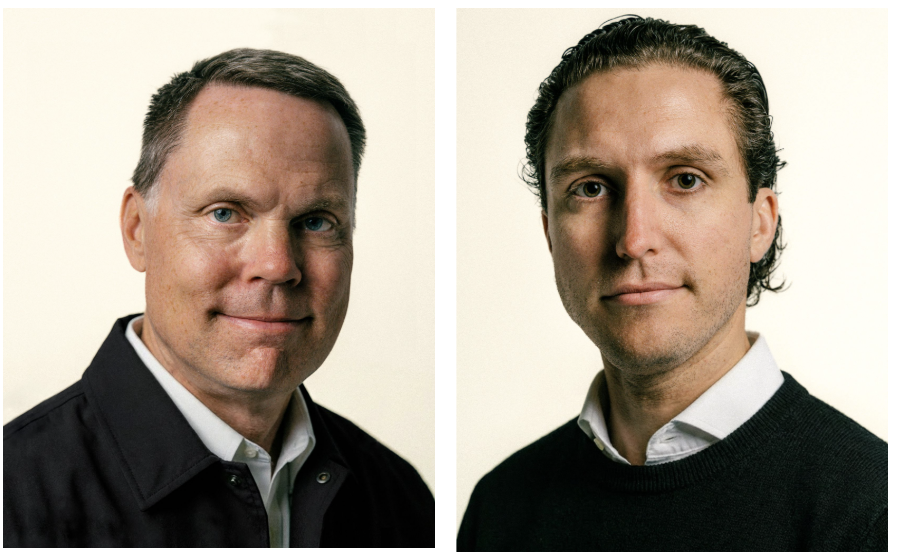
On this episode of the podcast, two of Forum Markets’ VPs, John Kristoff and Max Van der Griend, explain they have used Ethereum-based tokens to securitize airliner engine leases for a major US carrier, opening up this segment of the aviation finance market to retail (accredited) investors.
If we are to judge by the size other asset-backed security markets have grown to, the potential is enormous!
Following the first successful deal in this space, which was closed in early 2026, John and Max have certainly plans to develop this concept further, perhaps expanding into adjacent market niches, such as aircraft leases.
Blockchain and aerospace leasing are two highly technical disciplines, so it is great to be able to learn about both of them directly from those that are innovating by linking them up to create new products and solutions.
So, tune in to find out how all this works!
And, before going into today’s episode, please, remember this is not financial advice and everything we discuss here on this podcast is for informational purposes only!
Get this episode on:
Things we talk about in this episode
John and Max professional backgrounds
What is Forum Markets (previously ETHZilla)?
Why using Ethereum to tokenize engine leases is an interesting innovation?
How do you tokenize an engine lease?
What are the advantages of tokenizing engine leasing?
Who can invest in engine lease tokens?
Resources
Liquidity.io, the marketplace where the engine lease tokens are distributed
The press release about the first engine deal by Forum Markets, then known as ETHZilla.
Aero Engine Solutions, which is Forum-Markets industry partner in this project
The CFM56 engine, the type of engine which Forum-Markets has securitized
What is an accredited investor? The SEC explains it.
Our previous episode covering the basics of aircraft leasing (most of it applies to engine leasing too)
Another episode we did about blockchain technology uses in aviation, this one about airline ticketing
Podcast Music: Five Armies by Kevin MacLeod
Link: https://incompetech.filmmusic.io/song/3762-five-armies
License: http://creativecommons.org/licenses/by/4.0/
Interview Transcript:
(please note that, although we strive to make it as close as possible to the original recording, the transcript may not be 100% accurate)
- Hello, how are you guys doing?
- Doing well, thank you, Miquel.
- Well, thanks so much for being here today. We're going to talk about something which is quite interesting because of the novelty of it all: basically, how you can apply some of the new technologies, tokens and blockchain, to engine finance, and what sort of implications this can have for the market. I think it's best if we start with a quick introduction about who you are, what you are doing, and how you put together this very interesting concept.
- Absolutely, and thank you for hosting us today. We're excited to be here. My name is John Christoff. I'm senior vice president of corporate communications and investor relations for Forum Markets. I've been with the company since the middle of October last year, so several months now. I have almost 35 years' experience in financial technology, fintech companies, where I spent the vast majority of my career in marketing and communications and investor relations functions. I came to Forum because it's a very novel company, and I believe that tokenization is going to be the next massive change for the capital markets. Having been involved in electronic payments dating back to the early '90s, and having seen the transformation that can take place, I was very excited about the opportunity to come here.
- I'm Max van der Griend. I'm VP of Finance at Forum Markets. I joined the company back in the fall, in about October. Prior to joining Forum, I had extensive experience in private equity operations and investment, and like John, I joined the team because I saw the same opportunity in the way tokenization is going to disrupt the financial markets. I think there is incredible opportunity here, and I saw what we were building and was excited to join the team.
- So this is a technology that has been making headlines for a number of years already, and it's obviously become very prominent in certain segments of the finance industry. But what caught my attention is that it's being used to securitize assets in aerospace, and that has some interesting implications for investors who want to get exposure to this market, but also for the operators themselves. And before we start, just the usual disclaimer: we are not giving financial advice here. We are just trying to give an overview of this new way of financing engines, and potentially aircraft as well, and to understand how this market works. So please tell us a little more about how you guys are tokenizing aircraft engines.
- Yeah, let me start at a high level, and then Max can explain the mechanics and some of the technical aspects. Our CEO and our CFO have substantial experience in the aerospace industry. Both of them worked at Bridger Aerospace, and before that at another defense company that was involved in the aerospace industry, so that's our connection to this particular industry. Our company was founded on the premise that Ethereum, as a blockchain, has utility, and that we're able to leverage that blockchain to potentially displace inefficient, expensive processes and players from the legacy securitization process, which really hasn't changed in decades. So we saw blockchain technology as an opportunity to come in as a new entrant and say: hey, we can do this better, faster, cheaper, and in the process we can democratize access to these assets for a much broader group of people. That's our objective. And the aerospace connection is basically the experience of some of our senior executives and board members. Max, why don't you talk about how it works, how we bring these things on-chain, and our first token, which is already out there now?
- Let me just open a parenthesis here. Basically, you are taking an industry that has been around for a long time, and you are changing the way people looking for capital and the capital itself are matched, right? Let's look at how it works now and how it works with your system. Let's say you have airlines that use engines. Airlines might be leasing the aircraft and the engines separately. We tend to see them as one big entity, but the engines and the aircraft might belong to different companies, with the airline leasing them separately. And then you have a market where leasing companies are renting these engines to the airlines. So how does this market work at the moment? Who is involved, and what does the value chain look like?
- Yeah, that's a great point. I think what's happened, and this stems from the COVID pandemic as well, is that there was a shutdown, which created a massive shortage in engine production. So the supply and demand picture has changed drastically, and there's strong demand to lease these engines. A lot of people have actually gone and refurbished engines to bring them back online for these airlines. As the travel industry has rebounded from the COVID shutdown, and has actually exceeded pre-COVID levels, there is strong demand to get airplanes up in the air, and therefore a need for more engines. There's also been an increase in the overall number of spare engines available, because people are bringing more online, and that has created strong demand for these engines to be leased. We have a strategic connection through our CFO and CEO where we can source some of these engines.
We actually go and acquire the engine and put it into a dedicated entity, and we can then tokenize the interest in that engine and share the revenue participation that we get from the major carrier that leases the engine. Traditionally, if you look at the leasing space itself, it's typically only been available to institutional investors, with higher minimum investment amounts: 10 million, 20 million. By going out and acquiring these engines, we can democratize that opportunity and give the average retail investor the opportunity to invest in an asset-backed security that's secured by a AAA-rated lease. So it's a great opportunity for the average person to be able to invest and earn a good yield on their investment.
- Yeah, because basically…
- Sorry to interrupt. There's only a $1,000 minimum. The tokens are $100 apiece, and there's a minimum of 10 tokens. So to Max's point, we're taking a historical minimum investment in the millions of dollars and boiling it down to $1,000, so that just about anybody can participate.
- Because basically, the underlying concept here is that the engine is an asset that generates cash flows on a regular basis. As long as you have these cash flows, you can securitize them. You can create a cash-flow-generating security, I don't know if that's the right technical term for it, that can be traded and invested in.
- And I should also add that the engines themselves have quite a decent value at the end of the lease cycle. As you're probably familiar, these engines get parted out at the end of their life, and those parts have quite a high value for use on other engines. We have a great relationship with the source where we get the engines, and we can sell them back to them at the end of their life. That also creates value for the token holder, because they're not only earning revenue on what they invested, but at the end of the life cycle they also get a portion of whatever we sell that engine for, for parts.
- And I guess in the last couple of years, we've seen quite a few engine issues globally, with different technical issues that have really been impacting operations at numerous airlines worldwide. So having access to engines and spare parts has become really essential for many airlines just to be able to continue operating normally. So right now, who is involved in this value chain? You have an airline, and then the company that finances the engine, which could be a leasing company. I don't know if there are specialized operators, or if it's the same leasing companies that would lease you the aircraft that would also lease you the engine. Do these companies do any sort of securitization for institutional investors, as you mentioned, or is this something you are introducing into the equation?
- Traditionally in the US, there have been a couple of leaders in the space that specialize in engine leasing, or aircraft-related leasing. We've got a strategic partner that we can source engines through. We acquire the engines, and they have great relationships with the major airlines. If you think about the flow, these airlines are constantly looking for engines to keep their planes in the air, and there are a number of leaders in the space who either own engines or have access to engines across the world. They also have to manage bringing the engines back online, performing the maintenance and the retrofit. We've found a strategic partner to help us with that. We're able to source the engine, and then we pay that manager to help us manage it.
We also have other connections in the space to help us source additional engines, or to introduce us to people who need engines. Overall, I think the market right now is pretty strong. The engine leasing market alone is about 11 billion, and we expect it to grow at a rate of 7% a year. So there's going to be continued demand to find and source more engines, and we've got a partner that can help us do that. There's also good demand for parting out the engines at the end.
They help us maintain the engine while it's on lease, and they help us negotiate leases or find another lessee to take on the engine. And we are able to be the middleman, providing the financing to acquire the engine. For this first token, we've acquired two engines that are on lease with a major airline in the US. We provided the financing, and we spent about $12 million on these two engines.
- You created a fund specifically for that, right?
- Yeah, it's just a simple entity. Because these are assets on lease with a specific airline, and because we're also tokenizing the interest in them, we have to keep them within one specific entity. But it's just a simple entity that we spun up. We've got insurance, we've got accounting and compliance there, and we've also got a maintenance partner that helps us maintain the engine and will help us resell it at the end of its life. So we are really the strategic financial partner that provides the capital to acquire the engine and then builds the infrastructure to tokenize it. And on the tokenization side, we've made a strategic investment in a company called Liquidity.io.
It's an alternative trading platform with an SEC license to list and trade digital securities, things of that nature, and that's a pretty limited license in the US. So we have partnered with them, and invested in them, to tokenize these assets on their trading platform. That gives us the ability to list these tokens on their platform, so any accredited investor can sign up, acquire the tokens, and then every month we'll be making distributions of their pro rata revenue through the token platform.
- Okay, you kind of anticipated what I wanted to ask you about. So basically, you create the entity, you invest in these engines, then you lease them out. You get these cash flows, and then you create these tokens that can be acquired by individual investors. They need to be accredited investors, though. That's an important point. It's not just any random person who can go there with $1,000 and get a token. It needs to be an accredited investor. And then how do you distribute them? Do people go into this marketplace and acquire the tokens there? How does the distribution work?
- Yeah. They sign up on Liquidity.io. You have to go through what's called a know-your-customer, KYC, process, where they provide proof that they're an accredited investor. And I should note that this initial offering is a Reg D 506(c) offering, which is a type of US SEC offering that requires investors to be accredited. Our long-term goal is to also reach retail investors who don't necessarily need to be accredited, but that's a separate mission of ours. But yes, going back: they sign up to Liquidity.io, they fill out some forms to self-certify that they are accredited investors, and then they can simply deposit funds into a wallet and own the tokens. Liquidity has a cap table feature that allows them to track who owns which tokens, and we are able to make the distributions accordingly.
- Okay, so then you get cash flows based on the cash flows generated by the engine.
- That's right.
- And I should note that there are a couple of expenses netted against the cash flows, for insurance and other operating expenses. But yes, the net proceeds then get distributed pro rata to the token holders.
- And you can trade those tokens? There's a secondary market for them?
- Well, there will be. We just launched these tokens about six weeks ago. There is an initial lockup period of 12 months, and at the end of that initial lockup period, you would be free to list those tokens on Liquidity.io for sale. I would point out that the highest return will come from holding to term. It's a two-year lease on these engines, and that's due to the residual value of the engine that Max alluded to earlier. But if your circumstances change and you need to get your money back and put it into something else, this creates a secondary market, which is a key differentiator from how it works today. We talked about the 10 million-and-up minimums that currently exist in the securitization market. These are created through special purpose vehicles, where you're in it for the entire term. There's no way to get out once you're in, and it requires expensive accounting. Whereas we're doing this on the blockchain. It's very transparent and very automated, so our costs are much lower, and that means your returns are generally higher as a result.
- And what about the duration of this security? I'm assuming the token is alive for the life of the engine, is that right? So it extinguishes itself after the engine ends its productive life?
- Yeah.
- Yeah.
- To John's point, that's also why this type of token offering is likely to have a smaller secondary market, because the value is really in holding it until the end of the term. We should also note that as the lease plays out, the value of the token declines, because there's less cash to be collected, so the price adjusts accordingly every month. It's still designed so that if you get in at a certain month, you should be able to get a minimum yield out of it. But a good portion of the yield is the residual value, because these engines have a lot of valuable components that can then be used on other engines. So there's a pretty good residual payout, which is distributed on a pro rata basis, just like the monthly revenues. If you own 10% of the tokens, you get 10% of the residual.
- And you launched it six weeks ago. One of the things that caught my eye, and why I thought it would be a good idea to have you on the pod, is that I think it's quite a pioneering thing. Can you put this in context? Are you guys the first to do a token securitization of an engine, or has it been done before? I didn't have a previous reference for it, but of course the world is very big, so I don't know if that's the case. Are you really the first ones in the world, or the first ones in the US, to do this?
- Others outside the United States have tokenized private jets, for example, the cash flows from operating private jets, and there have been some other experiments. But we are the first and only company to create a tradable token backed by actual aircraft assets. So we are absolutely the first in that particular category.
- Okay. And why would you say that is the case? Tokens have been around for a while. The whole crypto and blockchain economy has been booming for the last decade. Why did it take so long to apply this to something that looks relatively straightforward conceptually? You have an asset that generates cash flows, it's globally traded, etc.
- I think a lot of it comes down to regulation. What we're doing here, Miquel, is really connecting the traditional financial world with decentralized finance. The things you're talking about existed in the DeFi world. You have various tokens that aren't really backed by anything. You have NFT tokens, and then USDC-type tokens.
And now we're getting to the point, from a regulatory framework perspective, where we have this exchange, which could not have existed 18 months ago, just due to the regulatory framework and the amount of time it took to set up Liquidity.io: to get the digital alternative trading system license, the broker-dealer license, the know-your-customer process, all the things you have to do to put a Regulation D offering into a tokenized product.
That just didn't exist previously. So we're very early, based on the regulatory environment being more favorable and, frankly, more of the traditional financial world now starting to accept Ethereum and other blockchain platforms as an alternative to the traditional way of doing things. I think that's why you haven't seen it until now. It was very time-consuming to set this up from a regulatory perspective, and we're really excited about it. And just to put it in perspective: I have a high-yield savings account that I use to rotate money in and out. It has a $5,000 minimum, and it pays about four and a quarter percent. I bought $5,000 worth of this engine token six weeks ago, and if I hold it to term, I'm expected to get 11%, and it was only a $1,000 minimum.
So it's a pretty compelling investment that we're bringing to market, if you think about it. And today, as Max said, it's only for accredited investors, but eventually we want to be able to offer this to an even broader segment of the population. So we think it's an exciting new offering for people.
- Yeah, actually, you mentioned some numbers there, and I wanted to ask you precisely about that. How much of a high-yield asset is this? How does it compare to more conservative types of investments?
- Yeah. Max, do you want to talk to the financial aspects of the token itself? It's expected to yield approximately 11% if held to term.
- Yeah. It's based on indications of the cycles left in the engines and the average utilization by the actual carrier. We think it could yield close to 11% or 12% overall if you hold it to term, and that includes the residual payout. So from our perspective, it's a great asset to put some money in, collect monthly revenues, and then ultimately get a decent chunk of the residual payout at the end of the term. We've spent a lot of time putting together, or engineering, the legal structure so that we can provide an asset that token investors feel comfortable putting money into. We wanted to make sure they feel that it is collateralized by the actual engines themselves. So we spent quite a lot of time and quite a lot of money with our legal team to really build out the infrastructure here, so that we can create compelling assets that people feel comfortable putting money into.
- What about the risk? How do you quantify that? Because we all know airlines come and go, and even if the asset is tradable and can be used by pretty much any operator, there might be occasions when an operator just goes bust, and the engine doesn't produce for a period of time, and so on. So how do you quantify that, and how do you mitigate it?
- Yeah. We mitigated the risk by only putting these engines on lease with a top-tier airline. We're talking about one of the top five airlines in the US. If it goes bust, to be frank, the whole industry won't do well, because it's one of the top tier and it's AAA-rated. From our perspective, we don't want to be playing with some of the lower-tier airlines, because there's too much risk. And we've also put together a financial model that investors can access on the landing page of the token. You can see an Excel financial model that projects the revenues earned, based on average cycle utilization and hours used by standard single-aisle aircraft in the US. So we took the historical numbers for this type of aircraft and this type of engine, we knew the cycles estimated to be left in the engine's life, and we can project out the cash flows from there.
- Okay, the operator is rated.
- Yes, the operator is rated.
- But not the asset, right?
- That's correct, because the operator pays the lease, right? That's the source of the cash flows. And as Max said, this is one of the largest and most profitable airlines in the world. It is actually one of the top three legacy airlines in the US. This is not one of the low-cost carriers that may not have as good a financial rating. The other thing is that we're dealing exclusively with the CFM56 engine. This is used on almost every twin-engine aircraft, including the Boeing 737, and it's the highest-demand engine, so that reduces our risk as well. If something should happen, being able to find a home for that engine very quickly is important, and having the most popular, most in-demand engine helps reduce that risk.
- What sort of traction do you have so far? I think you have already closed a transaction for some engines, as you mentioned, with a top airline. What can you disclose at this point about the deals you have already finalized, and what's in the pipeline? How big can this be?
- We closed on the two engines initially in February. Our plan is to bring on another engine per month in the near term, maybe working our way up to two engines per month as we develop a market for this new offering. It's very new, so right now we're on a bit of an education mission, which is why we're here today, to talk about the offering and explain it. So that's what we're targeting: roughly an engine per month, maybe scaling up from there as we develop a larger market for this offering.
The other thing I think is important for your listeners to understand is that these aren't crypto tokens, right? We are using Ethereum as the blockchain to record the transactions, to automate the monthly payments and so forth, but your investment in this token is made in US dollars, and the monthly returns you receive into your account are in US dollars. So there's no risk associated with the price of Ethereum or any other crypto asset. This is cash in and cash out. We're using the blockchain as the settlement layer, not as a speculative asset in the investment thesis. I think that's a very important point.
- A very important point indeed. So are you expecting more competition to flock to this space in the near future, if you continue to be successful with this?
- Look, there is an opportunity there. I think the unique aspect that we have is that we are an investor in Liquidity, which has the SEC-regulated license to actually list the offering, list the token and trade it, and that is a pretty unique aspect. There are people tokenizing other assets in this space. There's tokenized real estate, things like that. We think we're at the forefront of it, and I think we have done a really good job, like I said earlier, of building out the infrastructure and the engineering to do this in a legal manner that provides security to the investor, as well as a streamlined process to manage the asset, make the distributions and ensure a successful investment.
- Do you need to be based in the US to be able to invest in this security?
- Yes, I believe you do.
- You do.
- Any plans to open it up to international investors?
- Yes. I should provide additional detail there. The reason it's US-only right now is that it was the quickest way to market for us while still providing a good asset. Our long-term goal is to build out the infrastructure to have worldwide access. It just takes a bit more time.
- That's clear. So people in the US, who are actually the majority of our listeners, I think, who wish to learn more about this type of security, where should they go? Should they go to Liquidity.io, or do you have another website explaining it? Tell us a bit more about the platforms available, basically for education, but also to check the conditions and all that.
- Absolutely. Our company website has a lot of information, not only about the aircraft token, but also about other vertical markets where we're tokenizing assets, such as car loans, manufactured home loans and other asset classes going forward. That is forum-markets.com. To learn more about, and perhaps even purchase, the aircraft engine token, you would go to Liquidity.io, where you can find the aircraft engines under the Private Investments tab at the top. That's what Max was alluding to: we have a presentation and all of the legal documents you can read through to get all the details about that particular token, up to and including purchasing the token itself, once you've signed up as a user on Liquidity.io.
- Okay, excellent. I'll add the links to the show notes so that people can check them out. It's just left for me to thank you for being here today and explaining this new way of accessing the aerospace industry for many investors who might have an interest in investing in engines, or potentially in other types of assets with similar characteristics, right? So it could be aircraft as well in the future.
- Exactly. We appreciate the time and the opportunity. Thank you so much.
- If you like this podcast, you can support us by giving it a great rating on Apple, Spotify, or whichever platform you get it from. And remember, you can of course subscribe to it, and you can also get regular updates through the Allplane website. That's A-double-L-P-L-A-N-E dot T-V. We have a newsletter where we cover the aviation industry every week, with a special focus on innovation and sustainability. So give it a go. Thank you, and goodbye.
