The Allplane Podcast #139: eVTOL supply chains with Stefan Schamberger (Nova Elevation)

eVTOL developers promise thousands of aircraft by the start of next decade, but is this realistic?
I am not even talking about the long and costly certification processes, let’s assume, for the sake of simplicity, that this is sorted.
What about the capacity of aerospace supply chains, already strained trying to cope with the demand from traditional aircraft makers, to serve this new growth market?
Are the current processes and technologies flexible enough to respond to this market demand?
We are going to talk about all this with this episode’s guest, Stefan Schamberger, an aerospace supply chain expert who knows the world of aerostructures manufacturing inside out.
In this industry analysis writings, Stefan raises also an interesting point: what if the ultimate value delivered by the whole advanced air mobility (AAM) revolution was to facilitate the advent of the new generation mid-sized airliner which both Boeing and Airbus are aiming to launch some time in the middle of the next decade?
How transfereable are skills and technologies between the “old” and “new” aerospace industries?
Tune in for a fascinating chat about the industrial processes and infrastructure that make today’s aerospace industry possible!
Get this episode on:
Things we talk about in this episode
Stefan’s professional background in aerospace and his work in advanced air mobility
The state of advanced air mobility supply chains
How talent and technology flows between traditional aerospace and advanced air mobility
Composites and aerostructures for eVTOLs: how are they made?
Could advanced air mobility know-how become the cornerstone for the next generation airliner
New technologies in aerostructures manufacturing
Resources
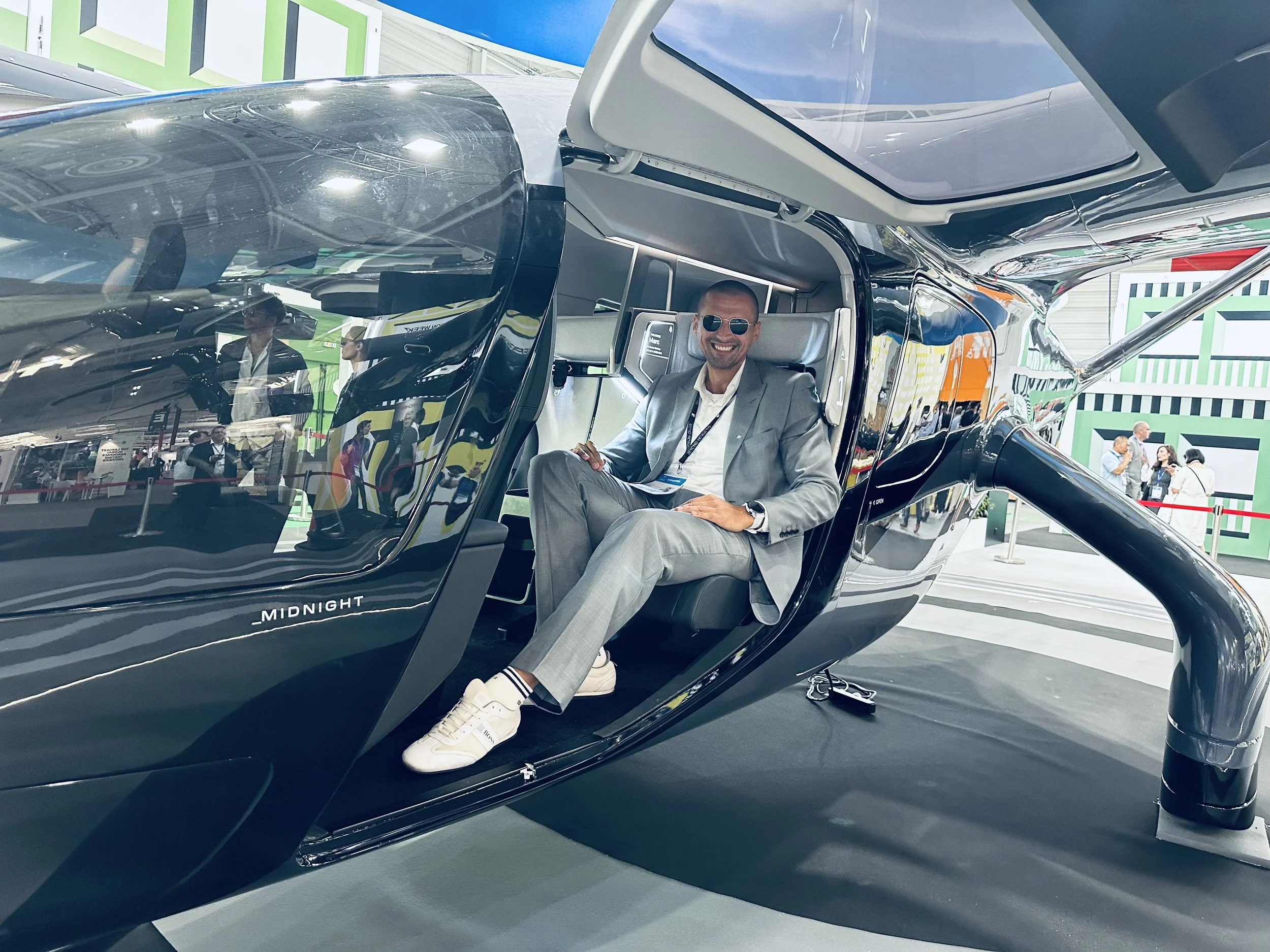
Stefan onboard an Archer Midnight eVTOL
Aciturri, the Spanish company recently acquired by Sonaca
“The Next-Generation Single Aisle Will Reshape AAM — Not the Other Way Around”, an interesting article by Stefan, which we discuss
“Why are leading aerostructures suppliers flocking to the eVTOL industry?”, the article about eVTOL aerostructures that we discuss
How Joby is producing composite aerostructures in-house
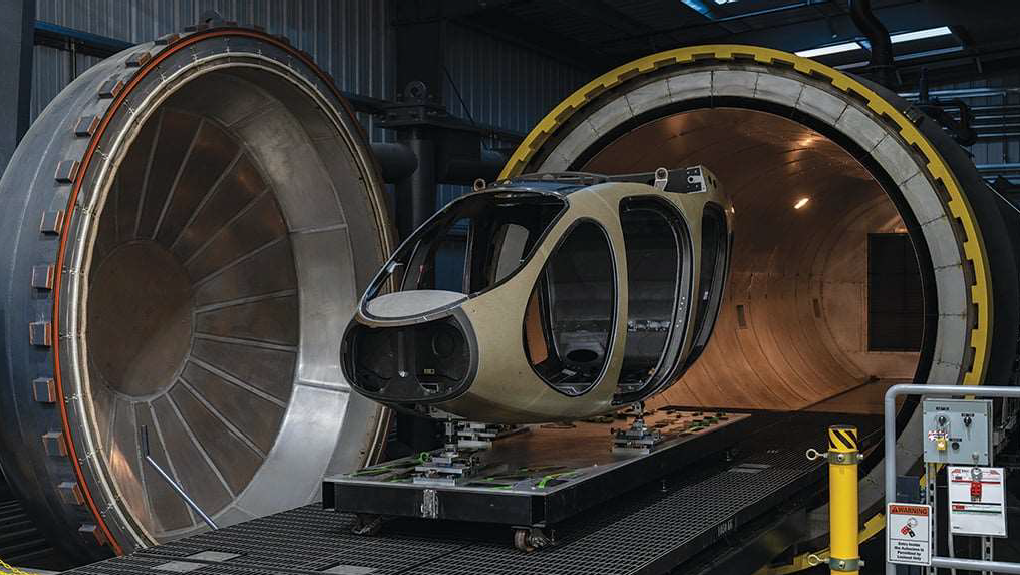
Autoclave during Joby aerostructure production process
Podcast Music: Five Armies by Kevin MacLeod
Link: https://incompetech.filmmusic.io/song/3762-five-armies
License: http://creativecommons.org/licenses/by/4.0/
Interview Transcript:
(please note that, although we strive to make it as close as possible to the original recording, the transcript may not be 100% accurate)
- Hello, Stefan. How are you?
- Hey, Miquel. I'm doing fine. How about you?
- Very good. Where are you joining us from today?
- I'm in Nashville, Tennessee, in the US.
- Okay, interesting. You've been based in the US for quite a while, I think, working on projects in the aerospace industry. But you're originally from Austria, is that right?
- Exactly, yes. I grew up in Austria. And I think the last time we met was in 2024, at the end of 2024?
- Ooh, hard to tell. I remember you were working for FACC, which is a very important Austrian company that supplies the aerospace industry. You were already based in the US at the time, representing them over there, I think. But since then, you've had a few professional changes, haven't you?
- Yeah, exactly. When we met, I was based in Seattle, Washington, working for FACC, as you mentioned, primarily focused on developing their advanced air mobility strategy. That was my primary objective since I moved in 2021, besides a couple of other assignments, like obviously working with Boeing and developing that relationship. But a key focus was how FACC could benefit from advanced air mobility.
- Yeah, actually, I remember that was for an article I published on AeroTime about aerostructures for the advanced air mobility sector. Most of these companies developing eVTOLs have tier-one suppliers making the actual fuselages of their eVTOLs for them, and I think FACC was one of the players in this field. But it's not the only one. There are a few others doing this type of work as well, and this is basically your field of work, right? Aerostructures. That's been the core of your professional activity.
- Yes, I've been an aerostructures guy ever since. I've been in the industry for a little more than 20 years now. I did some work in cabin interiors, as that was also part of FACC's business, and still is. Then, about one and a half years ago, I moved over to Sonaca Group. I joined them as vice president for business development and marketing. Sonaca, as you know, is primarily a metallics supplier. They have developed some exposure to advanced air mobility as well, especially with SQRTM, where they have developed some composite work. However, we recently acquired Aciturri, a Spanish composites company, and I knew them very well, because at the end of the day, in composites there is only a handful of competitors that you really have, and we all know them. We can name them. There's GKN, which is the biggest, then you have Aernnova, FACC and Aciturri. I would say those are the prime competitors. And then you could also talk about KAI and TAI. But those are what I'd call the primary players.
- And composites are the name of the game when it comes to advanced air mobility, right?
- Yeah, absolutely, because we all know that batteries are not where they are supposed to be to really get this industry off the ground. So they need to squeeze every gram they can out of their structures, and composites are obviously the best fit for doing that.
- You have also been advising companies in this field through an initiative called Nova Elevation, right? What can you tell us about this? I've read quite a few of your articles on LinkedIn commenting on industry developments, so you've got a pretty good vantage point on what's going on in advanced air mobility. That's actually one of the things I would like to discuss here today, because I think you've floated some very interesting ideas about where this industry is going. Can you tell us more about the work you do through Nova Elevation?
- Sure. A couple of years ago I founded Nova Elevation, because as I built some reputation in the industry, I had more and more tier-one, tier-two and also tier-three suppliers reaching out to me, asking if I could give them some advice on how they could find a foothold in the industry and how they could benefit from it. Because at the end of the day, I think that for the tier ones, and also the tier twos, for the supply chain in general, advanced air mobility gives you a playing field to develop technology.
And that was part of my somewhat provocative article saying that the end game is not advanced air mobility. At least for the suppliers, it never has been. The end game is really to prepare for what's next in the industry, which is what everybody is waiting for: the next-generation single-aisle. A lot of the technologies we are currently developing in advanced air mobility, or at least where the development continues…
Because if we talk about composite aerostructures, those developments didn't start in advanced air mobility, like thermoplastics, or out-of-autoclave technologies in general. A while ago, I think it was in the middle of the last decade, Airbus launched the Wing of Tomorrow and the empennage of tomorrow programs, and they really started all these initiatives.
Advanced air mobility just took them and advanced them further. Back in 2021, with all the SPAC pitches to investors, the advanced air mobility players projected production rates of, I think we've seen, 250 in 2025, going up to 1,000 or 2,000 before the end of this decade. If that had materialized, the whole industry would have been challenged to further accelerate the implementation of these technologies, because if you have two handfuls of players forecasting 1,000 or 2,000 vehicles a year, that's a level of demand that is unprecedented for the industry.
- Indeed, yeah. The mainstream aerospace industry, the traditional OEMs, to put it that way, have already been facing quite a few supply chain constraints, right? They are struggling to fulfill the order backlog they have now. So I guess it would put a lot more strain on the supply chain if these advanced air mobility companies were able to fulfill their plans for the second half of this decade, as you said. It seems we are now moving more towards an end-of-decade scenario, right? Some of them are saying between 2026 and 2028 for certification, but we'll see. If everything goes as it should, I guess we're potentially looking more at 2030 for this to become more generalized production at scale.
- Yeah, I fully agree. I think the visionary concept of the Jetsons, or the Uber-type applications where we use advanced air mobility to go from A to B within cities, is postponed for quite a while, at least. Right now, I think we're looking more at first applications like what Joby just demonstrated in New York City, flying from a city-center vertiport to an airport. I think that's something that could be implemented very easily, and it was actually a very important demonstration for the industry, because for the first time it was not a staged test flight in a desert. It was really a flight in existing airspace, demonstrating what the future of advanced air mobility could look like.
- And then we also have the cargo segment. We have seen AutoFlight in China, for example, conducting some real flights, carrying things around, even offshore, in mountain areas, in different locations. That also sounds like something that could happen relatively early, because after all, we already have some delivery drones operating, right? So that would be the next stage of that.
- Yeah, there are a couple of these applications, and you have a good point with cargo. I think Beta Technologies has also pivoted to cargo as a first application, before transporting passengers. But then you also have military applications.
- True.
- I would assume it's much easier to certify these vehicles for the military use case, and all of the primes have pivoted in that direction. Joby, Archer, Beta, all of them have contracts. Archer, for example, is working with Anduril. And all of them get funding and support from the defense sector in the US.
- So how prepared is the supply chain for this change of paradigm? Some of the tier-one suppliers you have mentioned, like GKN or Aciturri, have already been working very closely with eVTOL developers. How prepared are they, not just at the research level, where I'm sure they are very much involved, but in terms of being able to scale up their production facilities quickly?
- Yeah, it really depends on what type of scale we're talking about. Right now, despite all the OEMs talking about out-of-autoclave technologies to support scaling, at this point it's primarily very conventional manual hand layup. Some of them use AFP, like Joby does at their Marina site, but it's a very conventional process: hand layup, some automation with ATL and AFP, but then autoclave cure. And that would be the huge bottleneck, because you face cycle times of six to 10 or 12 hours, depending on the cycle, with the heat-up ramps and the cool-down ramps. So that would be the real bottleneck if we talk about, let's say, automotive-type scale. But based on the applications we've been discussing, I don't see that really happening, because it's still somewhat of a niche application, rather than scaling up to 2,000 or 3,000 vehicles per year.
- One of the things the eVTOL industry is selling is that they are doing new stuff: the batteries, things like tilt rotors, and of course the business model as well. But what about the actual structures? Is there anything revolutionary in the way these structures, the fuselages and airframes, are built, or is it just a derivative of more traditional aircraft manufacturing?
- Yeah, I think that's a very good point, because at this point we've only produced a couple of flight test vehicles. There's nothing more. They are working on design changes to make them more suitable for rate production, but right now, as with the manufacturing concept, the design concept is also very much conventional.
- And is there any bottleneck further upstream? Let's say the eVTOL thing is happening, all these projections materialize, and you need to produce thousands of them. All these tier-one suppliers need to produce these airframes, and I guess they also have their own supply chains, for the autoclaves to make these airframes, for the composites. Could the bottleneck potentially move further upstream in that regard, or is there not much of a concern here? I'm not familiar with how specialized this supply chain is when it comes to building all the machinery and equipment you need to keep this running.
- Yeah. Well, if we stay focused on aerostructures, I think yes, there will be a huge clash, as you just mentioned. All these suppliers that support the OEMs with primary structures, like FACC, Aciturri, Leonardo, GKN, name them, are also involved in the ramp-ups of the A320 and 737 MAX, and also the wide-body programs, and at some point they'll essentially be pivoting and preparing themselves for the next-generation single-aisles, which are supposed to have wide-body levels of composite content, meaning 50% plus, and rates higher than 100. And obviously, if you imagine the eVTOL industry taking off at the same time, and that clashing with the next-generation single-aisle and all the ramp-ups we are currently seeing, there will be a bottleneck. And it would probably come even earlier in the supply chain, with the raw material suppliers. I don't believe they would be prepared to support both industries taking off at the same time.
- Yeah, actually, raw materials are also an interesting topic, because we have seen tensions in the titanium market, for example, or in the famous rare earths. But I'm not too familiar with the supply chain for composites when it comes to the chemicals used to make them. Is there any bottleneck there at the moment? Any scarcity, or not at all?
- Well, I would be more concerned about the production capacity and capabilities of the raw material suppliers, because there aren't even a handful of them really playing in that field, right?
- Yeah. There's a line in your articles that caught my attention: that it's the next single-aisle family of aircraft that will reshape advanced air mobility, and not the other way around. And an interesting point here is that the large OEMs, namely Boeing and Airbus, have basically been producing versions, iterations, of the same types of aircraft for so long.
There are innovations in those programs as well, of course, but let's put it this way: the people looking for more revolutionary types of innovation have moved to advanced air mobility, and that has been acting as a sort of test bed for ideas and new concepts, and also as a repository of talent, basically keeping all these minds busy. And eventually there could be an overflow from one side of the industry to the other.
Can you tell us a bit more about this concept and how you see it happening? We know Boeing and Airbus are now discussing what comes next after the 737 and the A320. This is still a few years into the future, but of course those programs take many, many years. So what's the general landscape here? How do we make sense of all this?
- Yeah, you have a good point about the engineering talent and how it flows, or how it flowed, into advanced air mobility, because that's really a playing field for them. And I think that's also where tier-one suppliers took a lot of benefit from the industry, because you could really keep your engineering talent employed, first of all. Because there's no development program, so what are you going to do with all these engineers? So you could keep them, and you also brought them up to speed with the latest technology development.
So in preparation for the next-generation single-aisle, you have, I would say, a very educated engineering team within your company, up to date with the latest technology, which you would potentially have lost if we hadn't seen the rise of advanced air mobility. And from an OEM perspective, if you just spend some time at Archer, Joby, Beta, name them, there are a lot of people with heritage at Boeing, Airbus, Spirit.
A lot of these people went to advanced air mobility because that was the next big thing. First of all, the salaries were good. We've seen a lot of startups in the Silicon Valley area, like Archer, where the pay was very good and very attractive, probably also incentivized with stock options and stock programs. So a lot of people moved to these companies. But then the question is, what's next? Because at the end of the day, I think what everybody in the industry is waiting for is the next-generation single-aisle. So I would assume a lot of the talent will flow back to the big OEMs. That's a constraint we might see in advanced air mobility.
I would say the pure players, like Archer, Beta and Joby, probably have a better chance of succeeding than those backed by OEMs. Because at the end of the day, let's take Eve and Embraer. If Embraer launches a next platform, I'm not sure they would really want to go into an NGSA, a new single-aisle. If they ran both, could they sustain both programs at the same time?
- Yeah. Although Eve is a publicly listed, independent company, in theory, so you could play a little with stock options to retain talent. I'm not sure what arrangements they have, but yeah, good point. Do you think this new single-aisle is going to happen in, let's say, the next 10 years, or maybe towards the middle of the next decade?
- Yeah, it's definitely going to happen. The question is when. I think the OEMs are in a difficult situation, because I would say they want to launch, but first they want to ramp up, especially in Boeing's case. They need to get back to positive cash flow. They're forecasting between one and three billion this year, but then they need a couple of years of positive cash flow to manage the debt situation and also have enough cash ready to develop a new plane, because there are estimates it could cost, I don't know, 20 to 30 billion. So that's obviously a huge investment. But yeah, I definitely think it's going to happen. The question really is when. At this point, I think the most realistic assumption is a launch somewhere at the end of this decade, and then maybe entry into service in the middle or towards the end of the next decade.
- And then what happens with all this talent that, as you mentioned, flows back to the mainstream? Can we assume that by then, advanced air mobility will already be relatively mature, so that they can just keep going and consolidate what they have, rather than making the very exponential leaps they are forced to make now because they are inventing a new category?
- No, exactly. And it may sound odd, but a delay in the next-generation single-aisle development could actually be very helpful for advanced air mobility because, as you just said, if it takes another five years until this potential flow of talent back to the aerospace OEMs happens, that could create the window that the advanced air mobility players need to finalize the engineering of their aircraft. Let's be honest, not everybody will flow back to the traditional OEMs, but we are probably talking about the majority. So if they get a window that extends for another couple of years, that could be very helpful for advanced air mobility.
- Yeah, but aren't we also forgetting that there are other segments of aerospace that might become, or are already becoming, the next big thing in a way? I'm thinking here of space, in a broad sense, including everything suborbital, reusable rockets, and so on. Some of them are very exotic compared to more down-to-earth aviation, but some of these applications are also quite tangential to what we commonly call commercial or civil aviation. So that's another vector as well. There's always going to be a new, exciting field that attracts these more adventurous profiles, and the capital that comes with them, in a way that could possibly affect the calculations these companies have to make when planning ahead.
- Yeah, absolutely. When I told you that one of the main reasons I moved to the US was advanced air mobility, another reason was space. It always depends on where you look in space, but if you look at launchers, for example, their composite structures are, at the end of the day, very similar to what we do in aerospace. Take these big payload fairings: it's a structure you could make in aerospace as well. So for some of these components, even if you label them space, from a manufacturing perspective it doesn't really matter whether they go on an airplane or on a rocket.
- Yeah. So what do you think is the next big thing when it comes to aerostructures? The last couple of decades have been a lot about composites. Is this already a mature technology, or are we going to see more new things happening in this space in the years to come?
- Well, there could always be something new popping up, but from what we know now, I think the overall theme will be out-of-autoclave manufacturing, because you want to avoid the autoclave bottleneck, and investing multiple millions of dollars in buying additional autoclave capacity…
- To grow in volume, or to make the current processes faster, so that you don't need to bake these composites for so long?
- Yeah, it's actually both, right? Out-of-autoclave is just an overall theme. It includes RTM, resin transfer molding. It includes infusion technology, and thermoplastics, which is a big thing. Thermoplastics have been around for, what, 40 or 50 years, but they never really took off and scaled. But now, with sustainability becoming more important, and also with labor constraints, thermoplastics, if applied the right way, can remove a lot of assembly hours, because you don't need fasteners.
You can do welding. So these types of technologies, and then also further automation: automated fiber placement, robotic ways of laying up the plies, because composite manufacturing is basically laying up ply after ply after ply in a manual manner, and using AFP and ATL, but also robotics in machining, in drilling, and on the non-destructive inspection side. So I think there's still a lot we can do with these, I would say, fairly new technologies, because the existing platforms don't use much of them yet.
- For people who might not be very familiar with these processes, can you briefly explain the main steps of a more traditional composite manufacturing process, and of the thermoplastics you were mentioning? What steps, and what kind of time investment, does each of them involve?
- Yeah. Traditional thermoset composite manufacturing uses pre-impregnated plies, carbon fiber or glass fiber pre-impregnated with resin, and you lay up ply after ply after ply to create your ply sequence and stacking. Then you take those, compact them under a vacuum bag, and put them into autoclaves, which are basically huge pressurized ovens, and cure the parts in there for, depending on the cycle, up to 10 to 12 hours. That's obviously a huge time constraint. Then there are ways to avoid the autoclave, using dry fiber, in what we call resin transfer molding. You apply dry fiber, though it's still a manual process to lay up the dry fiber and put it in place, and then you inject resin in pressurized presses. That's already out-of-autoclave, because these press cycles can be much shorter than the autoclave cycle, but it still leaves you needing manual labor to lay up the plies.
Another iteration, a step up in automating these processes, is automated fiber placement or automated tape laying, where a robot basically replaces the human in laying up the plies. From what we've seen so far with the technology, it's not really much faster, but it's obviously more repeatable, with fewer errors, and you can reduce the labor you need in the clean rooms to lay up the plies. If you look at thermoplastics, you basically have a couple of big benefits.
One is that it's recyclable, because it's a thermoplastic material that you can bring back into its original form. And usually with thermoplastics, you already buy the compacted sheets, and then you form them into shape on the manufacturing side, so it's already faster. Thermoplastics can also be welded, which could potentially remove all the fastening in the assembly area.
- Okay, interesting. Just to wrap up, because we're running out of time, I would like to ask you more generally: what's your take on the future of advanced air mobility? Here on this podcast, we've had some of the entrepreneurs in this field, who have obviously presented a nice, bright future for advanced air mobility. And we've also had some other guests who were a bit more skeptical, and who pointed out some inconsistencies in this type of discourse and in the numbers usually being presented. What's your view? Do you think we're going to have all these eVTOLs flying around soon? Or maybe yes, but not as many as some people predict? I'm interested.
- Yeah, I would be very realistic about it. I think for quite some time it's going to be a niche, not a paradigm. It's going to be what we've already discussed: some type of helicopter replacement, going from downtown to the airports and vice versa. It's going to be cargo transportation. Medevac could also be an interesting field.
And then I would have big hopes for military applications to further drive and develop the technology. Because for the passenger transportation application, you still have a couple of unsolved problems. Vertiports: where's the infrastructure? At the very beginning, there was the idea of putting vertiports on top of high-rise buildings. I don't think that's going to work, because you need the infrastructure to recharge, and then there's also the question of who gets access to these buildings. So that whole vertiport infrastructure is unsolved. Then airspace: imagine having hundreds of these eVTOLs flying around in big cities.
There will probably be a solution, and technology like AI can really accelerate these things, but at this point it's still unsolved. And then we also need to certify the vehicles. I think that's progressing, maybe not as fast as we wanted, or as fast as the OEMs imagined, but it is progressing. There's also very strong support now from governments, especially here in the US, and then in China and the Middle East, which I would say are even faster at implementing those applications. And then I think the final one will be public acceptance. Does the public really want to fly in these vehicles? Obviously there are going to be first movers, but does it attract the masses? So there are a couple of things we'll have to see evolve.
- Yeah, exciting times ahead. For people who wish to learn more about your work and your opinion pieces, what would be the best way to check them out? Obviously you publish on LinkedIn, but I don't know if there are any other resources you could recommend.
- Yeah, well, there's my website, nova-elevation.com, and you can reach me on LinkedIn. Maybe you can post the link with this podcast, and then I'm happy to engage.
- Indeed. Well, thank you so much, Stefan, for your time today, and for giving us the view from the supply chain side, which is a part of the industry that is often neglected. We get all this talk about the demand side, but obviously someone is going to have to build these airframes, and that's easier said than done. So thank you so much again, Stefan, for your time today.
- You're welcome. It's good to see you again.
- Likewise.
- If you like this podcast, you can support us by giving it a great rating on Apple, Spotify, or whichever platform you get it from. And remember, you can of course subscribe to it, and you can also get regular updates through the Allplane website. That's A-double-L-P-L-A-N-E dot T-V. We have a newsletter where we cover the aviation industry every week, with a special focus on innovation and sustainability. So give it a go. Thank you, and goodbye.
