Fighting for the Emissions Trading System, algae for SAF & more
These industry wrap-ups have got lengthier and lengthier since I have taken to space them out in time. Even a few days can produce a huge stream of news in aviation innovation and sustainability, so I acknowledge I might have missed quite a few developments here. Nevertheless, this aims to be a curated list with the related comment, rather than a newswire.
So, here are my picks, from the heating debate about what to do with the EU’s Emissions Trading System (ETS) going forward, to how new feedstocks like algae are being researched to make SAF. Also some (inevitable, I guess) downsizing and restructuring of the electric aviation industry in Europe and, like always, some top level interviews, flight reviews and other aviation stories!
The EU ETS Revision Fight
There is a whole debate about the EU's Emissions Trading System (ETS) as the date on which the European Commission is set to release its formal proposal for the revision of this framework (July 15th) approaches. Of course, both the airline and transportation industries and environmentalists are each arguing their cases.
On one hand, the airline industry, supported this time by the shipping industry as well, has presented a number of proposals, such as not extending the ETS to extra-European flights, increasing the ETS allowance for SAF use, and reinvesting proceeds from the system into developing the supply of SAF and other alternative low-carbon technologies.
This position is summarized here.
The other side of the debate is held by those who say the ETS system is not effective enough.
Electric Aviation & Batteries
Dutch electric aircraft developer Elysian is collaborating with Taiwanese battery maker ProLogium to research lithium ceramic batteries, which are expected to provide enhanced energy density for aviation applications.
Certification & Regulation
The FAA has approved Electra's G-1 Issue Paper, which means there is now a specific set of criteria the startup will need to comply with in order to complete its certification.
Electra would theoretically fall under Part 23 rules, but some elements of its EL9 aircraft are novel enough that they require their own rulebook, which is what the FAA has now reviewed and agreed on.
An important ruling from the EU Court of Justice has sided with Dassault in a case in which the French manufacturer defended its environmental credentials.
Basically, the court said that private jet manufacturers can't be excluded from "transitional activities", which under the EU Taxonomy rules are those the carbon emissions of which are hard to abate with current technology but have a reasonable time-frame to do so.
Sustainable Aviation Fuel Roundup
LATAM Airlines has been operating charter flights for upmarket expedition cruise company Ponant, which operates in Patagonia and Antarctica, using SAF. This is a relatively small project in the big scheme of things, but worth highlighting since Latin America, as a region, has so far lagged behind a bit in SAF adoption.
Sasol, of South Africa, and Topsoe, of Denmark, have dissolved Zaffra, their SAF joint venture, before it came to the production stage and after having secured hundreds of millions of € of public money.
In this interesting LinkedIn post, Stephan Uhrenbacher, of Future Aero Lab, explains the issues that airlines face when confronted with regulations on one side and the realities of the market on the other. He points out some interesting figures, such as the $2.9B in additional costs incurred by airlines in Europe to take up 1.9 million tons of SAF in 2025.
In this regard, Patrick Edmond, of Future Energy Global, calls for a larger role for buyers of corporate travel, not only in helping foot the SAF bill but in providing the long-term demand assurance that can incentivize producers to invest in ramping up SAF production.
US SAF producer Syntholene is tapping another interesting raw input to make SAF: geothermal energy. It just opened a demonstration plant in northern Iceland.
Algae Enters the Chat
Algae have long been seen as an energetic resource, but this week there have been a couple of news items that relate to the aviation world.
A company based in the Canary Islands called MacroCarbon has obtained funding in Germany to develop a SAF-production process that uses sargassum seaweed as feedstock, processed through a miniaturized Fischer-Tropsch reactor.
And in Japan, ANA HOLDINGS, the parent company of All Nippon Airways, have invested in a startup called AlgaleX. In this case, the algae are not used to make fuel but food. Kind of unrelated to this latest investment, but still on topic: ANA already tested algae-based SAF back in 2021.
Hydrogen: Signs of Life
Despite a string of unfavourable news this year, there is life in the hydrogen aviation sector.
Airbus and MTU have set up a joint venture to pool their efforts in hydrogen fuel cell research. Good news for the sector, but still quite speculative whether it will result in something tangible in the foreseeable future.
Embraer has started testing a hydrogen fuel cell system for the Energia program.
Advanced Air Mobility
BETA Technologies continues to test the ALIA in different locations, this time in Hawaii.
Joby and Toyota are strengthening their collaboration (the automaker is already Joby's largest shareholder).
This is a development that mimics the arrangement Archer has with another automaker, Stellantis. However, Joby has always been a more vertically integrated company, having many of its processes in-house — as we discussed in this recent podcast with Stefan Schamberger.
German electric aircraft startup MD Aircraft has got a pre-order for 40 of its 9-seater MDA1 eViator from Solyu, a young Korean aircraft lessor specializing in clean aviation.
Signs of Trouble in Electric Aviation
Swiss startup H55 is firing about half of its workforce as it recalibrates its strategic choices. This happens as the company is starting to deliver some of its products to aircraft makers such as Bristell.
French hybrid-electric aircraft developer VoltAero is also closing down, but in this case, fellow French startup Aura Aero has stepped in to purchase the assets and tech, so hopefully the efforts and investment will have continuity.
A few weeks ago, electric aviation had a prominent casualty in the form of Dutch-German electric aircraft startup Maeve, which closed down after running out of cash.
Gulfstream pushing the tech envelope
Christopher Surgenor explains on Greenair News how Gulfstream has tested the new G800 and its Rolls-Royce Pearl 700 engines at higher than usual altitudes, also using different blends of SAF up to 100%.
The private jet manufacturer and its partners have reported some encouraging results when it comes to reducing non-CO2 emissions.
By the way, the G800 has also been breaking other types of records.
Manufacturing & Funding
French light aircraft maker Elixir Aircraft has raised €45 million. Elixir is quite an interesting startup since it is developing a clean-sheet aircraft that, while conventionally-powered, promises to reduce fuel consumption significantly thanks to aerodynamic and constructive efficiency.
You can read my behind-the-scenes tour of the Elixir plant in France last year, which included a flight over some of the most beautiful spots on France's west coast!
IAG has invested in Australian startup MAKO, which makes an aircraft coating that improves aerodynamic efficiency and saves fuel. Like its Lufthansa-backed competitor aeroSHARK, MAKO's "Flightfilm" tech is inspired by the skin of sharks.
Airlines & Business
The easyJet acquisition saga continues.
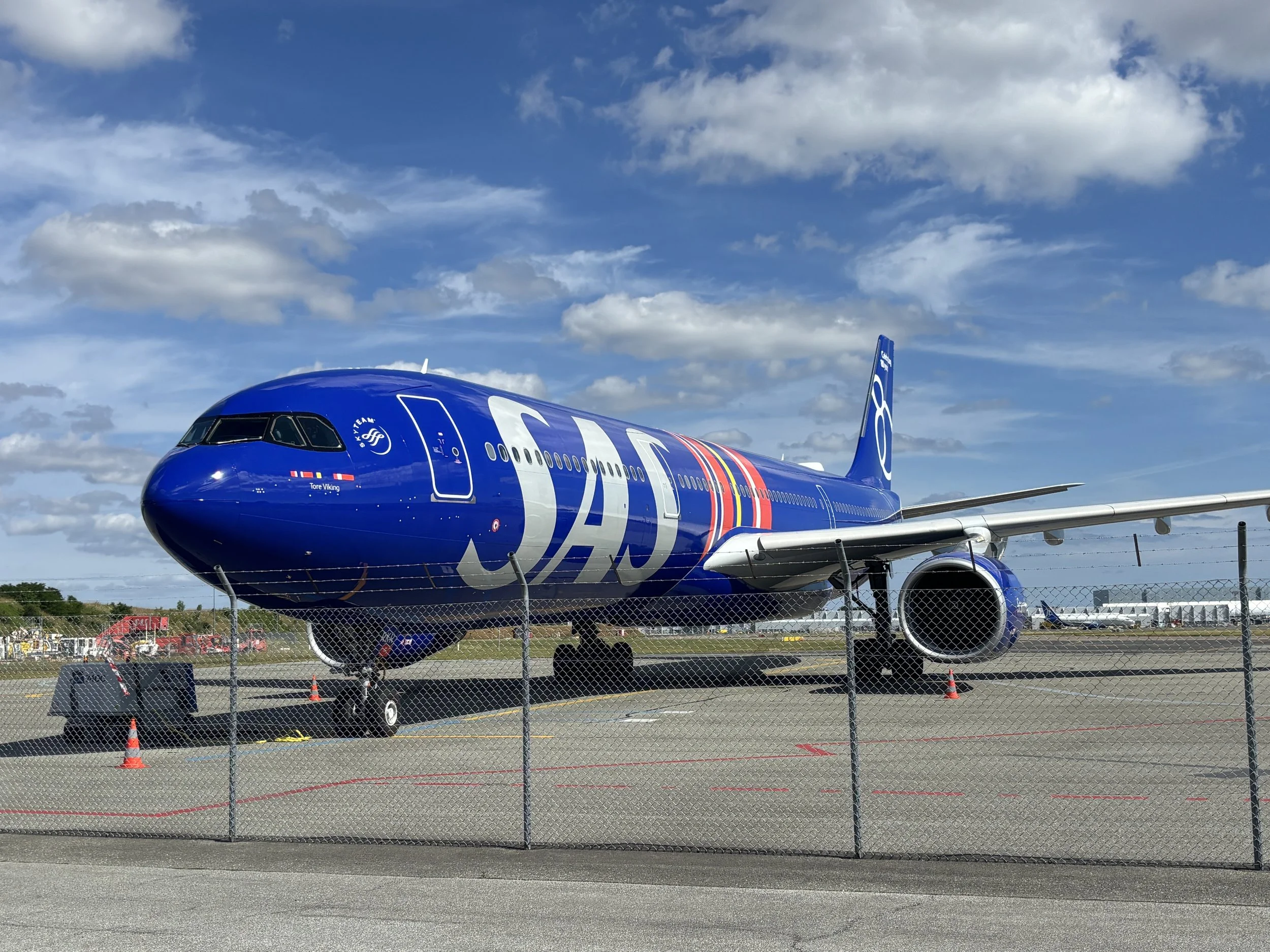
SAS's CEO is leaving the company in early 2027 to go head Air Canada.
The announcement was made just days after he announced the largest aircraft order in the history of the Scandinavian carrier.
A handful of interesting executive interviews this week:
With Vertical Aerospace's CEO, Stuart Simpson — "we are on track".
With Alex Wilcox, CEO of premium US semi-private carrier JSX — "the luxury is time".
With the new head of the Association of Asia Pacific Airlines (AAPA) — on fuel crisis and SAF struggles.
And a handful of flight reviews as well!
