The Allplane Podcast #142: how to prevent contrail formation, with Maxime Meijers (Estuaire)
In the debate about how to aviation’s contribution to global warming there is a factor that is getting an increasing amount of attention: contrails.
These happen when water vapour and particles from the aircraft’s jet exhaust form little crystals upon entering in contact with the very cold air that prevails at high altitudes. Depending on the circumstances of the time and place, those little crystals can then have one of two opposite effects.
They can either the help cool the surface of the planet by reflecting sunlight outwards, or, more often than not, they contribute to the warming by acting as a heat trap that prevents infrared radiation from dissipating.
So, if the aviation industry wants to up its commitment to preventing global warming, what can it do to prevent contrail formation?
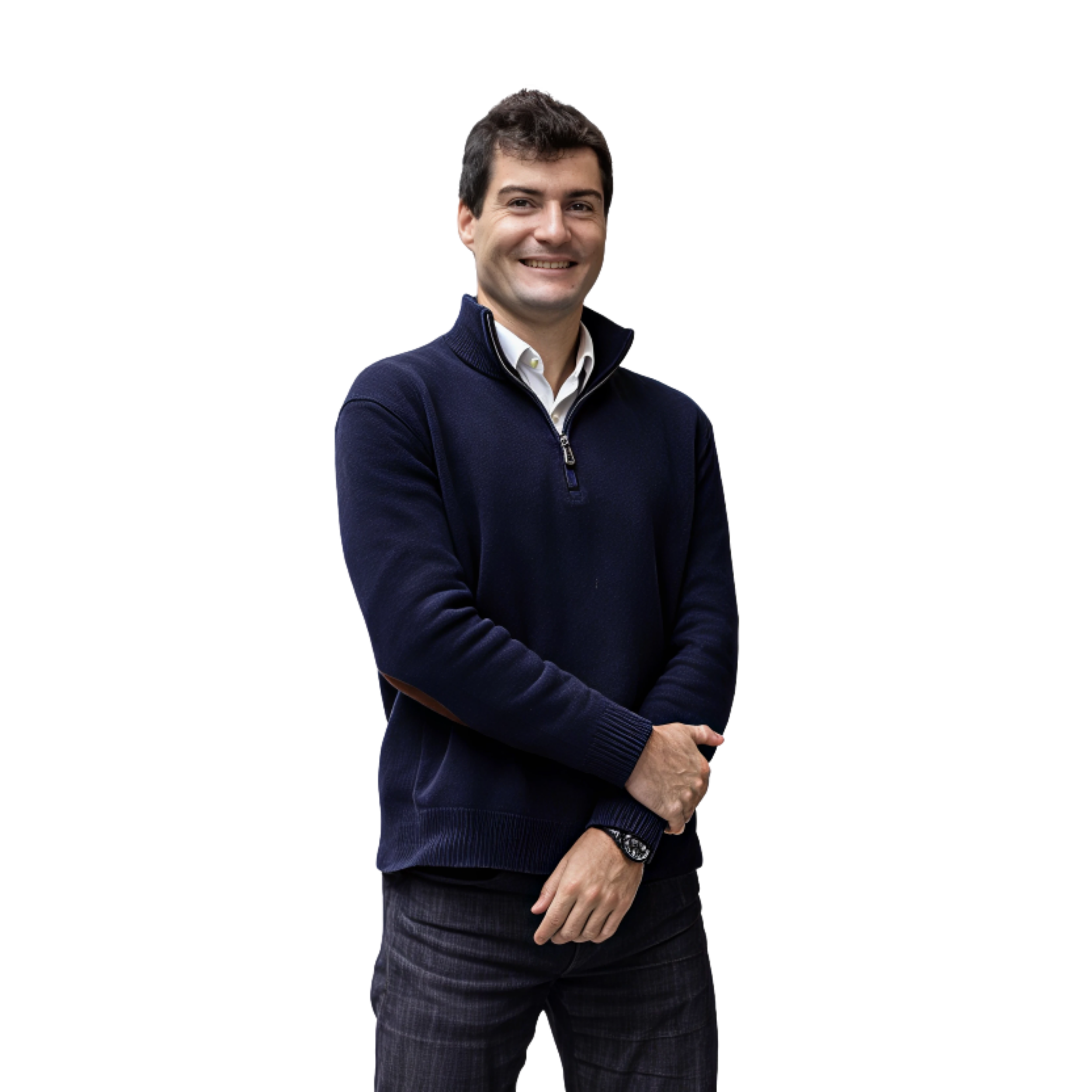
Our guest in this episode of the podcast is Maxime Meijers, founder and CEO of Estuaire, a French startup which is using technology to help airlines manage the contrail challenge.
In fact, Estuaire’s technology has the potential to help airlines optimize their flight plans for a whole set of variables, since it uses artificial intelligence and data models to find the optimal flight path. However, in this conversation we focused on contrail avoidance, since this has been so far Estuaire’s very distinctive value proposition.
With Maxime we talk about how this technology works, how is it implemented on a practical level and what is the business model that led Estuaire on the path of growth, with a number of prominent carriers, such as Vueling and Air France, using it for real.
Tune in for a fascinating conversation about the science and business of contrail prevention!
Things we talk about in this episode
Maxime’s background in aviation and entrepreneurship
The story of Estuaire and how it got started
What are contrails and why they matter for climate science
The state of contrail research
What can be done to prevent contrail formation
How Estuaire provides actionable data for airlines to optimize their flight paths
What is the business model of Estuaire and funding history
Resources
Starburst, the aerospace incubator-VC which Maxime worked at
The episode we did with Starburst’s founder, François Chopard
Google’s work in the field of contrail study
The results of Air France tests with Estuaire
The latest EU ETS system reform proposal, which includes contrail mitigation
Podcast Music: Five Armies by Kevin MacLeod
Link: https://incompetech.filmmusic.io/song/3762-five-armies
License: http://creativecommons.org/licenses/by/4.0/
Interview Transcript:
(please note that, although we strive to make it as close as possible to the original recording, the transcript may not be 100% accurate)
- Hello, Maxime. How are you?
- Good, good, and you? Thanks for having me.
- A pleasure. I think it's a conversation that I'm surprised we didn't have earlier here on this podcast, because I've been following Estuaire, the company that you founded and that you lead. I think it's doing really interesting work in the field of sustainable aviation. But first of all, like every other guest of the podcast, I would like to ask you to introduce yourself. Tell us a bit more about your background. I met you a few years ago when you were at Starburst, an incubator VC working in the field of aerospace, not just sustainable aviation, but many other things, defense and technology, etc. Then you also, I think, moved to Airbus. So you've been working in aerospace for quite a long time. Tell us more about yourself and what were the steps that led you to establish Estuaire?
- Yeah, sure. So, Maxime Meijers, 32 years old, born and raised in the south of France in Toulouse, which is well known for aviation, and that's where I first learned how to fly small planes. I got the taste for it, and wanted to work in that field.
- You have a pilot's license.
- Yeah, just small planes. I try to fly my hours, but with the company right now, I'm a bit tight.
- I can imagine.
- I still have it. I managed to maintain it.
- Great. Sorry, I interrupted you. So you were always in aviation, and you've been working at quite a few prominent companies in this space, no?
- Yeah. So after my aviation studies, I went to Starburst, which was a company that was investing in and supporting startups in the field of aerospace. And…
- The founder and director of Starburst, François Chopard, was also a guest of this podcast quite some time ago. I will recover the link for the show notes so that people can get a bit more context. I think Starburst has possibly evolved since then, because it's been quite a while and many things have happened in the world. But yeah, just a kind of flashback to the past.
- Yeah, they're very resilient. They still invest. They have a seed fund. They invest in early-stage aerospace and defense startups in the U.S. And to me, my time over there was really eye-opening. I met a lot of entrepreneurs. Some of them are still around in their companies, five to six years later. So you see what lasts, what doesn't last. You see the pitch decks, you see the fundraising, so you have a first taste. But ultimately, after a year and a half over there, I was like, okay, I want to work for a company that makes and builds aircraft, and that's when I went to Airbus Helicopters. There was the Airbus urban air mobility program over there, and they were studying all things electrification, so that's where I spent a bit of time. This was more engineering, so I liked it. It was really a lot about multidisciplinary optimization and design. So how do you understand aerodynamics, flight controls, structures? How do you make it all fit together at the early stage of an aircraft program so that your concept hits the top-level requirements? So the range, the speed, the payload. It's really a cross-functional view, and I think it's one of the most amazing jobs you can have as an aerospace engineer.
- And then after Airbus, you left to found Estuaire, which is the company that you are currently leading, and it's got a very interesting concept and technology. Tell us more about it, because I think it's a very interesting example of how the aviation industry can decarbonize, or mitigate its impact, without having to wait for new propulsion technologies or new aerodynamic designs. Just with the current aircraft and operations, doing things a bit differently with the support of technology, right?
- Yeah, exactly. So that was the founding journey of Estuaire. We were looking at the climate impact of aviation. My brother was working for an airport company, so he was also looking at this from a technical perspective, and I brought some know-how from Airbus about life cycle assessments. If you look at the impact on climate change of an aircraft over its life cycle, you'll find out that the non-CO2 effects, so everything that is not related to CO2, carry quite a significant weight. And we were like, okay, this is big, and it's not addressed. If you dig deeper, you find out that non-CO2 effects are mostly related to contrails. So the thin white clouds behind aircraft that, especially at night, have a warming effect when they last, when they persist after the aircraft has passed by. And you also find out that only 3% of the flights generate 80% of this warming effect. So this is a good lever, because changing a few things on only a few flights addresses basically up to half the climate impact of aviation.
- When you mention this 3% and 80% figure, are you referring to the non-CO2 effects or everything?
- Mostly contrails, which is one type of non-CO2 effect. Persistent warming contrails.
- Okay. So that's where you enter the picture with Estuaire. Tell us what you guys do at Estuaire in a nutshell.
- Yes. So today we have a dual strategy. On one side, we've built a data platform where we analyze all flights worldwide, and we try to understand those non-CO2 effects with state-of-the-art research and climate science models. On the other side, we are developing solutions for airlines to avoid contrails and reduce their climate impact.
- So it's basically focused 100% on contrails, or do you also cover other types of emissions with your data?
- We are pretty active on contrails, but we cover all types of emissions. So the other non-CO2 emissions as well, for example the effect of nitrogen oxides, and also, very simply, carbon dioxide emissions, which correlate with fuel consumption.
- And who are you getting this data from?
- We're actually buying a lot of trajectory data, typically ADS-B, from companies like Spire, Flightradar24 or FlightAware. All of them have different coverage in different locations, so we fetch the right data in the right place. Then we enrich this data with, for example, weather models and weather data, and we run climate models. With those additions, we produce the Estuaire database, which is the one that we sell.
- Okay, so the secret sauce is combining these data sets and adding your own algorithm or your own modeling to combine them.
- Yeah, but we really don't sell it as a black box. The weather models we use are free. The models are very often open source. It's really about bringing the pieces together, but there's nothing that's really proprietary. Everything is in the data engineering and the discipline you need to maintain this database.
- Okay, so one question that comes to my mind is how well established is contrail science? Because from what I've been reading on this topic, it looks like it's a relatively less-studied part of the broader aviation climate science than, for example, CO2 or other impacts of aviation.
- I wouldn't say that it's less studied. There's a very active community of researchers that dedicate 100% of their time to it, and it's publishing a lot. The early findings basically tell you that the problem is important. Estimating the magnitude is somewhat difficult, because you always want to express something in CO2 equivalent, and contrails are a very short-lived phenomenon. So it's sometimes hard to do. What has also been published lately is that contrail avoidance is a no-regret action for airlines, and that has been validated in very famous journals such as Nature. And one last thing: there's a lot of attention on the topic also because the EU decided to set up what they call an MRV, so a monitoring scheme. With the airlines turning their attention to it, suddenly all that scientific community that had been working on the topic came into the spotlight, and that research is much more active and much more visible today.
- I think it would be good to make a short pit stop here for people who might not be familiar with the topic of contrails. Can you tell us in a few lines why it matters, and what is the mechanism through which contrails have an impact on the climate?
- Yes, exactly. If you look up to the sky, you might see an aircraft generating a white trail. Not necessarily all the time, but sometimes they do. In some cases, those contrails (contrail actually stands for condensation trail) persist. So under certain atmospheric conditions, there's a long line that remains behind the aircraft, and ultimately this cloudiness might merge and develop into natural cloudiness. It just stays, and after a few hours, you cannot tell that it comes from an aircraft. It's just there. And just like any clouds, those contrails can block the outgoing longwave radiation. The Earth, as a warm body, sends radiation into space, and it is blocked by those contrails. On the other side, there's incoming solar radiation, which is also blocked, so that's a cooling effect. During the day, you have both the cooling and the warming component, but at night only the warming component remains, and that's what makes this phenomenon notably warming. You might notice it in winter: if you wake up in the morning and the night was clear, without clouds, it's very often very cold, because the Earth lost a lot of its heat, which radiated into space. On the contrary, if there were some clouds in the night, or if it was a rainy night, in the morning it will always be a few degrees warmer. So contrails act just like normal clouds, and because airplanes fly constantly and repetitively, that starts to have an impact for aviation as a whole.
- So basically, in order to quantify this, you are creating these maps, right, of where contrails are more likely to form when aircraft are going through. And how much freedom is there for operators to adjust their flight path? Because many of these planes follow certain motorways of the sky, right? And they are also, of course, subject to air traffic control instructions to keep distances and all that. So how much freedom to act is there for the airlines?
- Yeah, it's true. So what we typically do is fetch the information from weather forecast agencies. You try to predict where in the sky contrail areas will appear. That's typically air that is very cold and very humid. Once you have this forecast, you can try to reroute aircraft around it, and you can do this in many ways. You can do it at the flight planning level, so before the aircraft takes off, you try to design a route that avoids those areas. Typically, a very slight altitude change is enough, because those contrail areas are very thin. You can also work during the flight. Let's say the flight plan has been filed and the aircraft took off. For example, in the case of a long-haul flight, you have the latest weather information, and as a pilot you will ask the air traffic controller if you can have a different altitude, or maybe take a shortcut. This might be more or less easy to do. In Europe over the summer, it's very hard. The sky is very dense. Controllers are under a lot of pressure, so if you ask for a deviation, they need to coordinate, and this likely affects other traffic. But in some other areas, or typically in the winter, when there are a lot of contrail areas, even above Europe, there's maybe a better playground for asking for tactical deviations. In a way, we don't try to reinvent anything. We try to insert contrail avoidance into the legacy system. It's weather information, just like turbulence, just like winds. And already, for fuel efficiency, pilots tend to ask for shortcuts and deviations in flight. Even if it's not always granted, it's something they already do.
- Yeah, actually, I wanted to ask you about fuel efficiency, because in general, what would be the impact on the airlines' fuel consumption of implementing this type of rerouting? I don't know if you have calculated it. I think you're already working with some airlines with your technology, right?
- Yeah.
- So what's been the outcome in terms of fuel efficiency? Does it help them fly more efficiently as well, or is there an extra cost that they might assume because it's a good thing for the environment? I don't know what the incentives are, and also the regulatory framework coming into play.
- You're right. There's an impact, a small one, but there is an impact on fuel efficiency. First of all, not all flights today are perfectly optimized. But if you consider that, with the constraints that an airline or the dispatcher knows, they've already picked the best route in terms of costs… It's mostly about cost rather than fuel actually, even though fuel is a large share of an airline's costs.
- By cost, you would also mean overflight charges, stuff like that, in addition to fuel?
- Exactly, airspace charges as well. So if you add an additional objective, which is to avoid contrails, you might take a little hit on fuel. For example, if you descend to avoid a contrail area, you will likely burn a bit more fuel, unless the winds are very favorable. But typically you would burn more fuel, so this trade-off needs to be carefully assessed. But remember, there are only 3% of flights where you actually need to reroute the aircraft and do something. On 97% you just fly as planned, and that makes the total extra fuel negligible. It's basically diluted over the total fuel consumption of the airline. Typically, papers point towards 0.2–0.3% extra fuel at the airline level, and that's why an incentive or a business case needs to be built. You need to help airlines, because otherwise they just won't do it.
- Yeah. What are those incentives? Aside from knowing that you're doing something good for the planet, is there any other material incentive that an airline would have to avoid a contrail area?
- Yeah, that's a problem, because doing good for the planet is not a business case, unfortunately.
- Yeah.
- And actually, this summer we had a positive development with the proposed revision of the European Emissions Trading Scheme.
- Right.
- In there, for the first time, they plan to subsidize contrail avoidance, giving what are called allowances. So carbon quotas. It's a financial product, roughly 80 euros per ton of CO2 today, and they plan to give some of those free allowances to airlines in order to reward climate action. We think that's a good thing, because in order to benefit from this incentive, airlines will have to install contrail avoidance tools and use them operationally.
- And what's been the reception from the airline industry? I guess you've been talking with many airlines, you've been pitching. I've seen you attending quite a few events throughout the year. What's been the reception, the feedback you are getting from the operators?
- Everything is changing. Let's say that up to now it was mostly about the first movers. Very early on, we were working with Vueling, the low-cost carrier of the IAG Group. Fantastic over there. That started three years ago already. They were very eager to learn, implement new things and understand the phenomenon, even though there was no regulation at the time. Regulation came after. And then at the beginning of the year, we also did a trial with Air France on long-haul flights, effectively rerouting their A350 and Boeing 777 fleets flying across the North Atlantic.
- Because you can offer global coverage.
- Yes. Typically, the weather models that we get have worldwide coverage.
- Okay.
- Actually, you need to identify where there are more contrails than in other areas, and notably the North Atlantic is the hot spot. That's why we chose it in that case.
- Uh huh.
- So let's say you have the early movers, and then you have airlines with which we've been having positive discussions, but it's more wait-and-see. Some of them are like, I want to know a bit more about the research. Or now everyone's learning about that incentive and those subsidies, so it will probably trigger others into following the early movers. But overall, I can say we see good momentum on adoption.
- And in practical terms, how does it work? Is it some piece of software that they have to download, or do they connect to your servers and you do the calculations on your end? Tell us more about the implementation part of your product.
- So what we typically need to work is a flight plan. We need an OFP file, so you need to set up a data connection where we receive those flight plans as they are created, and we add the contrail forecast and the additional optimization to avoid contrails. We filter the flights: is this flight worth rerouting? This one, not? And then for those which are good candidates, we propose an alternative route that the airline can then either put back into its flight planning system, or send as a recommendation directly to the crew if the aircraft is already airborne. There are several concepts of operations, but there's always this back and forth where we receive a trajectory, we work with it, we reoptimize it, and we send it back.
- And who is your counterpart at the airline, typically?
- Very often, it's the operational control center, so dispatchers. There's always a representative from the pilot body as well.
- Uh huh. And what's the usual time frame for this kind of back-and-forth process?
- Well, it's very short. As soon as the flight plan is released, it takes probably between five and 10 minutes to compute the route, reoptimize it and send it back. We need to be on time, because if we work in a pre-tactical mode, the final flight plan very often needs to be ready and firmly validated two to three hours before the flight. So if we miss that time window, we miss our shot at reoptimizing the flight.
- And then, do you collect some sort of output results from that? Can you quantify the positive impact that your technology has had once it's been implemented?
- Yeah, there's a lot of work afterwards. If it's a campaign where you reroute a fixed number of flights, then you need to debrief. You need to check on some of those flights whether you have a good enough satellite image where you can detect the contrail and attribute it to the flight, so that you can validate what you've done. Some persistent contrails, when they're more than 20 minutes old, are visible on satellite imagery, so you can do it. You can also assess the effectiveness of your trial. If you made some recommendations, were they accepted by dispatchers? What was the pilots' reaction? If it's tactical, was ATC maybe denying a new route that you proposed? So you have a kind of cascade chart where you see where you ultimately lose in terms of climate savings, and you try to optimize those in later iterations.
- Uh huh. Because I was thinking, with this EU incentive or subsidy to avoid contrails, how do they plan to measure this? What is the unit of measure that makes it possible to provide this type of regulatory incentive?
- So today, it's only the start, and there will likely not be a system where the reward is proportional to the amount of savings. In the beginning, it will only be: are you doing something on contrails? Yes or no? If yes, okay, you get access to that pocket of funding. In parallel, there is a system developed by Eurocontrol called NEATS, which stands for Non-CO2 Effects of Aviation Tracking System, and that's the system airlines can use to monitor, flight by flight, what their non-CO2 impact is.
- And your business model: do you charge for the use of the software as a service? What's your business model?
- Yeah, exactly. Remember, we've been talking a lot here about the flight optimization product, but on the side we have the data platform. If you want to connect to our data, it's very simple: it's a license fee per year, a subscription. For contrail avoidance, if it's first a trial, then we would invoice you for the duration of the trial, considering computing costs and the time spent by our teams. And then afterwards, very similarly, it would be a yearly license for an ongoing service.
- Is artificial intelligence helping you in any way to process all this amount of data faster, something like that? I know it's a bit of a cliché, everyone is talking about artificial intelligence now, but I was thinking this is possibly one of the areas where it has more obvious applications, because of the sheer amount of data you need to compute here.
- Yeah. I can give two examples where we use AI. First of all, on the satellite imagery detection: we use very simple neural networks to detect contrails on satellite imagery, make them instances, and allocate those contrails to aircraft. Another area where we use AI is aircraft performance models. Today, a lot of those models are physics-based. So basically, you compute drag and thrust, and based on a specific fuel consumption, you go back to the fuel flow. But if you have a lot of aircraft flight data recorders, you can train AI models that directly predict the fuel flow, and this is very useful when you try to reroute an aircraft and you want to estimate what we mentioned earlier, which is the impact on fuel consumption.
- So you're a startup. What's been the trajectory so far? Are you venture capital funded? What is your growth plan, and what's the big idea behind it in terms of growth?
- When we started, we were initially bootstrapped. It was just my co-founder and I, and we had, I think, five customers at the time. And then we were like, okay, we can wait a little bit to get the next five or 10 customers, or we could accelerate a little and hire a team already. We went for that option, and the conditions, the environment, were very favorable. There were a lot of climate investors looking to deploy capital, so we raised a seed round with financial investors and also the engine OEM Safran, which has been a very good support. Since then, we are now breaking even, so the company is profitable and running, and there's no plan to raise further money at this stage.
- Okay. Interesting. So you're growing organically, huh? On your own.
- Yeah. We needed an initial kick in the beginning, but now organic growth is the way.
- And what is the vision for the future? And where do you see contrail science going more generally? I don't know if it's right to talk about an ecosystem around the contrail matter, because I think there are very few businesses focusing on this problem. But how do you see things going in the next three to five years, let's say?
- It's true that if you take a step back, it's a small community, a small ecosystem. You have, let's say, at the center this initiative, which used to be from Bill Gates' Breakthrough Energy, called Contrails.org. They're very active, and they gather the science, the airlines, and everything. Google has a contrail program, which gives a lot of visibility to the topic as well. And then you have NGOs like Transport & Environment, which are also pushing contrail agendas, and then a bunch of smaller startups and technology providers around. So that's the ecosystem today. The goal for us is to keep differentiating and remain central in that ecosystem, but ultimately broaden our flight optimization offer beyond just contrails, and look at other parameters, other phenomena, and go back to fuel efficiency a little bit, because we've seen some areas where there are definitely some improvements and savings we can still bring. It's a crowded market, there are a lot of fuel efficiency solutions, but with that contrail edge, I think we are well positioned, because working on contrails illustrates what you can do on all those other problems. It's really multi-parameter. You need to understand aircraft performance well. You need to understand weather. You need to understand climate, cloud microphysics. All those disciplines can be reused for other applications.
- Which resources would you recommend to people who wish to learn more about contrails and contrail avoidance? And also, where can they check your work, your own platform and services?
- Yes, so on our website, that's estuaire.aero. You can put a link. We have a few resources: we have an airline ranking of contrail impacts, if you want to see data, and we also have a contrail avoidance checklist, which runs you through the steps you can go through as an airline to understand the phenomenon, engage your teams, and launch a contrail avoidance program. Then there are tons of other resources. Contrails.org has a contrail map, and now also a tool that they call the Impact Explorer, so it's worth checking their website. Bill Gates himself recently published about this tool.
- That's a big name, huh?
- Yeah, it's a big name. We definitely need attention from big names, so that others look at it as well.
- Very good. Well, thank you so much, Maxime, for this very detailed explanation about this area of aviation climate science that is often not so much in the headlines, and doesn't get as much attention as CO2. It's definitely an area where I think we're going to see interesting things happening in the near future. Well, it's happening already, of course, but it's going to become a lot more mainstream, let's say. And without further ado, thanking you again for your time today, and reminding everyone that I'm going to post links and resources so that people can check all the information that you were referring to during our chat.
- Amazing! Thanks for the invitation, and thanks for shining a light on this crucial topic we're working on.
- Perfect! Thank you so much, Maxime. If you like this podcast, you can support us by giving it a great rating on Apple, Spotify, or whichever platform you get it from, and remember you can of course subscribe to it. You can also get regular updates through the Allplane website. That's allplane.tv We have a newsletter where we cover the aviation industry every week, with a special focus on innovation and sustainability. So give it a go. Thank you, and goodbye.
