The Allplane Podcast #143: leading innovation at IAG, with Nacho Tovar
International Airlines Group (IAG) is one of the world’s largest airline groups, with British Airways, Iberia, Vueling, Aer Lingus and LEVEL in its ranks. And like other leading industry players in such a technology-driven industry, IAG wants to have first row in the innovation arena.
This is the reason it created IAGi, where “i” stands for “Innovation”, a division which has the mission to keep the airline group ahead of the game when it comes to technology. It does so by deploying two different approaches: running an accelerator for startups aiming to make a splash in the travel and aviation industries, and investing directly through a €200 million ($265M) venture capital arm.
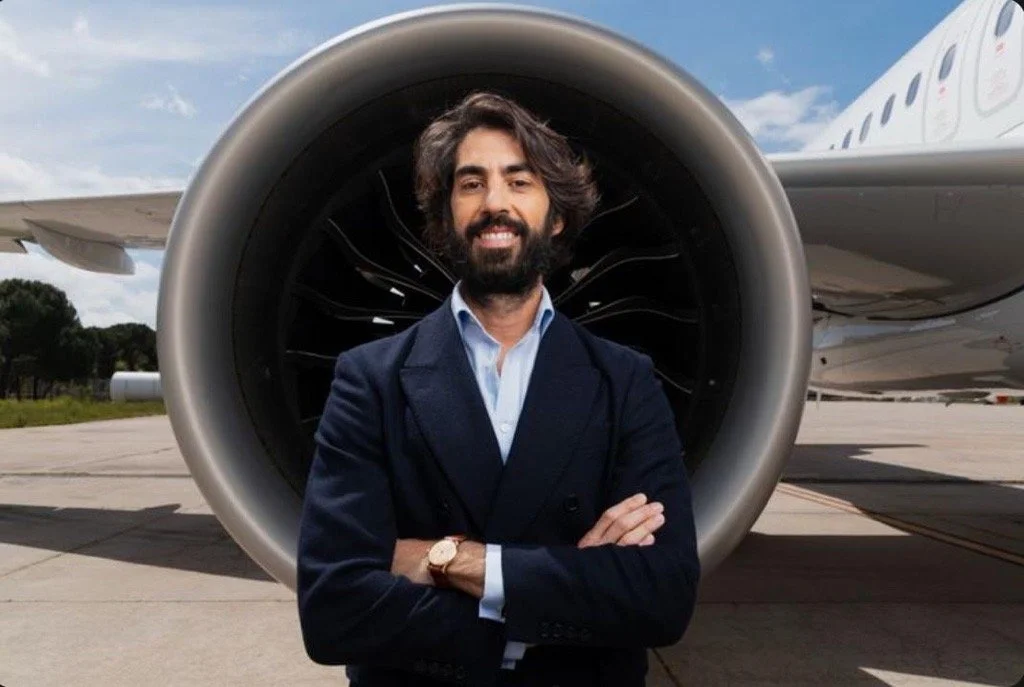
Our guest in today’s episode is, precisely, the man running these programmes. Nacho Tovar, Group Innovation Director at IAG, is an aerospace engineer turned venture capitalist.
Nacho will tell us all about how the different tracks available to startups and which criteria IAGi uses to invest in certain startups. We will also chat with Nacho about the shifting tech priorities in the airline world and about the different successes that IAGi has been collecting among the more than 120 startups that have passed through its acceleration or investment programmes in the last decade.
If you are into aviation and innovation, you can’t miss this episode, since it will provide you some truly direct insights about how a major airline group views innovation and about the options that aspiring entrepreneurs can leverage to work directly with the five carriers of IAG and perhaps even get financial backing from the group.
So, tune in for a fascinating conversation about airlines, innovation and investment with Nacho Tovar, head of IAGi!
Things we talk about in this episode
Nacho’s background: from aerospace engineer to VC
What is IAGi and how it fits into the International Airlines Group structure
How IAGi manages the innovation needs of its five airlines (British Airways, Iberia, Aer Lingus, Vueling and LEVEL)
How does the IAGi startup accelerator works
IAGi as the venture capital arm of IAG
Examples of successful startups that have passed through IAGi’s programme
What topics currently have the most interest for aviation investors
Resources
International Airlines Group (IAG)
The Plug and Play accelerator Nacho mentions
The MAKO sharkskin technology we mention
Ampaire, another of IAGi recent investments that we mention
IAGi investment in OXCCU, a sustainabile aviation fuel startup
Assaia, another startup which Nacho mentions as a success case
Podcast episode with Mukul Harharan, of United Airlines Ventures
Podcast episode with Stephen Snyder, of JetBlue Ventures (now SKY VC)
Podcast Music: Five Armies by Kevin MacLeod
Link: https://incompetech.filmmusic.io/song/3762-five-armies
License: http://creativecommons.org/licenses/by/4.0/
Interview Transcript:
(please note that, although we strive to make it as close as possible to the original recording, the transcript may not be 100% accurate)
- Hi, Nacho. How are you?
- Not so bad. Thank you so much.
- Thanks so much for being here on the pod today. We're going to talk about IAGi, which I think is one of the most prominent accelerators slash venture capital arms of an airline. Actually, of a group of airlines in this case, because International Airlines Group is the parent company of British Airways, Iberia, Vueling, Aer Lingus, Level, and I think that's it, right?
- Yeah, yeah. There are other businesses, like IAG Cargo and IAG Loyalty, which are two additional ones. But yes, those are the airlines.
- Pretty impressive portfolio of airlines, which covers pretty much the whole service spectrum, from full service all the way to low cost in Europe, long-haul low cost, hybrid. It's a very diverse group of airlines, so I guess that also broadens quite a bit the sort of solutions that interest you. Now, just before I ask you a bit about yourself and your background, I wanted to provide a bit of context, because IAGi is, I think, both an accelerator, so you are supporting startups that wish to grow and do interesting technology stuff in the aerospace and commercial aviation space, and you also have an investment arm, a venture capital arm that basically bets on some of these companies and puts money into them, right?
- Absolutely. I think that is a pretty unique value proposition for our industry. Through the accelerator, we try to fast-track testing. We want to test things live, over a limited period, 12 weeks, three months, where we work with products coming from startups, so global talent, facing real challenges for our airlines, which is extremely important for our group. And then we have the opportunity to invest. We do not just invest in startups coming from the accelerator, it's not the only source for us, but it's true that after working with them, it is pretty natural to assess them and be able to put some money into those companies that have the best fit for us. That's the venture capital side. We communicated that last year: up to 200 million to be invested over five years, with different priorities and challenges that I guess we will discuss during this podcast. So that's what it is. First of all, accelerating value and faster testing, and then backing early-stage startups that are able to generate strategic value for IAG and for the industry as a whole.
- I think the accelerator part was originally called Hangar 51, is that right? It started quite a few years ago. I think it was one of the first airline-backed accelerators out there. About a decade ago it kind of started to become a thing, and quite a few airlines have actually launched their own venture capital arms. On this podcast, we've had United Airlines Ventures, we've had JetBlue Ventures, so it's always interesting to learn how different airline groups approach this matter. In the case of IAG, you started with Hangar 51, which was purely an accelerator, and then you launched the venture capital arm last year. I think it was in 2025 that it was set up.
- Yeah, exactly. So, back to Hangar 51. We renamed the accelerator last year when we launched this new external brand called IAGi, where the "i" stands for innovation. It could have been impact or insight, but it is innovation, in fact. And we are pretty proud, because this year's cohort is going to be our 10th one. So this is our 10th anniversary, and doing this kind of thing for 10 years in a row is pretty much a miracle if you work for a corporate. We are pretty proud of that. The companies that are now alumni of our program number over 125, which is pretty impressive. I wasn't here, as you know, because I joined the accelerator last year, but the work that has been done is impressive, and having the possibility of working with more than 100 startups is interesting for them, for the industry, and for our group. And then, as you can imagine, we also communicated last year the new approach for the venture capital fund. It is true that we have invested in the equity of startups for some years now, but last year we put all that together. We formalized it. We have a renewed ambition, we redefined our priorities and our challenges, and we're taking this super seriously. Last year, I think we finished the year in the top three airlines in terms of number of investments and capital invested, and this year has started pretty interestingly as well, with some other companies whose equity we are now part of, which are now part of our portfolio, and which we can explain in a bit. So it was not just a rebranding, but a new strategy, reinforcing our ambition to work with the best talent globally to make this a reality.
- I would like to ask you about these priorities that you mentioned and some of the recent projects that you have invested in. I remember this summer you invested in Ampaire, which is one of the pioneers in hybrid flight technology. You have also invested in a company that makes exoskeletons for airport workers, I think. So it's pretty diverse, across the whole spectrum of activities that happen in commercial aviation. But first of all, I would like to open a little parenthesis here and ask about yourself, because you've been leading IAGi for how long? Maybe more than a year?
- Maybe more than a year now.
- Tell us more about yourself. How did you end up in this super interesting role, and what does your job look like on a daily basis?
- Okay, okay. I will try to keep it short and simple. I'm an engineer, starting with that, an industrial engineer. Some people don't believe me, and they think that I'm closer to art or whatever, I don't know why, because of this creativity thing, I would say. But no, I'm an engineer, and I started my career, in fact, at Airbus, in Madrid, working in logistics over there. Coming from an engineering training, I think what you learn is effort, being humble, understanding that there are so many people around who are smarter than you in that industry. And jumping into Airbus was more about understanding the magic of flying, and that is the moment where you totally fall in love with this industry and what we do.
- Yeah, we've got quite a few Airbus alumni here on the podcast.
- Then at some point, I wanted to try something in consultancy, and I worked at Accenture, where we were delivering a lot and focusing on service, customer service, the kind of things you learn when you do that kind of work. And then, I think it was 2015, one of my best friends was running a startup in Madrid that had nothing to do with aviation. It was food delivery. They had a really big exit. It was José del Barrio, who sold the company at that time to Rocket Internet, a German fund at that moment, and he had just launched a VC in Madrid that was more focused on e-commerce and marketplaces. So I decided to go there. It was a great opportunity, and I reviewed, I think, more than 1,800 companies in close to three years.
- 1,800!
- Exactly. You know that the funnel for a VC has to be super big in order to get to a good end of the funnel, a good deal, a good investment. And when I was there, I think we did something like 10 to 12 investments. Then, because I knew some of the leadership at Iberia, I had the opportunity to jump back into this industry, back into Iberia, to look after innovation and transformation at that time. So putting together the new stuff, the spark, with everything you need to do to turn that spark into real value for the company: impact on the P&L, impact on the balance sheet, impact on OTP, impact on NPS. That's what I did at Iberia. I always considered myself the new guy in town at Iberia, but I spent seven years there. And last year was the moment when someone thought it was a good idea to bring me to London and give me the opportunity to take care of innovation at group level, with, as you said, this different nature of airlines and businesses that we have. And at some point, to think a little more in the longer term than what you are able to do when you work for an airline, which is sometimes more what we call incremental innovation, what needs to happen tomorrow, in two weeks' time, in one month's time. And in this sense, that's exactly what we are doing. One of the things that we do is the one we just explained, this IAGi thing with Ventures and the accelerator inside.
- And you're based in London, so IAGi is based in London?
- It is based in London. I would say it is based everywhere. We need to be where…
- You take applications from startups from everywhere, basically.
- Absolutely, and not just that. Our ambition is to work with, as I said, the best talent globally, no matter if it's coming from Australia, and in fact one of the recent deals that you mentioned is coming from Australia, or from the United States. As you can imagine, a lot of them come naturally from our hubs. We operate from Dublin, from London, from Barcelona, from Madrid, and it's pretty natural for us to get deal flow coming especially from the UK and Spain. But a lot of it is coming from the US. A lot of our alumni come from the US, and a lot of our investments are definitely in the US. So yes, we are international, and we work closely with our opcos. That's one of my messages today: in everything we do, we are chasing strategic value for the airlines, for the businesses, for the group, and therefore you need to work with them. In the case of the accelerator, for example, it's the airlines deciding and selecting which companies are going to be working with them in every single cohort we have every year, which is important. We don't start the process by just bringing a technology in and having a discussion about what you can do with it. It's the other way around. We start with a challenge, a real challenge from the opcos, and then we go to the market and try to find the best people and the best products that could help us and them, to work in this accelerator. And the airlines need to take this seriously, so it is extremely important for us that they have the accountability and that they decide. Because this is not something that you do on Friday afternoons. You need to dedicate the right assets and the right time in order to get the right value back. It's always the same: you get what you put in, and in this case, it's pretty much that.
- Well, I've got questions. First of all, how does IAGi sit within the structure of the group, and what is the relation with each of the individual airlines? Because I'm not sure: do each of these individual airlines have their own innovation department or venture arm, or however you want to call it?
- We can separate what is more innovation from venturing or acceleration. In terms of IAGi, we built it to be managed centrally, supporting the rest of the group, with limited exceptions on certain programs happening at BA. The accelerator is something that we do at group level, because there's magic and value in scale, and it has shown in the past that this is the best way to approach it. Also because at IAG we work with partners like Plug and Play, which is potentially the biggest accelerator in the world, to support us in both the scouting phase and selecting the startups, so it's easier for us to coordinate that from a central perspective. In terms of venture capital, we also invest centrally. None of the airlines are actually doing investment in the equity of startups today. But they collaborate with us, as you can imagine, at different levels. Sometimes we need them to bring startups, and we have a kind of program that we call Innovate Yourself and Invest Yourself, where every individual inside IAG can contact the venture capital team to present a startup that they know or work with, and that could be worth assessing for a potential investment, and that is super good. So the opcos contribute to scouting. The opcos contribute to the assessment, because they are sometimes the experts. If someone presents an AI company oriented to commercial, you need to speak with the commercial teams of both IAG and the different airlines to assess it. And then, of course, they support us in the scaling. What we call strategic value is never going to happen if it's not live in one of the airlines or opcos of the group. That is the only way to generate impact. We could be generating financial impact if we just invest and have an exit, the company is acquired, or there's a secondary deal or whatever, and we get our money back, which is good. As an investment manager, if I put 1 million in there and get three million back in one year, that's a good return. Somebody's going to tell us "well done", but it is not why we exist. We exist to generate real impact and to create the game changers that are going to drive the future of innovation, of airlines, of the way we fly and the way we live, I would say. That is the ambition. So we are an internal venture capital fund with a strategic angle rather than a financial one. As I said, financial returns are always welcome, but we're here to change the landscape and the way we fly.
- And the other question is: how does this work in practice? Let's say I'm a startup and I want to be part of this accelerator program. What can I expect, and what is the usual path I need to follow?
- Typically, we do one acceleration program a year, so we have one cohort, in this case the 10th anniversary that I just mentioned. And we have specific windows. Right now, we've done the scouting phase, and we are closing the contracts and the collaborations to start in September doing the real stuff with the airlines.
- So it starts in September every year, each cohort?
- The scouting phase started around March, I would say.
- Okay, for the next cohort.
- Yeah, exactly. But I would like to highlight that some years ago we changed the approach a little, so that startups don't see this as a closed program. If you miss the March to June window, you're not out. That's not the reality. We always keep an open innovation window that is open the whole year. So if you contact us and we are outside the accelerator timing, we're definitely going to evaluate whether there's a potential trial that makes sense with our airlines and our businesses. Or even if you're raising and closing your seed round, your Series A or your Series B, it will be assessed by the venture capital fund. So it's always a good time to get closer to IAG. We will evaluate you, and you will evaluate us, because that's another important message: we only do things with those startups that also feel that they're going to get value back from IAG. And I honestly believe that, as part of the team, like myself, are coming from venture capital, I know what it takes to be an investor and to kill a startup from one day to the next. If there isn't the right collaboration dynamic, you can really hurt a startup, and the other way around: a startup can really cause pain to an airline if you don't manage it properly. In this case, I think we understand the language of open innovation, and after a decade of doing acceleration, I honestly believe we are in a good position now.
- Okay. And then, let's say I'm accepted into the program. What can I expect in practical terms? Do I need to move to London for a period of time? What happens during the period when you are in the program?
- Maybe it's the right time to explain that inside the accelerator, last year we had two different tracks. The first one is what we call Deploy, and this is for those startups that have a concrete product that they just want to test. What you can expect is that we are not asking people to come to London. Remember that it is going to be in the different hubs of the airlines. It could be that you collaborate with just Iberia, just Vueling, just BA, just Aer Lingus, with two of them, with three of them, or with all of them at some point. So this is not an in-person program. This is a value-oriented program. We will do whatever is required for the startup and ourselves to succeed during the next 12 weeks. Sometimes, if there's a company from Australia, it's not that easy for them to come here, so we set up the right method to be able to iterate. And the other track that we have is what we call Discover. That is more related to earlier-stage products, where you are expecting from the airline, or the group of airlines, more support and advice to build the right product and to speak with the right experts. It might not look like a highly valuable thing, but we tested it last year and it was extremely valuable. In some fields, for example, as you can imagine, SAF, sustainable aviation fuel, and the future of that, we were speaking with companies that didn't have the facilities or the right products yet, and that were testing an approach. And the interest from an airline, and speaking with some SMEs from IAG, was super interesting for them. So, as a summary, it is not a closed thing. We just chase value for both of us, both the startup and IAG. And I would always recommend getting closer to the business when you do this kind of stuff. Being 100% remote is not always the same. Although you can make it work, it is better to get closer. If you're working on something operational, for example, and you need to be in the hangar, sometimes you need to be there. That is better, I would say, but we have many ways of approaching this.
- Particularly in aviation. I've been working with some airline technology companies, and I know it's a particularly difficult sector to get into in any case, but particularly if you are a startup, because there are so many risk elements from a commercial and operational point of view. My experience is that all airlines are extremely careful when they evaluate new products or technologies, because they are very aware of all the cascading effects these can have on their operations, in some areas more than others. But still, it's a very high-profile business, and it obviously has many risks that need to be mitigated.
- Absolutely, and I agree. We have to admit that we are regulated, so this is not like other industries, like food delivery, for example.
- Exactly.
- But the reality is that safety and security are principle number one in everything you do. That has to be that way, and we keep it that way. And to those companies coming to me and saying exactly that, how complicated it is to become a customer, what I would say is: if you bring something that is important enough, if you're tackling a big challenge, if you are not bringing, as we said, a blockchain thing just for the sake of doing blockchain, but something that is going to support us in the way we sell, in the way we manage fuel, in the way we manage our operations and become more punctual, in the way we support our people, you're going to be listened to 100%. And I think we have broken those walls where a director of a big corporate could never be accessible to a young, talented startup founder. I can clearly see that after 10 years, because I saw it from an Iberia perspective. At the very beginning, we were more like facilitators, and now you can see startups in our corridors and our buildings, and that's important. But the message is: if the problem that you are trying to solve is not big enough for us, you will never be listened to, because there are so many things that we need to change and solve in our industry. Which is another good thing: the upside is huge. There's still a lot of stuff that we really need to do in a different way, and challenges, as you know, come every day in this industry. But on the other hand, this is a trillion-dollar opportunity. Everyone is flying globally, the sector is growing, so whenever you manage to hit the sweet spot, the opportunity is going to be great. So from here, I want to send the message to the world that we need entrepreneurs focused on our industry. This is a huge opportunity. There are lots of things to do. No one said it was going to be easy, but then again, if you go to finance, it's not easy either. If you go to retail, there are other components that make the equation complicated. But it's a good opportunity, I would say.
- And this support you provide, money aside: is it mentoring? Is it a certain number of stages or milestones you need to hit, with some exchange of know-how? How would you define this support?
- Exactly. I would say that what startups need at the very beginning is customers, and customers that pay. That's important. So they need money, they need support, and not money just from someone jumping into the equity, as you said. You need scale, you need learnings, and at some point you need assets. Depending on the stage of your startup, sometimes we become the first customer, so that you are able to sell on board, you're able to guide our customers in an airport, you're able to support our maintenance team in doing something. And as you can imagine, the portfolio of assets that IAG and the different parts of the group can provide to the startups is immense. There's no process globally that doesn't have a fit in one of our internal processes. No matter if you do HR, AI-oriented things, operational stuff, commercial, customers, maintenance, finance, back office, infrastructure, facilities: we are a super big company, with, as you said, airlines that are more low cost, point to point, more premium, long haul, flying 120 million customers a year to hundreds of destinations. And that's exactly what the feedback from these startups is telling us: that the amount of assets you can access is impressive. On the other hand, there's also the support from our team, the innovation team, which tries to facilitate getting things done. That's an important step. You have specific legal support, procurement support, IT support, cyber support, AI support, which, being a big corporation, can sometimes be difficult to find. If you don't speak to the right stakeholder, or you don't follow a specific process, you suddenly get to a point where working with, I don't know, Volantio, which is a company in our portfolio, is the same in terms of contracts as implementing SAP, and it is not. So you need to manage all that, and I think that's pretty much the unique proposition from our side. And a specific path to get to the value, real talent and real value orientation. When you start working with us, you will see in one line what it is that we need to achieve. For example, right now, being able to test shark skin on the fuselage of an aircraft, to see if you are able to reduce drag, reduce emissions and be more efficient. That is one line. And then you need to understand what needs to happen to get there. But the ambition is going to be clear, and you will find people that take this seriously, as we said. It's not about taking a picture with a startup guy with sneakers and a beard and whatever, and just using it as PR. This is not a PR move at all. It is not. And it is perfectly respectable if others are doing that, and there's a PR component to this too, but we are chasing value, and we are chasing a change in the industry. That's what we do. And then money: if, at the end of that path, you can get some money to accelerate what you want to do and evolve the product, that's what we can offer as well.
- Yeah, that's good. Actually, that was my next question. So companies that go through this program might get investment, and some companies that are not part of the program might also get investment. But when we look at the venture capital arm of IAGi, what would you say differentiates it from a generalist or mainstream VC firm?
- I used to be part of a generalist VC where we said that we were hands-on. It's not easy money like you could get from other sources, like a loan, a bank, or friends and family. When you jump into VC, it's a different stage, and we were hands-on. But I would say we were not really, compared with what I do today. Here we are really hands-on: we offer, as we said, the assets, and you can really test. Your potential first customers could be our own airlines, and then we can jump into oneworld, and so on. So the level of connection and access, not just to money, but also, as we said, to assets and customers, is huge. And we want you to succeed, which is important. Again, repeating that if you're chasing financial value or strategic value, the strategic piece is what we're looking for, and to get that, we really need you to scale up, to be successful and to grow, because otherwise it's never going to be something material or important for us. So that sense of being strategic is a differentiation, I would say, from generalist VCs, where if you get a good return, that's okay, and if the company dies two months after that, that will be okay too. In our case, we are building partnerships. And that's a super good discussion: we could decide to just become a customer, so you get to a commercial agreement, and that's what you are, which is good. Or you put some money in and then become a customer, but then you are part of the equity, part of the ownership, sometimes part of the board, and you support them in their growth and their operations. And in my opinion, we put money in when the product is potentially not that evolved. It's more an early-stage product that is not fitting 100% what we need from an IAG perspective, or even sometimes from an airline or industry perspective. But it's pretty clear that if you support it, you're going to be shaping a product that is really valuable for you in some months, or a couple of years, I would say. And that's also an important piece, because we can accelerate your path, accelerate the value, and accelerate your level of fit for our industry. Sometimes you see AI agents that support operations and processes, but are more related to, I don't know, automotive manufacturing, so cars, rather than an MRO business or an airline. But if you support that with some funding, it could be adapted in six months or a year and really cover one of your challenges, and that is important. And sometimes we…
- Sorry. And you co-invest, I guess, with other venture capital firms?
- Absolutely, it is pretty common. Sometimes we are followers, not lead investors. Sometimes, if it is super strategic and there's a need, we lead. But sometimes there are requirements when you lead, like board positions and so on, and we sometimes limit that. We are observers, in a way. But yes, we are mostly followers, so we co-invest. And we don't co-invest just with other airlines, as we did in the case of JetBlue, for example, which you mentioned, or United, where we have common portfolio companies. We also invest with other big corporate VCs, like Aramco, which is one example, or Salesforce, or Google, or Samsung. They're around, and we are super open to that, depending on the case, of course.
- And what's your average ticket?
- We typically invest, I would say, within a big range, from 300k to 10 million.
- In which currency? Pounds, dollars, euros?
- In this case, it's more pounds. What I'm trying to clarify is that the bigger tickets typically come from sustainability investments, our green portfolio, so SAF, sustainable aviation fuel, where bigger capital was required. But that's not typical. A typical investment would be around 1 to 2 million, getting from 2% to 10% of the ownership, and again looking for strategic value for us, globally. It doesn't matter where you work. And typically it's also aviation-oriented. It's not like the strategy of other funds: we do not invest in electric bicycles just because it is mobility and close to us. We are really focusing on certain priorities and areas where we strongly believe there could be a huge impact for us.
- So, when it comes to priorities, do you have specific criteria right now? You mentioned earlier that there has been a change in priorities recently. What are the main themes, the main areas? Because of course, aviation and aerospace is huge, even bigger if you consider travel as a single category. What are the main things you're looking for in companies, the sort of problems they are trying to tackle?
- Yeah. So, surprise, surprise: I would say AI. The AI revolution. We look at it from two angles. One is what we call digital AI, so the new GenAI and agentic revolution. We are looking for people and talent that are trying to solve specific aviation issues. Imagine someone who is really focusing vertically on, I don't know, improving our operations, that kind of stuff. What we're typically seeing is engineering teams getting closer to AI and doing some magic around that. That's extremely interesting for us. Or the way we sell in the future: distribution and commercial is another super big, interesting space.
- Yeah, I actually read that Y Combinator now has something like 80 or 90% AI-related startups. So there's definitely a big trend there.
- Exactly. That also happened to us. In this year's cohort, our 10th anniversary, over 85% of the companies are AI-oriented. It's true that everyone is also trying to find an AI angle, because it's what is important today. So whatever you do, you need to find the angle of AI that supports your thing. But yes, it's extremely important for us.
- And I guess a few years ago, sustainability was a big thing. Not that it's not now, but I guess it's maybe been pushed a bit down the priority list.
- It is still a priority for us. In fact, one of the deals that we communicated during these last five to six months was OXCCU, which is actually a third-generation SAF company. So it is still there. So, starting with AI, I discussed the digital angle, and then there's also physical AI. As Amazon would say, it comes in three waves: robotics, then autonomous, and then humanoids. This field is also extremely important for us, and we put it together within this AI revolution field. So that's number one. Number two, and this is not in order, I'm just explaining the three or four things that we are actually focusing on today: connectivity.
- Okay.
- So everything related to that. We signed an agreement with Starlink to have high-speed Wi-Fi on board more than 500 aircraft, so the whole IAG fleet.
- So was that managed by you, this sort of…
- At group level. We didn't explain it, but to summarize: we explained IAGi, the accelerator and Ventures, and then we have two other things. The third is more like an R&D lab, and the fourth is what we call IAG Connect. Today we are responsible for managing the current Wi-Fi, but now we're more excited than ever, because we also reached that agreement for the whole group, and we're working with all the airlines to get this one gigabit per second per aircraft, which is a complete game changer. Not just for our customers to be consuming Netflix or HBO. It's more about how you can manage operations, commercial, crew. It's going to be a game changer for us, so we're doing many things around this new enabler. We consider AI an enabler of real business challenges, and connectivity is another one. The kind of things you can do to manage disruptions in flight, and being able to leverage the 10 hours of a Miami–Madrid flight for our customers and our operations, is extremely important. And then there's the data linked to all this. The way you generate and manage data in this new, 100% connected world is important for us. So that is number two. Then I would say there's something around what we call experiential platforms. One example is seamless travel and everything around digital identity, for example.
- Okay.
- Americans are now able to use Apple or Google Wallet to carry their passport or whatever, and that could simplify many of the processes that we have at airports. And the last one is a mix of things that we usually refer to as being resilient and the future of our business. In there we put sustainability, which we just mentioned, not just SAF but other initiatives, like recent investments such as MAKO or Ampaire.
- Ampaire as well, exactly.
- Yeah, yeah.
- The MAKO one is shark skin, right? It's an Australian company. That's very interesting. I know that one of your competitors, Lufthansa Group, has its own shark skin solution as well, and now IAG also has its own shark skin solution.
- We are trying to support this product because we understood it was extremely promising and positive, given the different testing they have done, though not with purely commercial short-haul or long-haul aircraft. And that's exactly what we want to support them in: starting in Europe, launching the first testing. And also around robotics, which we communicated in the previous months, and that's a good example. My vision is long-term vision, short-term execution, and it has to be a multi-million opportunity if things go well, or a big shift in on-time performance or NPS. If you manage to do this properly, it's going to be important, and that is the case here, with the way you can reduce drag if these guys get to the right product. And we believe they did, and they will, with our support as well as others'. It's a super good example.
- Maybe I should add a line here to explain shark skin for people who might not be familiar with it. It's basically adding a surface to the fuselage, to some areas of the aircraft. It's like an adhesive film that you cover the fuselage with, and it's called shark skin because I think it's inspired by the texture of the skin of the… it's like…
- A fish. Like in nature.
- And it reduces drag, makes flying more efficient, so the aircraft consumes less fuel because of this surface you put on it. And I think it's in the order of 1% to 3%, something like that.
- That is kind of the ambition. But it doesn't matter: if it's 1%, that would be huge.
- Yeah, it's still big. Across 500 aircraft, that's a lot of fuel you are saving. And we've talked about these specific companies, but what would you say have been the main success stories in these 10 years? Companies that have gone through the program and are now fully consolidated and doing great stuff out there?
- Yeah, we have a couple of those. I can think of Assaia. Assaia is an AI company that we are using to put video analytics on cameras in the turnaround of an aircraft. That can support you, first of all, to generate data, secondly to understand what's happening, and thirdly to optimize. And it's a good sign of how open we are as IAG, because we were one of the first investors, and now they have many more investors and are operating all over the world. It's not just Heathrow, where we are planning to cover the whole of Heathrow very soon, and where it's actually live and operating with us. That was a company that came from the accelerator, was then tested at Heathrow, scaled at Heathrow, and now they're managing thousands of stands all over the world. That's a good example of something concrete, something that is not purely customer-oriented or commercial-oriented, which is where you naturally start. It's easy to think about how you improve the app or the website, but this was not that clear some years ago. We made this bet, it's really helping us, they are growing, and we're super proud of how they are performing now. Another one, more on the commercial and customer side, could be Volantio.
- Uh huh.
- Volantio is working to optimize revenue for airlines, supporting processes like how you manage disruptions or how you manage overbooking. It's a clear example of how a product evolves, because they started some years ago, when AI was not that clear or that mature, and now it's a purely AI company, an AI platform. They have a new product called Vector that is amazing. In fact, I was at Iberia then, and we selected Volantio to work with us. The chief commercial and customer officer at that time was Marco Sansavini, who is today the CEO of Iberia.
- Yes.
- And he took it seriously, and so did the founder of the company.
- Yeah, I actually met him. I had the chance to speak with him at the World Aviation Festival last year. Very interesting product, and they are making good progress. I think they signed with Southwest Airlines in the US, which is a big win for them.
- Yeah, and they got closer to Amadeus, which is another big win, because of all the penetration you can have through that kind of partnership. And there are a lot of other examples, like Geofund, where we are trying to manage the complexity of staff contracts and back office, end to end. As part of these more than 100 alumni companies, there have been big successes, and we are always trying to measure the success of our program with different KPIs. The first one is whether you are able to attract the right talent: how many companies register for the program at the very beginning, at the earliest stage of the funnel.
That is typically between 300 and 500 companies, also with the support of partners like Plug and Play, which I mentioned before. So we believe we are able to attract talent. That's point number one. Then, whether you are able to build something tangible: how many of those you select, and how many you get to set up products with. Then, whether you are able to sign a commercial agreement after the trials, because you do not want to have these walking-dead POCs that never pay, that never go anywhere. That's something we want to avoid, and we hate it. And then, whether you continue collaborating with those companies after two years.
That shows whether they are really generating an impact on what you do as an airline, and whether you are able to pay. There are so many companies that are still there, not just from the accelerator, but also from a venture capital perspective, and those two are good examples. And what else? A potential exit that we communicated. We had an investment in a company called ALL.SPACE. They do antennas, hardware plus software, for onboard connectivity for our aircraft, and they are technology-agnostic, so both low Earth orbit and geostationary technology, and potentially also agnostic to the supplier or partner. It could be Amazon Leo or Starlink.
And they were acquired by a publicly listed company, York Space Systems, in a super big deal at the beginning of the year, and we're also super proud of that. It wasn't long ago that we invested, I think it was nine months, so that's again a good financial return for us. In this case, not that much strategic value, because they were acquired before that, and now we are starting with the whole fleet. But it is another good example. Having liquidity, and being able to show that our companies also have good exits and get acquired, is also important. It's not just a matter of strategic value for us, but also of supporting them in their growth and maturity.
- Of course. If there are startups out there that wish to apply to your program, what should they do?
- I don't know if you are sharing personal contacts, but I will put my own one there. If not, you can go to our website, IAGi, and you will see that there are different ways of contacting us. There's a single, simple survey where you can put in your data and add a deck if you want, and we will contact you within some hours, or a couple of days at most.
- Perfect. I will certainly include that in the episode show notes so that people can check it out. We've covered lots of ground. It's been really fascinating. Of course, you are touching upon so many different topics and companies that we could spend hours here talking about all the different things you're involved in, but I think that was a great overview of what you guys do at IAGi, which I think is one of the most active airline-led accelerators slash VCs out there. And I'm hopeful that this will also serve as inspiration to entrepreneurs out there who are thinking about how they can scale up their business and get into this industry. So it's just left for me to say thank you so much, Nacho, for the chat today, and hopefully I'll see you at some of the upcoming industry events, where I think we are possibly going to coincide in a few weeks.
- Absolutely. Thank you so much, Miquel. It was my pleasure, and my honor, after you've had some of my colleagues from United and JetBlue. Hopefully you found it interesting, and all the rest of the audience too. And please, for the entrepreneurs out there: invest in this industry, invest in travel and aviation. It is worth it. You will get returns, 100%. And please contact us for whatever you need. Thank you very much, Miquel.
- Perfect. Thank you so much. If you like this podcast, you can support us by giving it a great rating on Apple, Spotify, or whichever platform you get it from. And remember, you can of course subscribe to it, and you can also get regular updates through the Allplane website. That's allplane.tv. We have a newsletter where we cover the aviation industry every week, with a special focus on innovation and sustainability. So give it a go. Thank you, and goodbye.
