eMobility World Congress: a glimpse of Spain’s aviation innovation ecosystem

The eMobility World Congress - MOW 2026 took place in the city of Malaga, the capital of Spain’s Costa del Sol on March 10-11, 2026.

This is a multi-sector event that is structured around the topic of sustainability, autonomy, electrification and connectivity in the transportation industry.
And, while land transportation is, perhaps, the largest of its sections, this year it featured also a whole advanced air mobility track that gathered some of the most prominent names of the aerospace industry in Spain.
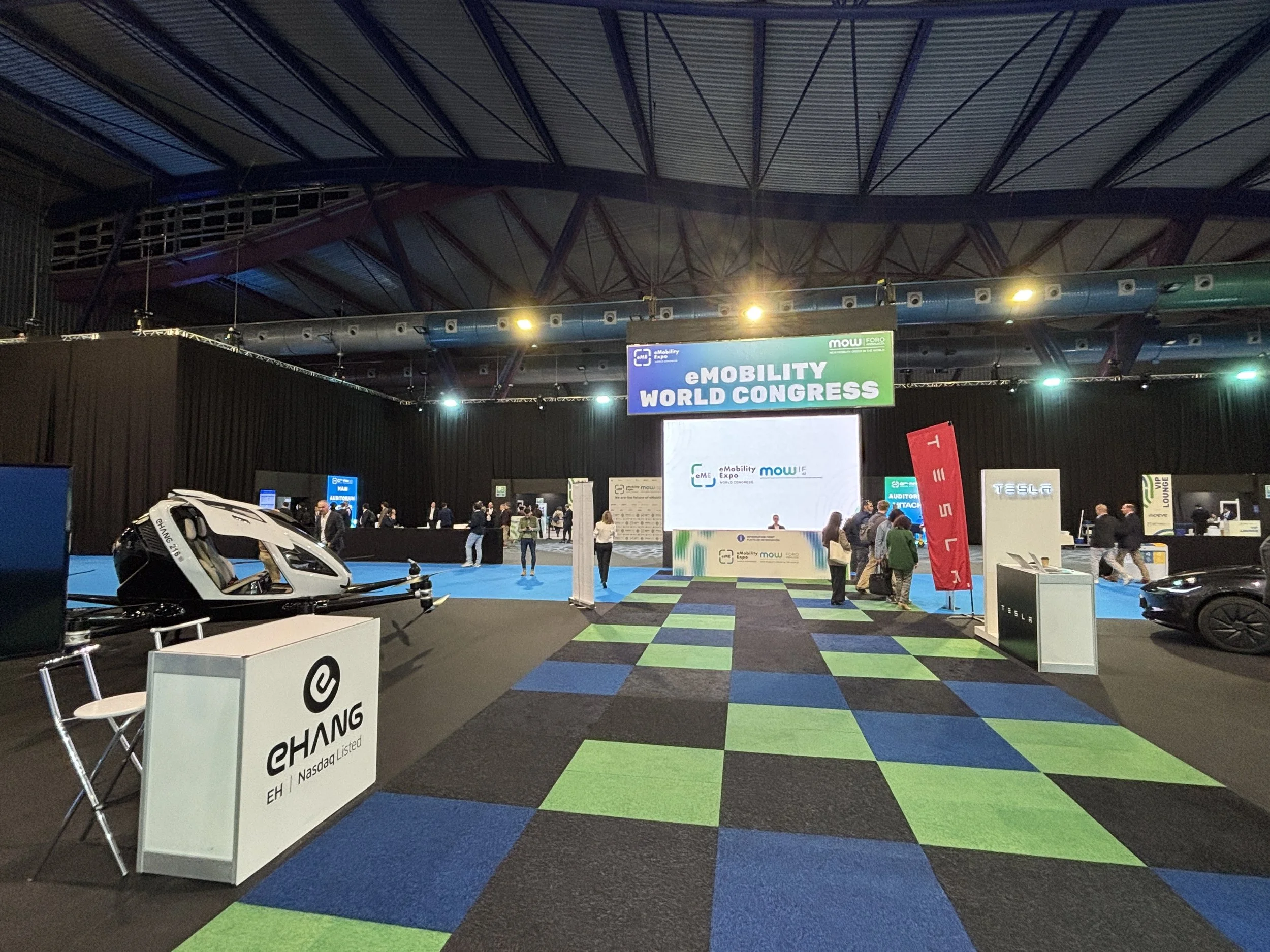
The event has, in fact, two major components: the conference programme where I ‘d say, most of the action takes place, with up to four tracks (organized by topic) running in parallel, and an exhibition area.
Smart airlines, smart airports & the outlook for 2026
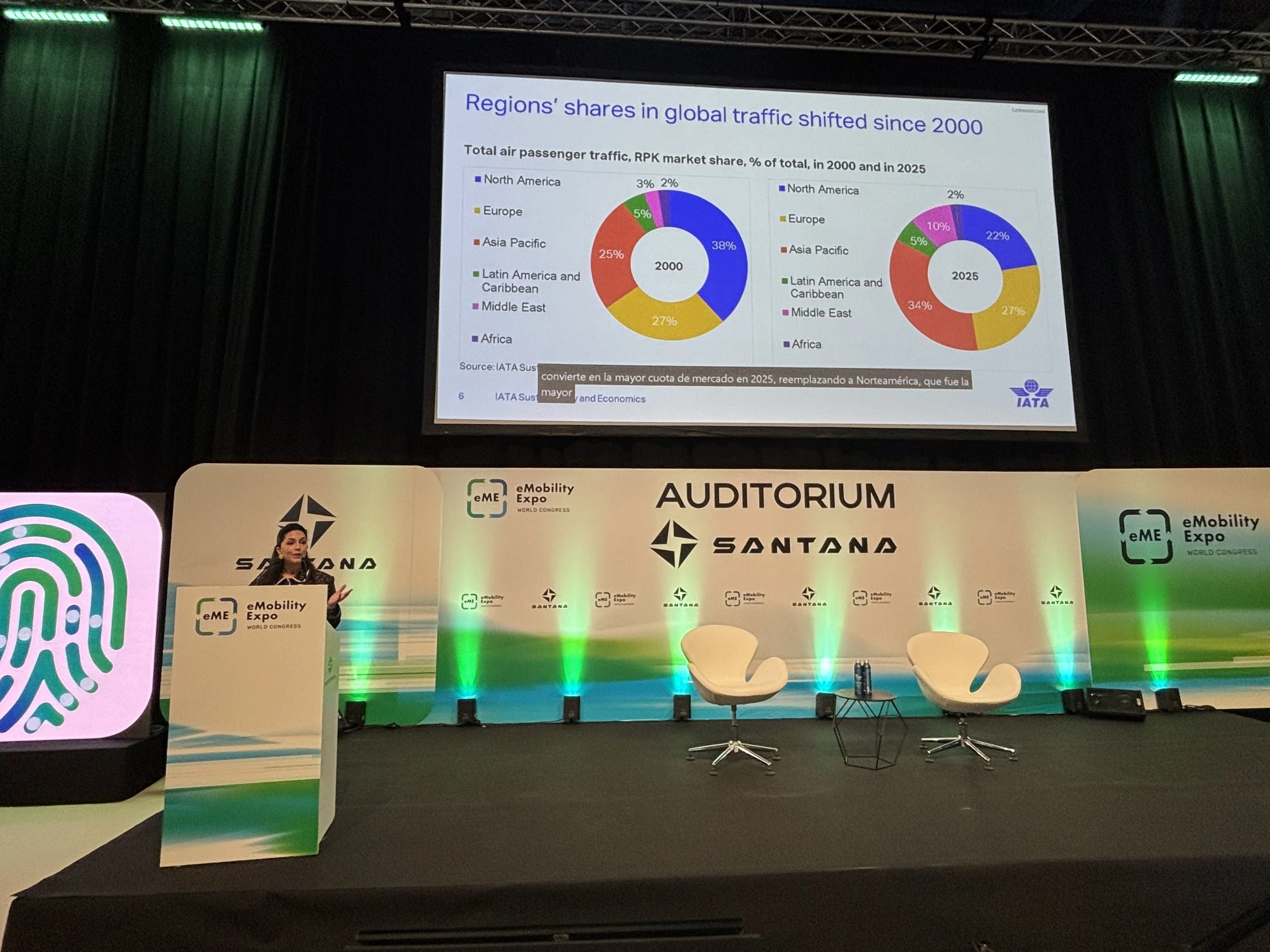
IATA economist Negar Rezvany shared the industry’s outlook for 2026
One of the interesting aspects of this event is, precisely, this multi-sector approach. As someone used to attending aviation conferences, it was refreshing to mingle as well with fellow professionals in adjacent industries.
If was to highlight a major takeaway from these interactions is that much of what is going on in the aviation industry in terms of innovation and sustainability is, by and large, still contained within our own industry.
Even in other branches of the transportation industry there seems to be but a vague notion of the developments that are currently underway in advanced air mobility, in novel aircraft design or in new propulsion technologies.
So, while some of the topics discussed there may have sounded familiar to regulars of the aerospace conference circuit, I am sure helped spread the word about some of the projects that will likely transform the way we fly in the next few decades.
Rosa Nordfeldt, head of sustainability at Air Europa, and Alejandra Ruiz, head of communications for Spain at Ryanair, went on stage to provide some insights about what these two airlines are doing in the field of innovation.
While, I had the chance to debate about the bottlenecks of technology adoption at airports with the Director of Tourism of the Andalusia region as well as the directors of two very different types of airports, Málaga and Teruel, both in Spain. The former is one of Spain’s largest and fastest growing airports, while the latter is a rather unique example of an airport entirely devoted to industrial activities, from aircraft storage to aerospace experimentation (an activity which I had the chance to write about for CNN a few years ago).
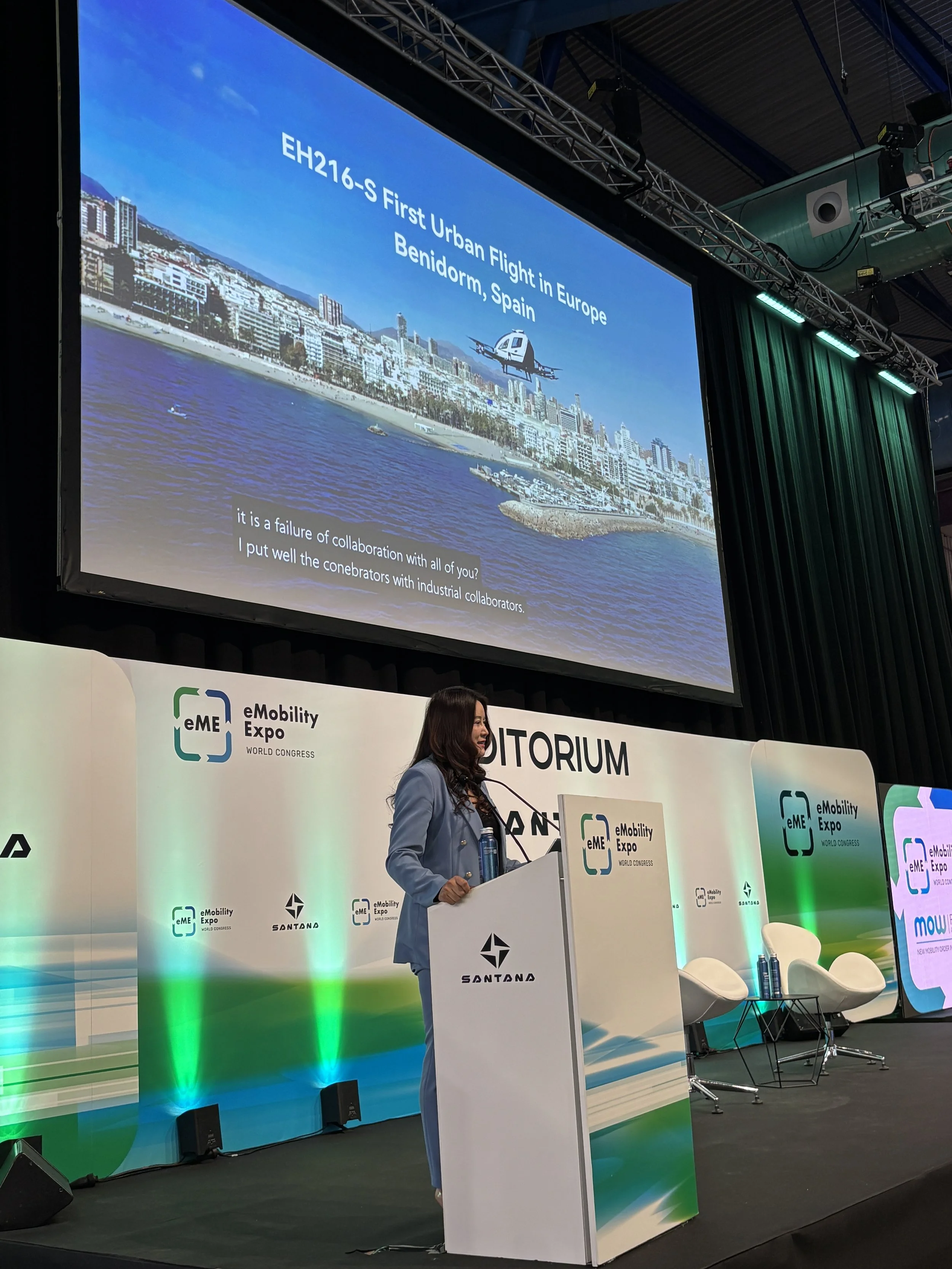
Victoria Xiang, COO of EHang for Europe and Latin America, for example, shared some details about the progress the Chinese eVTOL developer has been making.
EHang, which is already certified for some types of missions in China, is currently using Lleida-Alguaire airport, in Catalonia, as its European testbank. The Chinese firm has also performed some public demos in Spain, for example, in the seaside resort of Benidorm.
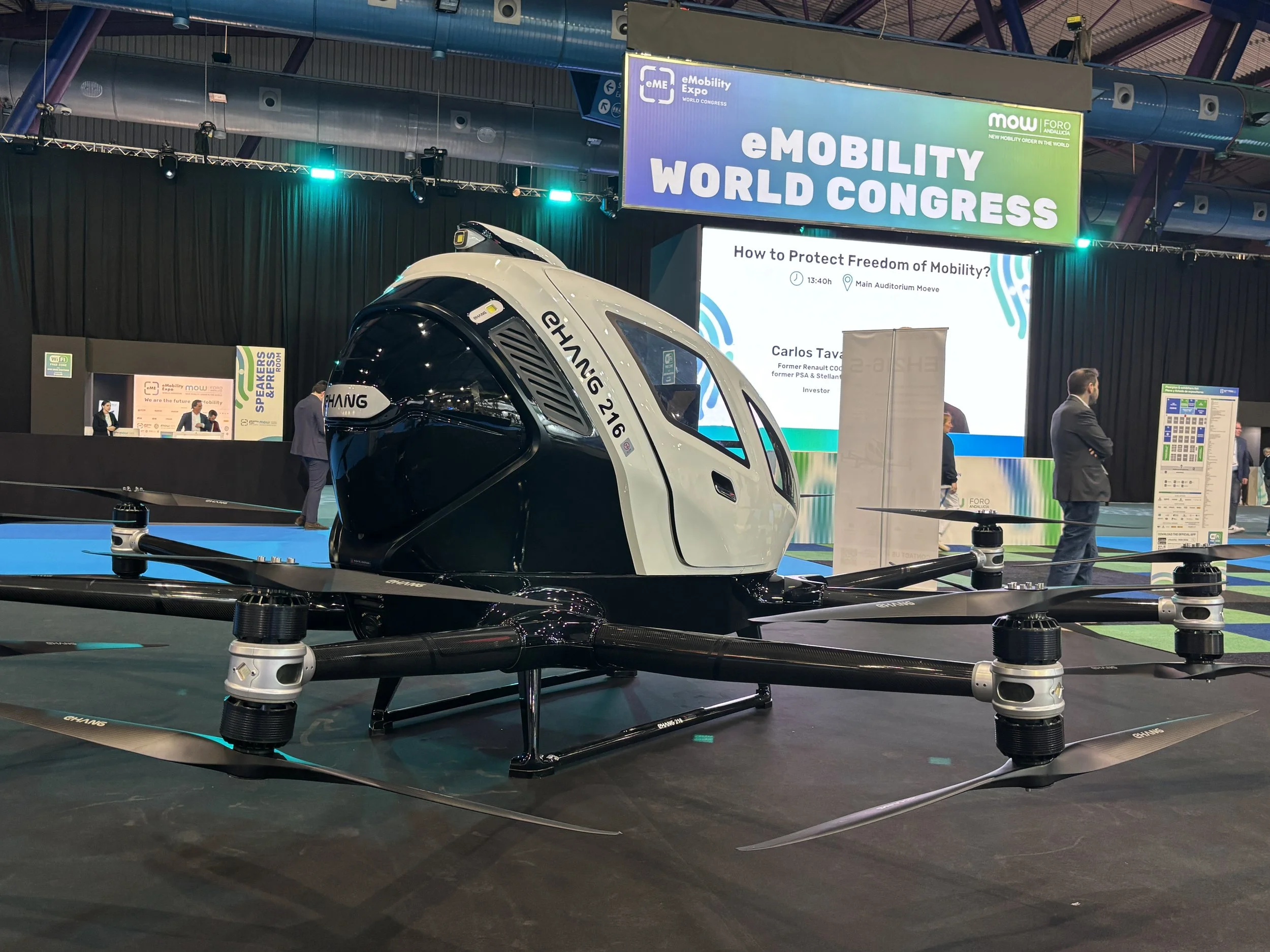
EHang also gathered a significant amount of attention by displaying a real-size mock up of its E-216S eVTOL in the exhibition area.
Two other innovative aerospace companies which were present at the exhibition also caught my eye.
Dovetail Electric Aviation
This is an Australian-Spanish company developing electric and hybrid-electric propulsion systems that can be retrofitted into CS-23 aircraft (that is aircraft for up to 19 passengers).
Its founder, David Doral is a true sustainable aviation pioneer and was also one of the early guests of our podcast.
Although it started and still is partly based in Australia, Dovetail is also expanding its footprint in Spain (where it has obtained support from two airlines, Volotea and Air Nostrum, as well as from CDTI, a government-backed organization which supports technology projects).
In 2024, Dovetail opened a research and production facility in Seville, also in Andalusia, where part of its engineering team is based and where it expects to serially manufacture its propulsion systems in the near future.
ELA Aviación
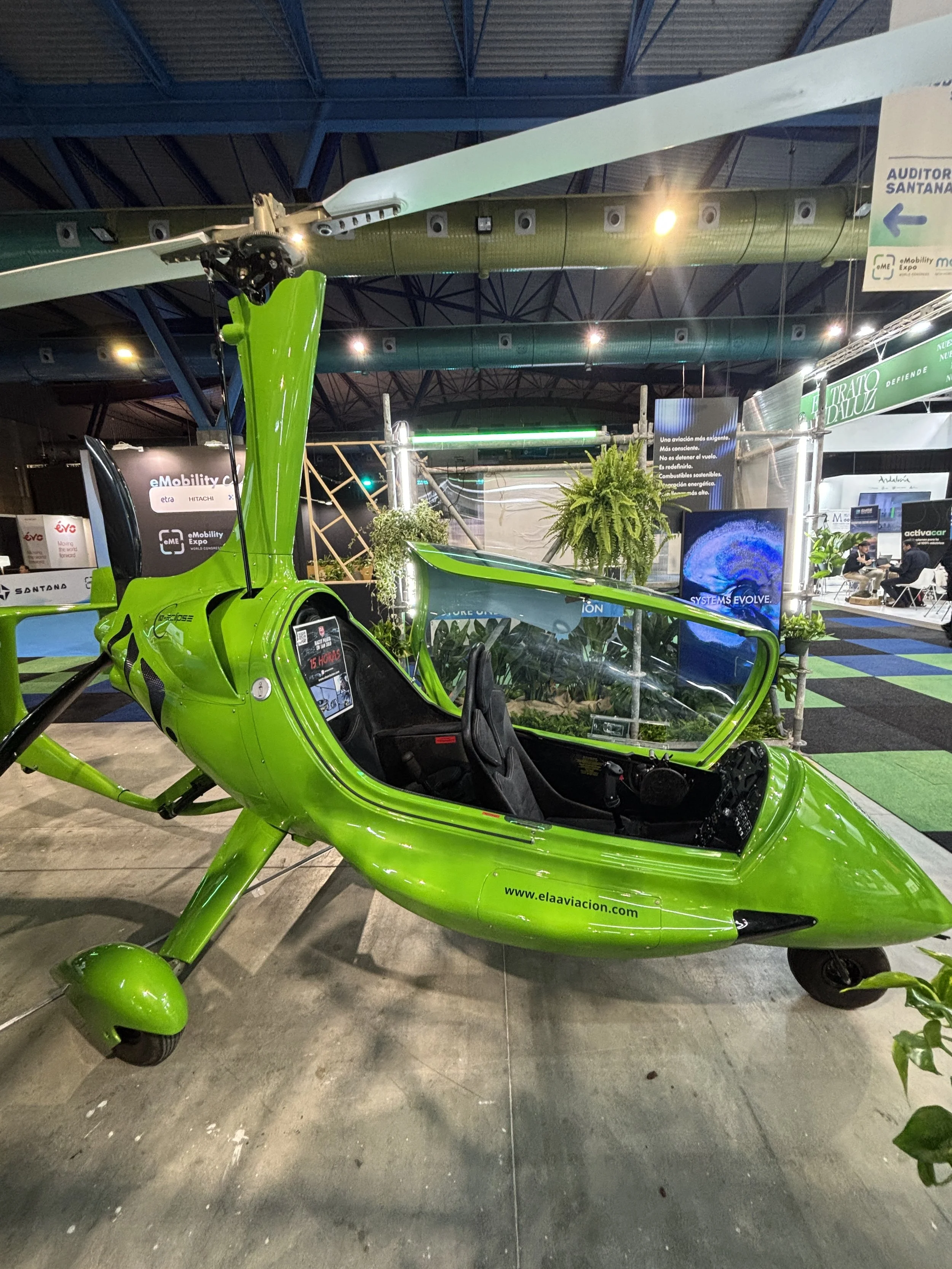
This is also an interesting firm, not least because it is one of the few companies in the world developing and manufacturing autogyros at scale.
An autogyro, or gyroplane (a concept, btw, invented some 100 years ago by Spanish engineer Juan de la Cierva), is an aircraft that uses auto-rotation to generate lift. It does have an engine and rotor at the back (or sometimes at the front) that moves it forward, and a non-powered rotor that keeps it in the air.
This is a type of aircraft that, while definitely very niche, has seen a bit of renaissance in recent years, as I explained in this article for AeroTime.
ELA Aviación is based near Cordoba, in Andalusia, and it has developed a range of state-of-the-art autogyros which have proven to be popular among private aviation enthusiasts (the aircraft are, apparently, easier to fly and cheaper than regular fixed wing aircraft).
The next big market this autogyro developer has set its eyes on is security and defense, where it can pitch some of its capabilities, like ultra-short take off and landing and much lower operational cost than a helicopter.
Would like to close this post by thanking the event orgaziners for facilitating my last minute attendance and kudos also to the friends of La Nova Mobilitat, partners of eMobility World Congress and the leading podcast in Catalan language about innovation in the mobility and transportation industries (which in 2024 hosted me for an episode about advanced air mobility), for drawing my attention to this event!
