The Allplane Podcast #132: Airships w/ Michael Kendrick, Mark Dorey & James Dexter (Straightline Aviation)
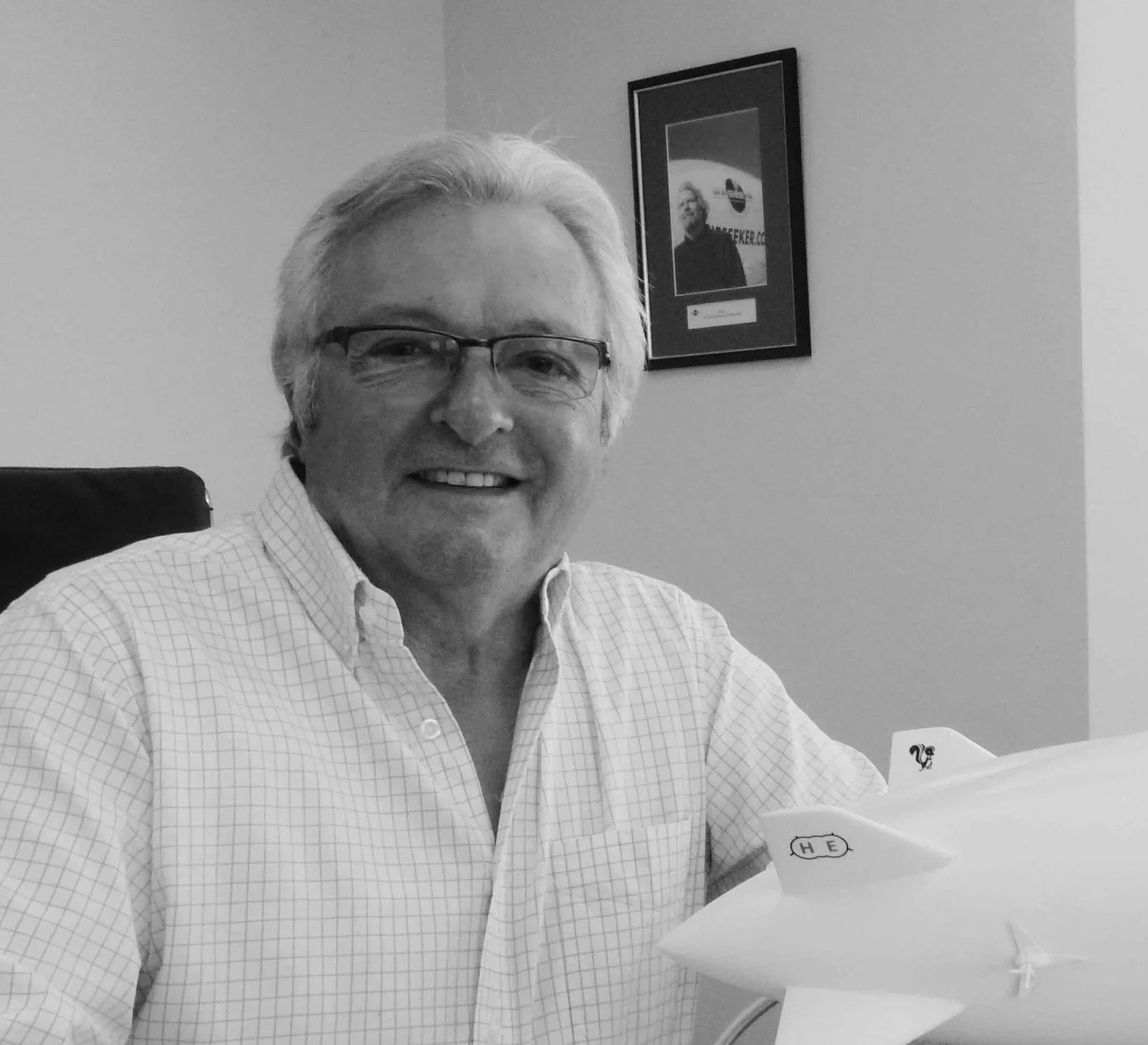
Michael Kendrick

Mark Dorey

James Dexter
Is the airship ready for a big comeback? This is not some sort of retro-futurist sci-fi scenario, since there are a handful of companies working to develop a new generation modern-day iteration of this iconic type of aircraft.
But, in fact, airships and, more generally, lighter than air aircraft never fully went away. The US Navy, for example, operated blimps until 1962 (and experimented with them again in the 2000s). Airships have also been used for advertising purposes and, for some time, even Richard Branson’s Virgin Group had an airship division.
Our guests today know all this very well because they experienced it first hand. In fact, I doubt there are many other people in the world right now with the sort of experience and knowledge about how to operate an airship.
Mike Kendrick, Mark Dorey and James Dexter boast decades of combined experience managing airships and they are now the management team of Straighline Aviation, a British startup that aims to become the world’s top airship operator.
If there is a technological advance that has prompted this renewed interest in the airship category, it is the development of the Air Cushion Landing System (ACLS), which enables airships to land, load and unload at pretty much any flat spot that is large enough. This double-chambered airship concept has been under development by Lockheed Martin and, later by, a spin-off company called AT² Aerospace, for about two decades.
As this technology approaches maturity, Straightline Aviation has been also refining its plans to deploy it commercially, with the plan to become the world’s first airship-based air cargo operator.
On today’s episode we assess what are the chances of this happening soon and what are the requirements for a successful commercial air ship operation. We also talk about Mike Kendrick’s earlier ventures in the airship space and how the team is preparing for a nonstop circumnavigation of the globe as soon as the first unit of this novel airship type becomes available.
So, tune in for a fascinating talk about airships and the role they may play in the future of aviation!
Get this episode on:
Things we talk about in this episode
What is Straightline Aviation
How Straightline Aviation’s executive team created the largest airship operator in the world
The Virgin Airship and Balloon Company
Working with Richard Branson
Why the time is ripe for an airship renaissance
What technological changes have made airships again a feasible option for many missions
What are Straightline Aviation’s rollout plans
Resources
The Lockheed Martin airship we talk about
And AT² Aerospace, the Lockheed Martin spin-off which is currently developing the double-chambered airship with Air Cushion Landing System (ACLS) that Straightline Aviation intends to use
Types of lighter than air vehicles:
We also mention Hybrid Air Vehicles (HAV), another UK-based airship company that was also here, on the podcast
Virgin Balloon Flights (the present-day balloon business of the Virgin Group)
The 1920s Norge airship, which is mentioned in the conversation
The globe circumnavigation project which Straightline Aviation is planning
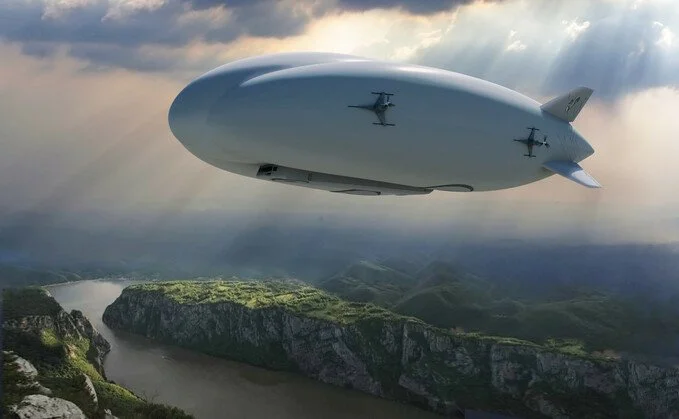
Some renderings of the Z1 double-chambered airship:


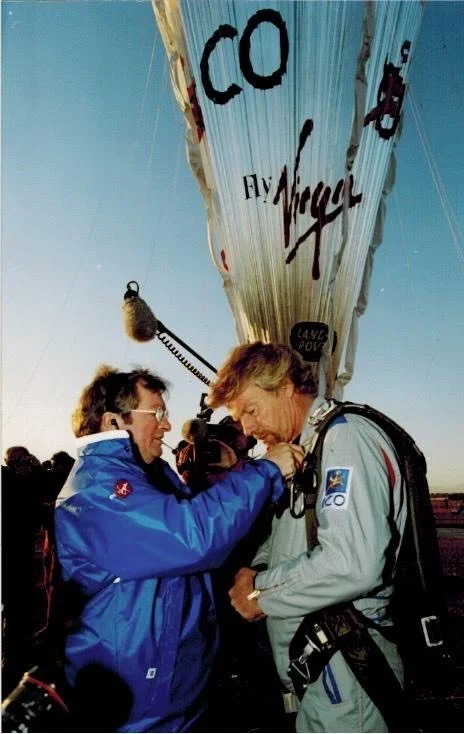
Mike Kendrick and Richard Branson is in Morocco for the launch of Branson’s 1998 circumnavigation attempt:
One of the advertising blimps Mike used to operate:

Podcast Music: Five Armies by Kevin MacLeod
Link: https://incompetech.filmmusic.io/song/3762-five-armies
License: http://creativecommons.org/licenses/by/4.0/
Interview Transcript:
(please note that, although we strive to make it as close as possible to the original recording, the transcript may not be 100% accurate)
- Hello, how are you?
- Oh, good, thanks. Yeah, great. Thank you.
- Well, today we have a bit of a special episode, because it's not just one person, but a whole team, the team of Straightline Aviation. You are working in an area of aviation that I think is very interesting, because after many decades there seems to be renewed interest in lighter-than-air vehicles, or what are commonly known as airships, and Straightline Aviation is active in this field. Tell us a bit more about Straightline Aviation.
- Okay, well, I'm Mike Kendrick. I'm the chairman of Straightline Aviation.
- Mark Dorey, CEO.
- James Dexter, director of operations.
- Perfect. What can you tell us about Straightline Aviation? There's a lot of talk now about airships, and there are a few projects, including Hybrid Air Vehicles in the UK. In the US, we have the founder of Google, for example, investing in LTA, and there are a few other projects as well, some of them unmanned, for things like power line inspections or carrying cargo. But you've been in this industry for quite some time, right? Tell us a bit more about how you started and where your interest in airships came from.
- Okay. Well, we started this business many, many years ago, 30 or 35 years ago, and we were involved in hot air balloons. But it was always a desire of mine to move into airships. As early as 1972, I was investigating the feasibility of flying around the world in an airship. I had a company called Lighter Than Air Limited, and we ran commercial balloons. And then I was basically headhunted by Richard Branson, and we formed Virgin ABC, the Virgin Airship and Balloon Company, and Richard and I became partners for 26 years, I think it was. We moved naturally into airships, and without going into immense detail, we became quite well known, because we did major projects. We headed up Richard's flight across the Atlantic, his flight across the Pacific and his attempt to go around the world, all in balloons. But we were always very keen on airships, and eventually we bought a controlling interest in American Blimp, which made small advertising aircraft, the sort of thing you saw for MetLife and Goodyear. There were only two airships commercially working when we came into the business, and I think one was for the whale, in what was then…
- Shamu, yeah.
- And the other was… no, no, but one was in there.
- The Goodyear airships?
- No, it was another one. Anyway, there were only two airships functioning in the world, so we disrupted the industry. Mark came on board very early, and so did Jim, and we grew that company to become the largest fleet of airships the world has ever seen. We had 19 airships, and we operated in 38 different countries, completely disrupting the business and launching a new era for commercial airships. It was hugely successful. We became the largest aerial advertising company on the planet.
So we were well traveled, and we did extraordinary things, including in Barcelona, where you're sitting, where we took Richard Branson water skiing behind one of our airships. We did all that kind of stuff. We were an advertising and marketing agency, and the big, significant thing that took us to this super-company status was that we understood the value of the advertising and the public image of the airship. So we put cameras on board, which the client paid for, at the major publicity events in the world, like the Super Bowl.
We ran cameras throughout a game and gave the broadcasters the air-to-ground shots for free, on the basis that they showed the airship two or sometimes three times an hour and said "thank you to the Budweiser airship" and all that kind of stuff. That's what really made it, because the client could then measure the effectiveness and the value by TV time and press time. It was enormously successful, because we reduced the cost of audience impact compared with regular TV and press advertising by a factor of more than 10, and that is purely why it became so successful. Plus extraordinary things to catch people's eye, like water skiing with Richard, lots of events like that, setting world records, and appearing in episodes of Friends and Baywatch and that kind of stuff. So that's how we got into the business.
- And were these airships manned? Was there someone in the cockpit?
- Over to Jim.
- Yeah, they're piloted. They're FAA type-certified aircraft for day and night VFR and IFR operations. They're quite capable. They're the blimps you see flying over events, and they're piloted.
- Okay. And are you still running this fleet, or what happened to it?
- What happened, Miquel, is that tragically, 9/11 came along, and of course that grounded general aviation completely. We had hundreds of people sitting in fields with airships unable to fly all over the world. And at the same time, in the UK, we had the foot-and-mouth outbreak, which was a problem and meant we couldn't even fly balloons, because we couldn't land in farmers' fields. So reluctantly, we had to… We didn't go bankrupt or anything, but it was obviously unsustainable, so we decided to sell the company back to American Blimp, the manufacturer of the aircraft we flew. It was very sad. But in the meantime, Mark and I had our eye on a particular aircraft called the SkyKitten, and we went to see it. It was very much a miniature version of… can you do this? It was a miniature version of this airship, which I hope you can see.
- Okay, yeah. People listening to us cannot see it, but I'll try to post images in the show notes so that people can get an idea of what it looks like.
- Well, it's like two airships strapped together side by side. And the innovation, the reason why there are two strapped side by side, is that you get very good lift from what is actually a flying wing. An enormous flying wing, but a flying wing nevertheless, and it's filled with helium. It doesn't have any structure inside. One of the biggest problems with large airships, as you probably know, is that, apart from the one being manufactured by Lockheed Martin and its spin-off, they are all totally dependent on securing and mooring to a mast. You've seen those masts on the ground. In fact, the Empire State Building had a mast.
And while airships are great and comfortable to fly in, landing and mooring to a mast is difficult, because the airship weathervanes around the mast in the wind, and therefore getting people on and off safely has always been a problem. So when we saw this airship called the SkyKitten, and then the Z1, which is the Lockheed Martin derivative, Mark and I believed in the technology immediately, because it didn't have to use a tower or a mooring mast. It had an innovation called the air cushion landing system. Basically, underneath the aircraft there are three hovercraft pads.
When you bring the aircraft down, you don't attach it to a tower or a mooring mast. It sits on the ground, and you reverse the thrust of the hovercraft pads, which were keeping it a few inches above the ground. Reversing the thrust sucks it onto the ground and holds it there, very steady. Completely innovative, a complete revolution. Mark and I believed from the moment we saw it that that was the way to go. And there's some confusion or disagreement about this, but it seemed to us that the air cushion landing system was invented by a British guy, as was the hovercraft, by the way, although that is disputed by a couple of people.
- Yeah, it happens often. People work on things in parallel and come up with the same or similar ideas.
- Well, nobody had. That's the point. Nobody had. And Lockheed, being a big, powerful company, patented the idea. All lighter-than-air aircraft are subject to weather more than any other aircraft, but we don't think the Lockheed Martin aircraft is any more subject to weather than any other aircraft. In fact, it's often less subject to weather than other aircraft. We were convinced of it, although of course it has taken from then, which was, what, Mark, 20-odd years ago?
- 20-odd years ago now.
- 20 years ago. It's taken from then until now to become a reality, Miquel. And it's not quite there yet, because we haven't had one delivered.
- I wanted to ask you about this. What time frame are we talking about here? When did you come across this? I guess it was a novel concept at the time, and I don't know if it still is. What's the approximate time frame we're talking about?
- So the SkyKitten first flew around the year 2000, I think. Jim, is that correct? Around the year 2000, wasn't it, in Bedford? Maybe a bit later, but only by a few months. Anyway, we're talking 20-odd years ago. Roger Munk's company metamorphosed into HAV, who you say you've already spoken to, and they're following their path here in the UK. Lockheed spent a lot of money on a competing program over in the US, and has passed the intellectual property on to a group called AT2 Aerospace, who are now commercializing what they developed. And Jim, you were with Northrop Grumman working with HAV, weren't you, at the time when they developed their full-size aircraft for the military?
- That's right.
- So the HAV concept is based on the same Lockheed Martin patent?
- No. Well, that's where it gets a little confusing. As Mike said, there have been competing claims over who invented the technology, where and how, and who has the rights. But that's all been settled. Lockheed Martin ran more with the ACLS concept than others have.
- The original Northrop Grumman aircraft that went to HAV still uses a mast.
- They don't have the ACLS system.
- They don't. No one else does.
- They don't have the ability to stabilize on the ground.
- So can you tell me about your business model? You are working with the manufacturers to establish an operation that will use these airships for what sort of missions? What's the business model, and how do you plan to deploy these aircraft?
- Let me talk you through that. The first thing to point out is that we are an operator of airships. We're not a designer, and we are OEM-agnostic. We don't mind which technology comes to the fore. What we are most interested in is that the technology is operationally feasible and serves a commercial market. We've worked with and talked to a huge number of airship manufacturers around the world, some of whom you've already mentioned, with many, many different design concepts. There are almost as many different design concepts as there are people supporting them, but…
- If I may interject, I think it's worth saying that we're known to be the most successful airship operator that has existed. So it was natural for all the OEMs to come to see us or make contact with us. We've reviewed probably every other system, I think, Mark.
- Certainly every credible system, yeah.
- I would like to ask a technical question, from the point of view of someone who has been following this space but is by no means an expert in airships, and I think it could be interesting for the audience as well. What is the difference between an airship, a lighter-than-air vehicle, and a blimp? Are they all the same thing, or are they subcategories?
- It would be worth talking about the difference between a hybrid airship and a conventional airship.
- Well, there are now four types of airship. The conventional airship is the cylindrical airship. It has a single hull, and there are three different design types: the non-rigid, the semi-rigid and the rigid.
- All three are versions of the conventional type, right?
- Yes, they are.
- And these would be the classic 1920s-type designs.
- Yeah. Okay. So the design types, the non-rigid, the semi-rigid and the rigid, refer to the structure used to provide the integrity of the ship. The non-rigid airship is affectionately known as a blimp. It has no structure. It's just an envelope, and it relies on internal pressurization to maintain its shape. It's got a ballonet inside, an air bag, and that allows the airship to ascend and descend with changing atmospheric pressure, which changes the volume of the lifting gas you're carrying.
You have a ballonet filled with air on the surface, and when you go up, the helium expands with the decreasing air pressure, and the ballonet compensates for that. Air is vented out of the ballonet as you ascend, and when you descend, back towards the earth, air is reintroduced into the ballonet. That serves to maintain pressure as you go up and down. Now, I believe the three different types were designed due to the size restrictions of the time. Semi-rigid airships had a keel running from nose to tail, so they could build longer airships. The non-rigid would have a bending moment, so they couldn't build them too long. The keel provided longitudinal stability so that they could build a longer airship.
Famous semi-rigid airships were the Norge and the Italia, which flew to the North Pole. Those were classic semi-rigid airships. The rigid airships are what we know as the Zeppelins. They have a rigid framework running the entire length of the ship, the framework is covered with fabric, and the gas cells that provide the lift are placed inside that frame.
- You mentioned four types.
- Well, the hybrid I'm calling the fourth type, because it is a lifting body. It's basically the width of two airships, to create, as Mike mentioned, the flying wing, if you will.
- Okay.
- Much more aerodynamic lift.
- Okay, so we would have three types of conventional airship, and then the hybrid, which is this more modern approach that makes it possible, for example, to land on the ground and embark and disembark people straight from the ground.
- And the very significant point about that, Miquel, is that it doesn't need a runway or a tower to moor it to, so you don't need an airport, and you don't need infrastructure on the ground. In some remote places, of course, if you were to use a ship that needed a mast, you would have to put the mast in before you could operate from there. Whereas this airship, the Z1, is capable of landing in a very small area, on unprepared land or on water, practically any surface, and it's been tested.
- You need some space, though, because the Hybrid Air Vehicles airship, for example, I think is going to be the largest flying vehicle in the world.
- I think that boils down to the static heaviness the aircraft is operated at. Conventional airships operate close to equilibrium, so their static heaviness is not very high. A hybrid's static heaviness is driven by its ability to create aerodynamic lift, because when you're taking off, you have to generate enough aerodynamic lift to carry the weight you're flying with.
- Okay.
- So conventional airships are limited. With the Goodyear blimp, for example, the maximum static heaviness is 800 pounds. They had to demonstrate that in flight testing, to show that a pilot of average skill could safely get off the ground at that weight. Now, that drives endurance, how much fuel you can carry, payload, and basically the capability of the aircraft. The hybrid, with its wide lifting body, can create much, much more aerodynamic lift. The Z1 hybrid will be able to take off with 15,000 pounds of static heaviness, so that gives it the capability to carry cargo, to carry much, much more weight.
- And it doesn't need an airport to land.
- Yeah.
- Or anything with infrastructure.
- So, getting back to the business model, am I right to understand that the idea is to operate a fleet of airships to carry cargo? What sort of missions do you have in mind? You plan to be an operator like an airline, basically?
- We're an operator like an airline, exactly that, sitting between the manufacturer on one side and the end-use customer on the other. We've looked at a huge number of markets, Miquel, and we consider the attributes, particularly of the Lockheed-designed airship, to be very suitable, as Jim has just highlighted, for carrying heavy loads, cargo and freight, particularly to remote parts of the world that don't have access to existing transport infrastructure. So we alleviate the need to build roads or rail links into areas that don't have them already, and we don't need runways to operate from. It really is a uniquely capable ship when you combine that ability to carry significantly heavy loads with the ACLS system.
There are other ships out there that serve other markets, but we believe this is a real game changer in terms of how we connect parts of the world that are not connected. That may be commercial freight and cargo. It may be humanitarian missions, disaster relief, aid programs. We've got some great relationships with agencies around the world, including the UN. But it's also good for surveillance and survey, because of its capacity to stay on station for prolonged periods of time. When you look at all of those things together, we believe there's a significant market for the hybrid airship, particularly the hybrid airship designed by Lockheed. Now, we're not ruling out others. Other people may come along, and other people may have airships that are very suitable for other markets.
Some companies with unmanned airships, for example, are looking more at the survey and surveillance side of things, which is great. But the work we've done over the last eight, nine, 10 years, and our relationships with people all over the world, suggest that there's great demand for that remote connectivity, and for doing it in a way that minimizes the environmental impact. It minimizes the environmental impact because we don't burn as much fuel, so from an operating perspective it's a much greener aircraft, and it's cheaper to operate. But we also avoid the environmental damage caused by construction.
We take away all the problems of permitting roads, whether you're looking at the north of Canada or Alaska, the Amazon region, Southeast Asia or Africa. A large part of the world is not connected by traditional forms of transport, and suffers as a result. The UN has identified it as one of the major detriments to economic growth, and we believe the airship is a tool to help promote sustainable economic growth without the environmental damage that would otherwise be caused by other forms of transportation.
- Understood. How are you planning to roll this out? Are you planning to have this airship airline based somewhere? Is it going to be a global operator? What's the idea when it comes to implementing this vision?
- Good question. We have a network of partners already established around the world in what we see as key markets, and we are in discussion with many tens of potential end-use customers who see a requirement for the ship. What we're not aiming to do is put ships into areas of the world speculatively. It will be based on specific customer demand that we've already identified, and on other customers that I'm sure will come to our notice over time. The one thing we're certain of is that there's no shortage of demand for the airship in many parts of the world. The problem will be picking which customers to serve in the early part of the deployment, because there'll be limited production in the first instance. We've got demand from customers that far exceeds the production capacity of the manufacturer.
- Okay, I've got a few questions. First of all, certification: under what regulation would this airship operate? Is there a specific section in the regulations for airships, and does it apply to the sort of cargo operations you are envisaging here?
- The airship is going to be certified by the FAA. When Lockheed Martin was designing and building it, they produced design criteria that were approved by the FAA, which outline all the requirements specifying the design.
- Would you be able to operate in all these remote areas, in places like Africa, Asia or Latin America, with an FAA certification, or would each of the specific countries you plan to operate in also need to certify these aircraft?
- That's specifically dependent on the country in question. Most countries recognize the FAA, or an FAA-style body of regulation. As Mike mentioned, we operated in over 19 countries, and we obtained permission from the aviation authorities of those countries to operate either under the FAA or the CAA. If we went into a country whose main body of regulation was fashioned after the CAA's, there would be a way to comply with those regulations. The FAA has an international certification office that deals with that, and there were several instances where we had to type-certify the aircraft in the country we went to. So there's a process for how we can deploy this aircraft. If you think about it, aviation regulations are all about safety and security, and a lot of the regulations are very similar, so the FAA's international office helps get through those obstacles.
- Okay.
- And that's part of our skill set. As Mike was just saying, having operated airships in 35-odd countries, and balloons in a lot more than that, we are very experienced in taking new aircraft and working with the aviation authorities of those countries. Jim has spent many hundreds, if not thousands, of hours with aviation authorities, from Australia through to Canada and Brazil, and into Asia, in Hong Kong and China. So it's part of our skill set: we have the relevant experience and understand how to work with aviation authorities. And it's not just the aircraft. The aircraft needs certifying, but the operations also need to be approved and structured in a way that complies with local regulations, and pilots and mechanics need to be trained and qualified and have their qualifications recognized. So it's three tiers, three layers of qualification that we need. I don't want to single out any countries in particular, but I think, Jim, was it Singapore where you spent the longest time?
- Singapore and Hong Kong. But having said that, we were able to comply, we were able to get in, and we were able to operate successfully for our clients. So we don't really see that as a major obstacle to our ability to expand.
- And in fact, in the case of Singapore and Hong Kong, the main concern was the airship navigating within congested airspace, because you've got major international airports that control most, if not all, of the airspace. Operating in remote, relatively depopulated parts of the world is less of a concern to aviation authorities than working in congested airspace. Having said that, we flew in and out of LAX, the international airport in Los Angeles. So I think Mike made that point earlier: the airships are fully capable.
- I wanted to ask you about multimodality, actually. I guess that to carry cargo, it's important to be able to connect with other modes of transportation. How is the cargo going to be carried in the aircraft? Is it going to be in standard containers? What volume and weight are we talking about? And how is it going to connect with other modes of transportation, whether by ship, road or rail?
- Good question. The cargo bay is 60 feet by 10 feet by 10 feet, or just over. It will take three standard ISO containers, but you could also load vehicles in there. You can load things on…
- Because it's not on a mooring mast. It's not moving.
- And it's been designed with that in mind, so it's very flexible in terms of its payload. We're talking to people about putting mobile hospital units in containers and moving them around. So it's a very, very flexible space that can be used for a whole range of applications. And in terms of connectivity, it's a very good question. One of the great strengths of the airship is that it breaks away from that intermodal transport model. It can fly directly from A to B. That's why we're called Straightline Aviation.
We can go straight from, for example, a mine through to the market. As we've said already, we don't need to operate from an airport, so we can actually operate from greenfield sites. If we're working for a customer, we can deliver and pick up close to, and directly at, the areas we need to serve, rather than having to load and unload at ports or other airports. That's one strength. That's not to say we wouldn't or couldn't do it. There will be times when we will deliver into nodes, say in Canada, where the roads or the railway only go so far up the country, and we can deliver back to those points. But by and large, we help alleviate the bottlenecks that otherwise exist in the transport network.
- Is there an optimal range? Is there a sweet spot where moving things by airship beats other modes of transportation?
- Yeah, there is. We plan to fly it non-stop around the world, so it could be configured for a very long flight. But in terms of day-to-day operations, we talk about a maximum range of around 1,400 nautical miles from a practical and operational perspective, which means it has a much greater range than helicopters, but a lot of the same attributes a helicopter would have. Plus, it's a lot safer and greener. So anything sub-1,400 nautical miles. You probably start building in inefficiencies if the route distance is too short, because your turnaround time starts taking up an increasing proportion of the operational day. But the airship has been designed to operate 24 hours a day, running air-bridge-type operations backwards and forwards over that kind of distance.
- That was a very good question, Miquel. Thanks for that. It's an important question.
- No problem. Let's talk about costs and revenue. What sort of capex do you need to get one of these airships, and what sort of operating costs are we talking about? How does it compare with the alternatives? And by alternatives, I'm thinking particularly of the scenario you mention, remote areas, which I think is where the airship brings a number of capabilities that are currently absent, but also of other modes of transportation in, let's say, an easier environment where alternatives exist.
- Yeah. Typically, we are more expensive than road, rail or sea freight connections where they exist. That's one of the reasons why, with this size of airship, we won't target markets where there's already established infrastructure. The larger airship, the next derivative up, at 100 tons, will start to compete with those types of transportation on cost per ton-mile. In comparison with other aviation, we're significantly cheaper than fixed-wing and rotary-wing aircraft in terms of operating cost, maybe a fifth, or even down to a tenth, of the cost, mainly due to fuel burn and maintenance. But it's difficult to make a direct comparison.
The big saving is in not requiring high capital expenditure. Where routes don't exist, removing the need for capex, whether it's building an airport or building road or rail connections, is huge. One example: an oil and gas company operating in Australasia spent $900 million building a landing strip to fly Antonovs in and out of, and they calculated that, in total for the project, rather than that 900-plus million, it would have cost about 27 million if airships had been available to them. So it would have saved them a huge amount of money. That gives you an idea, using just one project as an example.
- What would those 27 million be for?
- It's the flight cost of the aircraft: flying the aircraft in and out to do the job they required is what we costed in there. And the same would be the case elsewhere. If you look at northern Canada and Alaska, the cost of building ice roads gets higher and higher every year, and the ice road season is more and more unreliable. It's now down to four to six weeks in many parts. We've talked to people who said they may well not have an ice road season at all, and obviously this puts existing projects at risk and prevents new projects from being undertaken. The airship is significantly cheaper, and we can operate 10 and a half to 11 months a year, so we don't have the seasonality you associate with ice roads.
- What about reliability in the face of challenging weather? You mentioned Alaska and northern Canada, and even in the tropics you can have pretty big tropical storms, hurricanes and all of that. So…
- I'll let Jim… sorry, you carry on.
- No, no, I'm just curious about that, because I had the idea that airships were very sensitive to weather conditions.
- I'll let Jim answer in terms of the technicalities, but just to give you an overview: Jim and I have studied a lot of places around the world, and we haven't come across an area where we couldn't operate. In most areas, when we talk to people, they say: "Oh gosh, it's very windy," or "it's very this," or "it's very that." But when you dig down into the data, the weather limitations for this particular type of airship are considerably less than one would otherwise imagine. But Jim, I'll let you talk a bit more about the specifics.
- Well, airships are very robust with respect to weather. There are certain types of weather, like thunderstorms, that you avoid, but all aircraft avoid thunderstorm activity. As for the other types of weather you encounter, I mentioned that the airships are certified for day-night VFR and IFR, so we can fly in zero visibility. We have the instrumentation, and the pilots are trained to operate in that type of environment. The US Navy operated airships for a very long time, up through 1962, and in the 1950s, to prove the capability of the airship, they conducted an exercise called Operation Whole Gale. It took place in the northeast of the United States in winter, in blizzard conditions, and the airships were supposed to go out and support a fleet exercise offshore. During that program, the airships were at one point the only aircraft flying, in freezing and icing conditions. They were all non-rigid airships, but I think it's a testimony to the robustness of the airship itself.
- And I think that's a good point, Jim. It's a very powerful example. We've also had conversations with people about how flying in particularly mountainous regions, in Alaska and elsewhere, can be very hazardous when visibility drops, and there are a number of incidents, accidents and fatalities caused by that every year. The airship has a great ability to stop, so you can stay stationary if all else fails. So on top of everything else, it's a much safer aircraft to operate than many other aircraft in those areas.
- So you mean it would be stationary in the air? Okay. And if there are strong winds, doesn't that make it worse? If you stop moving, you're left at the mercy of the elements.
- It's relative. I've been flying in strong winds at full power going into the wind and been going backwards at around 10 miles an hour. That's a temporary event. You can change altitude to get different wind conditions. That's one of the things we do: we use altitude to take advantage of, or avoid, adverse wind conditions. Then there's flight planning: we know where we need to go, and we get good weather forecasts, because weather forecasting is really good these days. I think it's safe to say that finding yourself in a condition where you cannot safely conduct a flight is pretty rare.
- And just to be clear, Miquel, when we talk about being stationary, we are still under power, so we're still in control of the aircraft.
- Okay.
- We haven't switched the power off to stay stationary. The aircraft has vectored thrust, so we can take off and land vertically. We can manage that, and manage the climb and the conditions.
- Another way to look at it: if you're flying into a 20-knot wind, you match that wind speed with your airspeed. The wind is at 20 knots, your airspeed is 20 knots, you're flying directly into the wind, and your ground speed is zero.
- Okay, they cancel each other out. So, if airships have all these advantages, why did they fall out of favor? They were a thing in the 1920s. After the war, as you mentioned, there were still some, and you obviously operated most of those that were left. But it became a very niche type of aircraft, and now all of a sudden there seems to be renewed interest in airships. So why did they fall out of favor, and why is a comeback possible now? Is it because of all the new technology and new designs you mentioned, or are there other underlying factors here?
- Yeah, it's a great question. In terms of why now, you're right: it's the technology and the technological advancements we've outlined, but also the push towards more environmentally friendly forms of transport, particularly in aviation, so aircraft that burn less fossil fuel. The airship, by the way, is very much on the path to net zero emissions and through to zero-emissions aviation, because we don't have the limitations that fixed-wing or rotary-wing aircraft have. It's a real pathway to a much more environmentally sustainable form of aviation.
- But it seems that at some point airships became a bit of a rarity, as you mentioned. You were using them for advertising, but not for things like these remote cargo missions. Why were they left aside and not used for those missions? Even in a more primitive form, the main principles of the technology have been known for many decades, for more than 100 years. So why weren't they being used for this type of mission? And I'm assuming that if there had been interest, there would have been more investment as well, which would have brought all these advances forward in time.
- Yes, you are really asking why airships failed in the '20s.
- Yeah, well, in the '30s, we all know there was the very famous Hindenburg disaster in New Jersey, right? We all have those images in our minds; we've all seen the footage. But in the decades after that, after the war, the technology was there. Why wasn't it used more widely for all these missions, like carrying cargo to remote outposts, or using them in areas that…
- I think, Miquel, it was the advent of the blimp rather than the large aircraft. Jim, you're really the expert on that.
- That's a good question, Miquel.
- All these questions are good. Have you noticed that?
- Yeah. My opinion is that airships have never done cargo before because of their inherent instability on the ground. You're not able to stabilize a conventional airship on the ground enough to load and unload a large amount of cargo.
- Okay, so we needed to wait for this Lockheed Martin project.
- Yeah. The ACLS system makes the difference, because with that system you can operate at your maximum static heaviness over the field. You can hover and taxi around the field, so you can load in one area, then maneuver to your takeoff area, take off and depart. You can land and then taxi back to your loading area. But all the other conventional airships have mooring masts. Either they have a mobile mast that comes out to the ship and takes it to a secure area, or they don't, and you have to land and maneuver the ship at an optimum static weight safely back to the mooring mast. There's an element of risk involved with that, a large element of risk. A lot of airships have been lost on the ground.
- So it was necessary for this hybrid technology to come into play to be able to conceive of these other uses for the aircraft. But still, there was a decades-long gap. Why did it take so long? We are talking from the late 1930s all the way to the 2000s, so it's quite a long time.
- Airships were flying quite successfully. The US Navy operated a fleet of airships up to 1962. The reason they canceled their flight operations is that the advent of the satellite and the nuclear submarine negated their mission. So the airships no longer had a mission, but they had been operating them quite successfully and safely for aerial surveillance, anti-submarine warfare, reconnaissance, that type of mission. And commercial advertising airships were a natural fit. Goodyear pioneered that, and we excelled at it with our fleet of 19 airships. But why there was never an emphasis on cargo and utility work with airships, I think that will always remain a mystery.
- I think in large part it was due to the instability of conventional airships. You'll have seen the pictures of the old airships with ground crews of tens or hundreds of people on the lines, holding the ship down, bringing it to a mast and tying it off. And even then, the ship moves around and pivots up and down, and as Jim said, that's not a practical solution. A lot of people have thought about a lot of different designs to solve that problem, and it wasn't until the late '90s that an engineer came up with a workable solution.
- Yeah, I was surprised that no one had been investing in that. We went to the moon, we launched supersonic airliners, and no one thought about perfecting a concept that already existed.
- Well, people did in the '90s. You had CargoLifter in Germany, which had big plans to develop heavy-lift airships, and they thought they had a solution, but it didn't work practically, and they spent a lot of money. You probably know the hangar site south of Berlin, which I think is still the largest single-span building in Europe, certainly. And they failed to come up with a workable design. I'm sure there are other airship designers out there who are also spending a lot of money building airships without having a practical, commercial, workable design. These things appear easy once you see the solution, but finding that solution is often harder.
- The question to ask, if anyone's looking at airships, is: how are they going to stabilize it to conduct the cargo exchange and the ballast exchange on the ground? That's the key. And the one with the ACLS system is the answer.
- Okay, understood. In terms of making all this fleet of airships a reality, how much money do you need? Are you VC-funded? How do you plan to finance this plan?
- Yeah, we are VC-funded. We're backed by a number of VCs, high-net-worth individuals and family offices, as well as by our strategic partners around the world. As an operator, we actually don't need a huge amount of funding to get into service. We have offers of debt finance to help fund the aircraft themselves, and our working capital requirement to grow the fleet is not significant. As I said earlier, it's not our intention to place airships into service speculatively, so we'll do it off the back of firm customer demand.
The manufacturers are well supported. AT2 has its heritage at Lockheed. They've already spent a large amount of money getting the airship to where it is now, with, as Jim said, type design criteria approved by the FAA and the certification plan approved by the FAA. So they're a long way down the line. They've already spent north of $100 million getting to this point. So, unlike a lot of other airship manufacturers, the money has been spent, and it is a significant amount of money. Certifying any aircraft is an expensive business, so we're pleased that those funds have already been invested. That's another reason why we're confident that the Lockheed design will come to market first, and in a way that serves the customer requirements we see.
- As Mark said earlier, if any other company or airship designer comes up with a solution, we'd be happy to work with them. But we don't see that on the horizon at the moment. Unfortunately, because we'd love to have other airships, apart from the Lockheed Martin airship, that we could buy. But we don't see any other developer at this time developing an operationally safe and environmentally kind method of moving freight.
- What time frame are we talking about, if everything goes according to plan?
- We're looking at two and a half years from here to the aircraft being certified, something in that time frame. Two and a half to three years.
- Okay, and then the plan is to build up a fleet of how many, and over what period of time?
- Ultimately, it's a totally scalable business. If the customer demand is there, we will carry on buying aircraft and deploying them into service. There is a limited supply in the first instance. We're talking about manufacturing six aircraft a year, rising to 12, and going on from there. But as I mentioned earlier, we already see demand well in excess of that, and we haven't really gone out proactively into the market to stimulate more demand, because we just don't need to.
We get inbound calls and emails every week from people interested in what the airship is capable of doing, and in how it will help solve problems they see in the real world. So I think it's got a massive future. A number of independent studies have suggested a requirement for over 500 airships globally, and we don't think that's even scratching the surface. The number of customers we talk to who themselves require multiple airships, regions of the world where numbers of 20, 30, 40 airships have been mentioned in our conversations just to serve those areas… So there's more than enough work out there, more than enough for us to target and grow a substantial business.
- Just before you ask the next question, I want to make it plain that certification is two and a half years away, but we don't need a certified aircraft to fly around the world non-stop, which we intend to do. We can do that experimentally.
- Tell me more about this. You're planning to fly around the world in an airship?
- Yes, it's on our website actually, Miquel. Basically, we've been involved in some pretty large projects in the lighter-than-air industry with Richard, as you know, trying to fly around the world, and I was always the project leader on those. So we're familiar with big projects, and our aim is to fly around the world. We've done a lot of work on this: non-stop, unrefueled, with net zero emissions. And we can do that before the certification is complete. Well, the certification program will be going on all the time, but it doesn't need to be completed before we fly around the world. It's going to take us between 15 and 20 days, and we've been working out the route, which we don't really want to talk about yet because of the political situation. But there are two or three viable routes. Eight people on board, and it's going to be a great project.
- Interesting. And do you have a set date for this? Not yet? Is it within this two-and-a-half-year time frame, but not clear exactly when?
- No, it depends on a lot of things, and raising the cash to do it is one of them. But we certainly don't need to raise enough cash to take us through the certification program. That's the point I'm trying to make. And it will be a revenue-generating exercise as well, like most of the major flights we've done, across the Atlantic and the Pacific.
- Okay. And where can people learn more, not just about this round-the-world flight, but also about the overall project and your ideas for bringing airship cargo transportation to many regions of the world? Is there a website you could recommend, or social media channels people can check?
- We have a website, which is straightlineaviation.com, and we also put out regular updates on LinkedIn. People are welcome to track us down on LinkedIn and follow us, and of course to email us or pick up the phone. We're always happy to chat with people.
- Perfect. Well, thank you so much for being here today on the podcast and sharing insights about this very exciting project. I wish you all the best with these endeavors, and I'm really looking forward to seeing these airships flying around at some point in the next few years.
- You should make sure that you're one of the first people to fly in it.
- Hopefully!
- If you like this podcast, you can support us by giving it a great rating on Apple, Spotify, or whichever platform you get it from. And remember, you can of course subscribe to it, and you can also get regular updates through the Allplane website. That's A-double-L-P-L-A-N-E dot T-V. We have a newsletter where we cover the aviation industry every week, with a special focus on innovation and sustainability. So give it a go. Thank you, and goodbye.
