Electric aviation progress, VIP turboprops and oneworld’s strategy: aviation wrap-up
Electric propulsion: what’s new?
Dutch electric aircraft developer Electron has unveiled a revised concept for its E5 five-seater passenger plane, with a first flight targeted for 2027.
For some background, Electron's co-founder Josef Mouris was on the Allplane Podcast back in 2022 to share his vision for electrifying regional aviation.
There's also been a flurry of activity from Vertical Aerospace: the British eVTOL developer has begun (ground) testing its hybrid-electric powertrain and produced the first battery for its electric Valo aircraft.
In a recent conversation, CEO Stuart Simpson told me the company is pursuing both propulsion systems in parallel, given how many architectural elements the two share, you can read more on that here. Vertical has also confirmed Hyundai WIA as its landing gear supplier.
Meanwhile, a Canadian company has conducted what is believed to be the world's first flight test of a hydrogen-electric helicopter, a specially modified Robinson R44.
Notably, the project is led by the organ-transportation subsidiary of United Therapeutics, whose CEO, Martine Rothblatt, is also linked to advanced air mobility developer BETA Technologies. The news are from April, but was too interesting to skip, read the details here.
Otto Aerospace: busy times!
It's been a particularly eventful stretch for Otto Aerospace:
Scott Drennan, who was on the Allplane Podcast just a few months ago as COO, has been named CEO, as the Phantom programme shifts into execution mode.
That podcast episode is here, and it is a great way to learn more about Otto Aerospace.
On the engineering side, Otto has completed the Preliminary Design Review (PDR) of its future Phantom 3500 executive jet, a key milestone in the programme.
The US startup has also wrapped up a DARPA-funded flight test campaign using a drone built to validate its laminar-flow technology approach.
SAF: new projects taking shape
The sustainable aviation fuel space is seeing meaningful activity on multiple fronts:
In the UK, Zemo Partnership (formerly the Low Carbon Vehicle Partnership) has launched a voluntary traceability programme for SAF called the Renewable Fuels Assurance Scheme (RFAS). Drawing on lessons from equivalent schemes in land transport, it aims to let SAF buyers claim emission reductions under the UK Emissions Trading Scheme.
In Africa, Kenya Airways and Rubis Energy Kenya have announced plans to build the continent's first fully dedicated SAF refinery, which will produce 32,000 metric tons per year and require an investment of between $70M and $82M. Here are the details.
In Europe, US firm LanzaJet will build its first European production plant in Ghent, Belgium, using its Alcohol-to-Jet process. More on the announcement here.
By the way, if you want deeper context on LanzaJet's approach and technology, don't miss our podcast with CEO Jimmy Samartzis.
Also worth flagging: a thought-provoking LinkedIn post notes how the Hormuz crisis has narrowed the price gap between SAF and conventional Jet A-1 fuel, though the gap remains wide.
Also noted here is the fact that, while SAF comes with the promise of energy independence, since feedstocks can in theory be sourced from many more locations, even locally in places like Europe, in practice the structure of the supply chain is such that most SAF is still being shipped across vast distances
Last but not least, 21 Spanish firms active in the SAF supply chain have written to the government of Spain urging measures to support the development of the eSAF ecosystem in the country.
eVTOL & Advanced Air Mobility: building momentum
A lot happening across the eVTOL landscape this fortnight.
Two OEM-backed programmes are making visible progress:
Wisk (Boeing) has fly-tested the second generation of its aircraft, just months after the 1st gen own test-flying.
EVE (Embraer) has completed hover and low-speed flight tests with its prototype.
Hyundai is reactivating Supernal, its eVTOL subsidiary that had been pretty much put in the freezer, following a new deal with Korea Aerospace Industries (KAI). So, the large groups have not given up on this sector just yet!
Japan's SkyDrive is targeting 2028 for the start of commercial eVTOL services in the Osaka-Kansai area. Ambitious, to say the least.
REGENT has partnered with Schneider Electric and World4Solar to develop mobile, off-grid charging solutions for its Seaglider. This capability will be extremely useful in a context in which the US is revising its military preparedness in the Indo-Pacific region and it is no secret that REGENT wants to be part of this story.
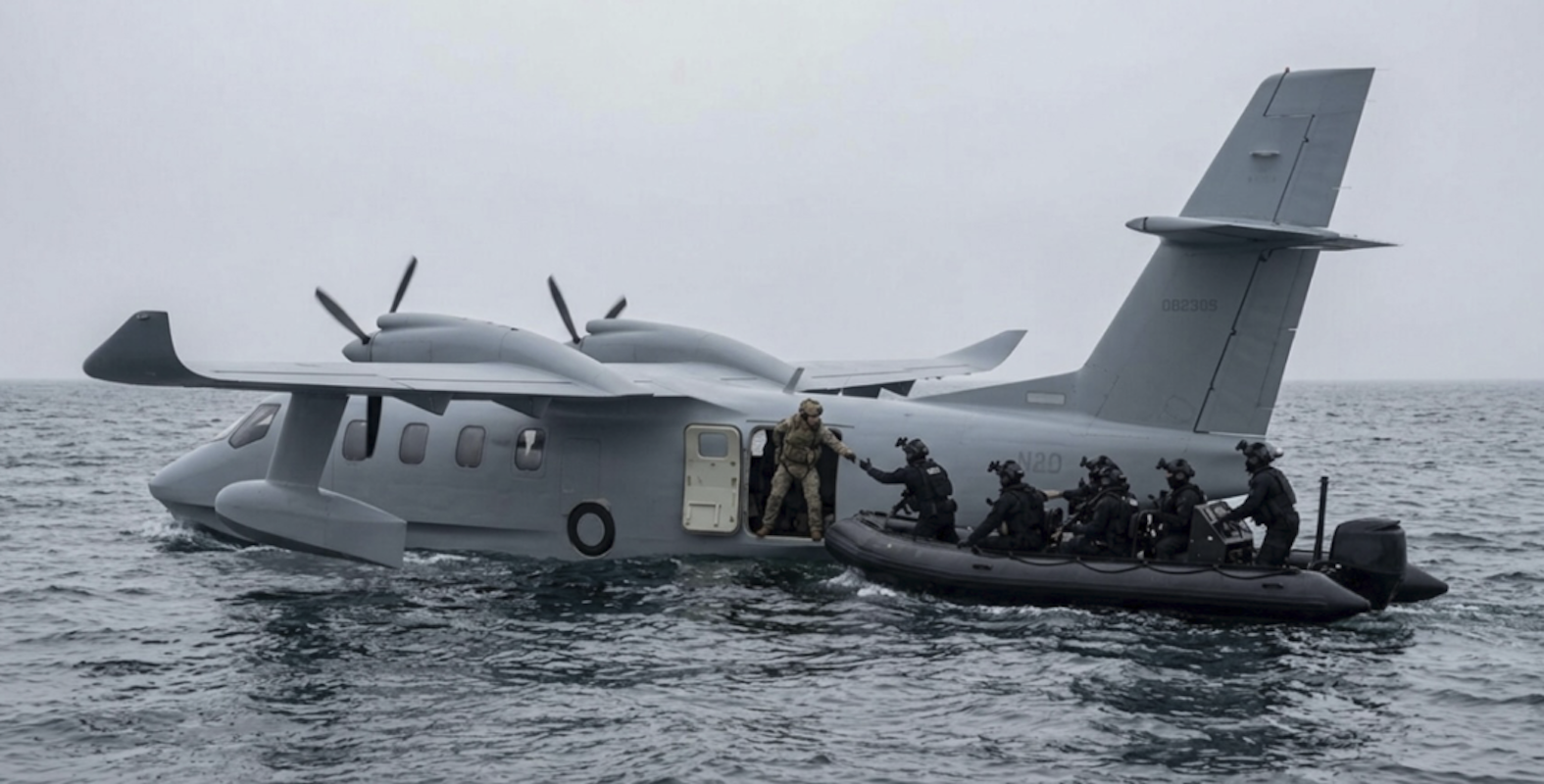
NOEMI Aerospace has announced new use cases for its electric seaplane, as well as plans to explore hybrid and conventionally-powered variants. This is a rather pragmatic pivot that acknowledges the need for extended range to be able to perform certain missions like search and rescue and other military applications.
IndiGo, the Indian low-cost carrier, has invested $1.2M through its VC arm into Sarla, a Bangalore-based eVTOL developer. The details are here. This is a timely reminder that India's advanced air mobility space deserves closer attention. We touched on this briefly in our podcast with JetSetGo founder Kanika Tekriwal.
AutoFlight has been conducting demo flights near Almaty, Kazakhstan, gifting us some stunning footage with the city and the snowy peaks of the Tian Shan mountains as backdrop (if you've never been to Almaty, this piece might inspire you to do so).

AutoFlight has also released a jaw-dropping three-ship formation flight video in China (a V5000 Matrix and two V2000s). Hats off to whomever manages AutoFlight’s video production and marketing efforts!
The UK government has committed nearly £50M (roughly $67M) to support the roll-out of the advanced air mobility and drone economy. This money targets the operational framework, including a smart plate numbering system for drones, rather than specific aircraft programmes .
On the supply chain side, the latest Allplane Podcast features Stefan Schamberger (right), consultant at Nova Elevation and VP Business Development North America at Sonaca, discussing the industrial side of the AAM revolution and how eVTOL tech spillovers could influence the next generation of conventional airliners.
Airships in China
China has issued licences to its first batch of airship pilots.
While Western airship ventures have received most of the coverage in recent years, China has been quietly developing its own next-generation airship: the AS700.
“Solar Impulse 2” lost at sea
Some details about the crash of Solar Impulse 2 off the Louisiana coast. The legendary aircraft, which once completed a full circumnavigation of the globe, was conducting test flights for Skydweller Aero, a company developing long-endurance aerial surveillance platforms, when it went down.
One of its original pilots, André Borschberg (now founder of H55), joined the Allplane Podcast back in 2020 — that conversation now feels like a piece of history.
Airlines & Airports
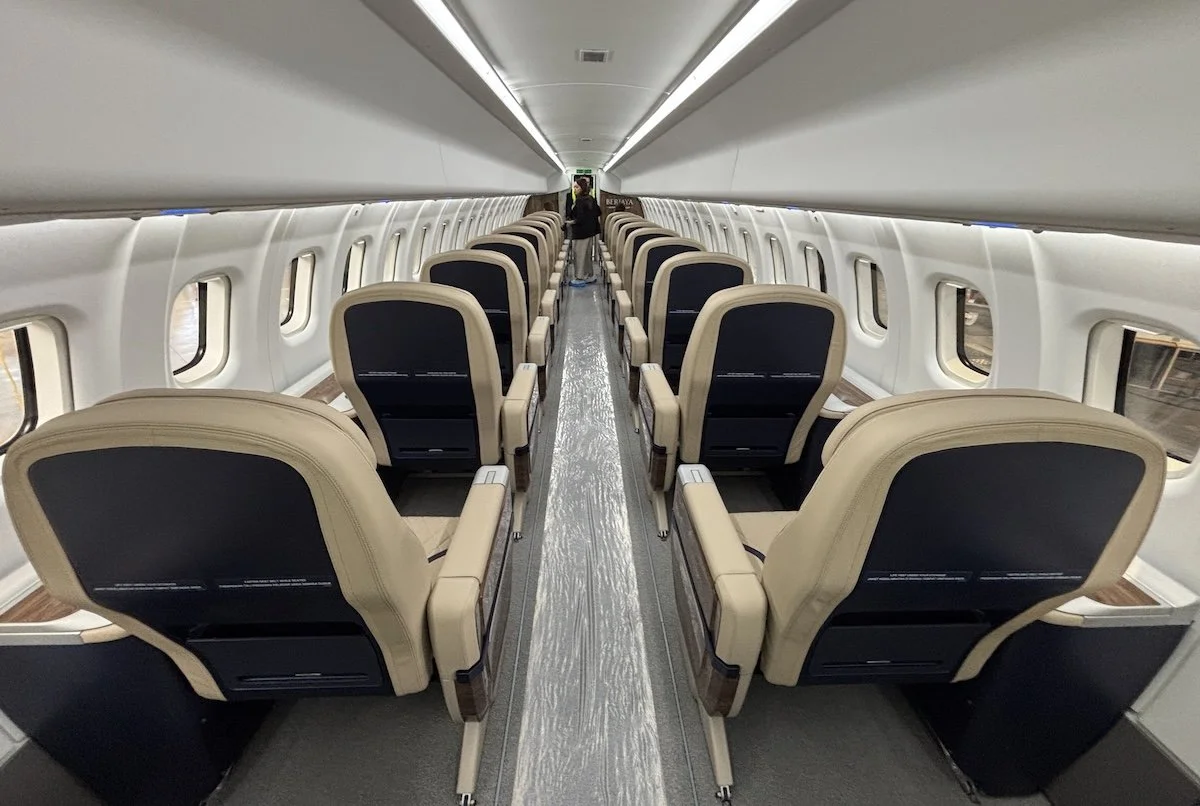
ATR has delivered the first ATR 72-600 fitted with its new HighLine VIP interiors. I got a preview of this cabin a few weeks prior, see the photos here.
Also, don't miss my interview with ATR's CCO Alexis Vidal, in which he outlines the main strategic lines the turboprop manufacturer is pursuing.
A conversation with the CEO of Nuremberg Airport, who explains how a mid-sized regional airport can reinvent itself after losing its main carrier.
Is Air France-KLM rebranding as "Blue"? We'll see.
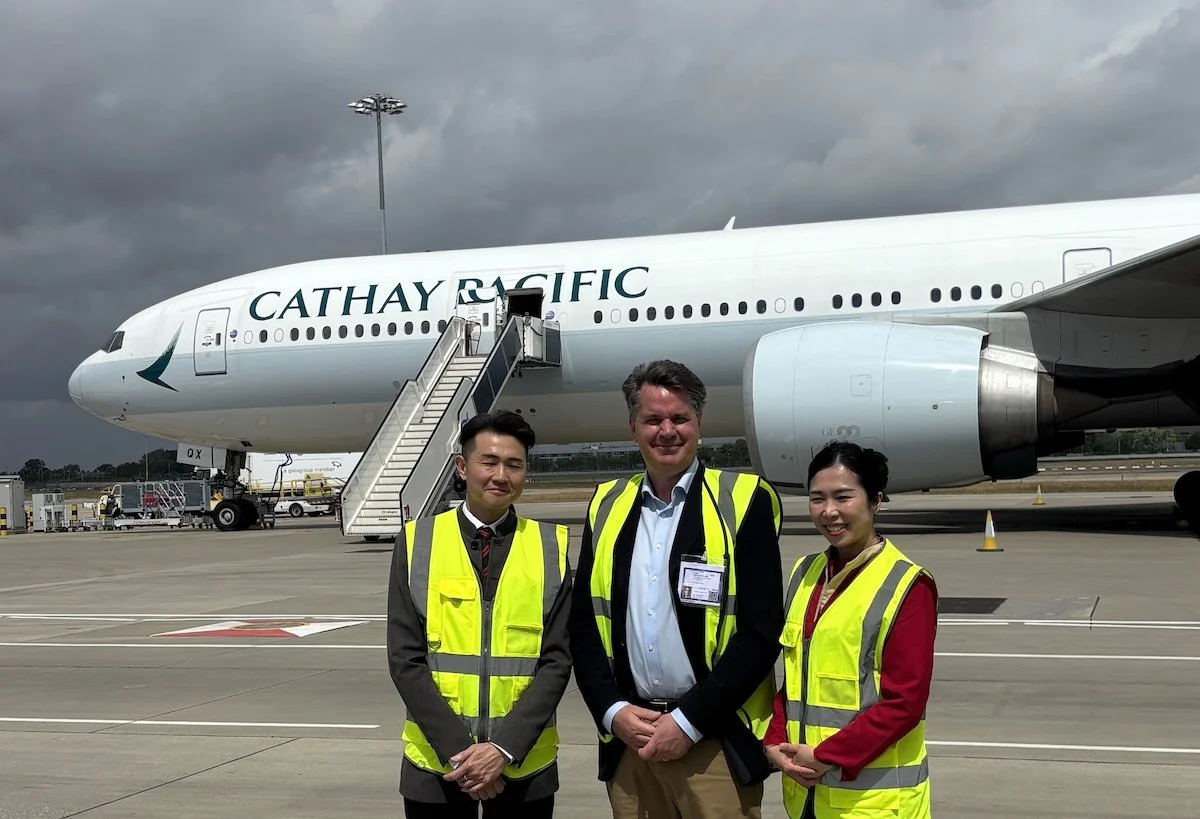
Finally, a look inside the oneworld alliance: the CEO explains why the group is prioritizing premium over growth.
Worth Watching
A friend flagged this hour-long Arte documentary on the iconic Antonov An-225 Mriya. A great way to remember this truly unique iconic aircraft.
