This November 19, 2026, I travelled all the way to Muret, a historical town near the French aeronautical capital, Toulouse (and site of the very pivotal Battle of Muret 800 years ago, but this is a story for another day!).
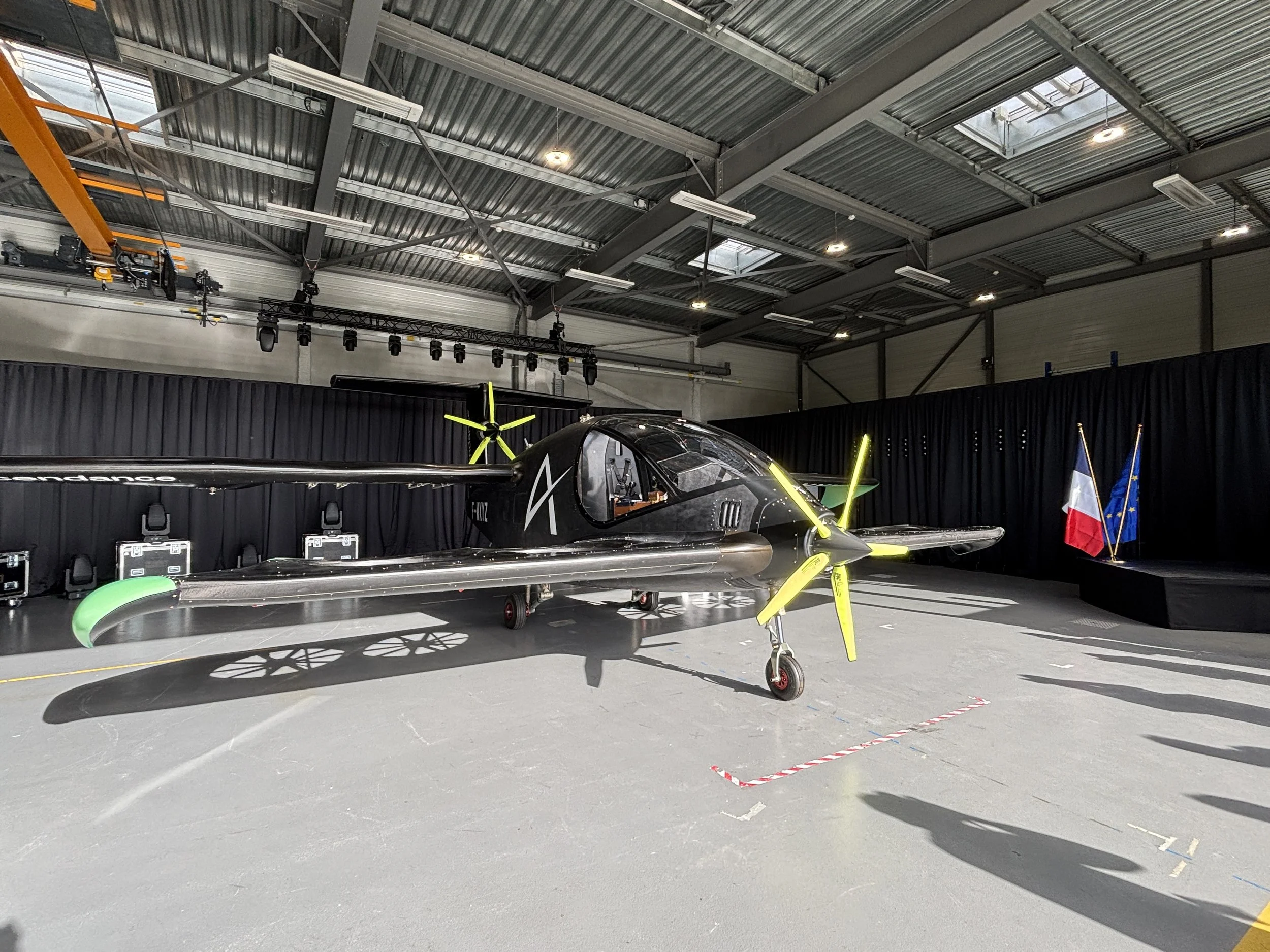
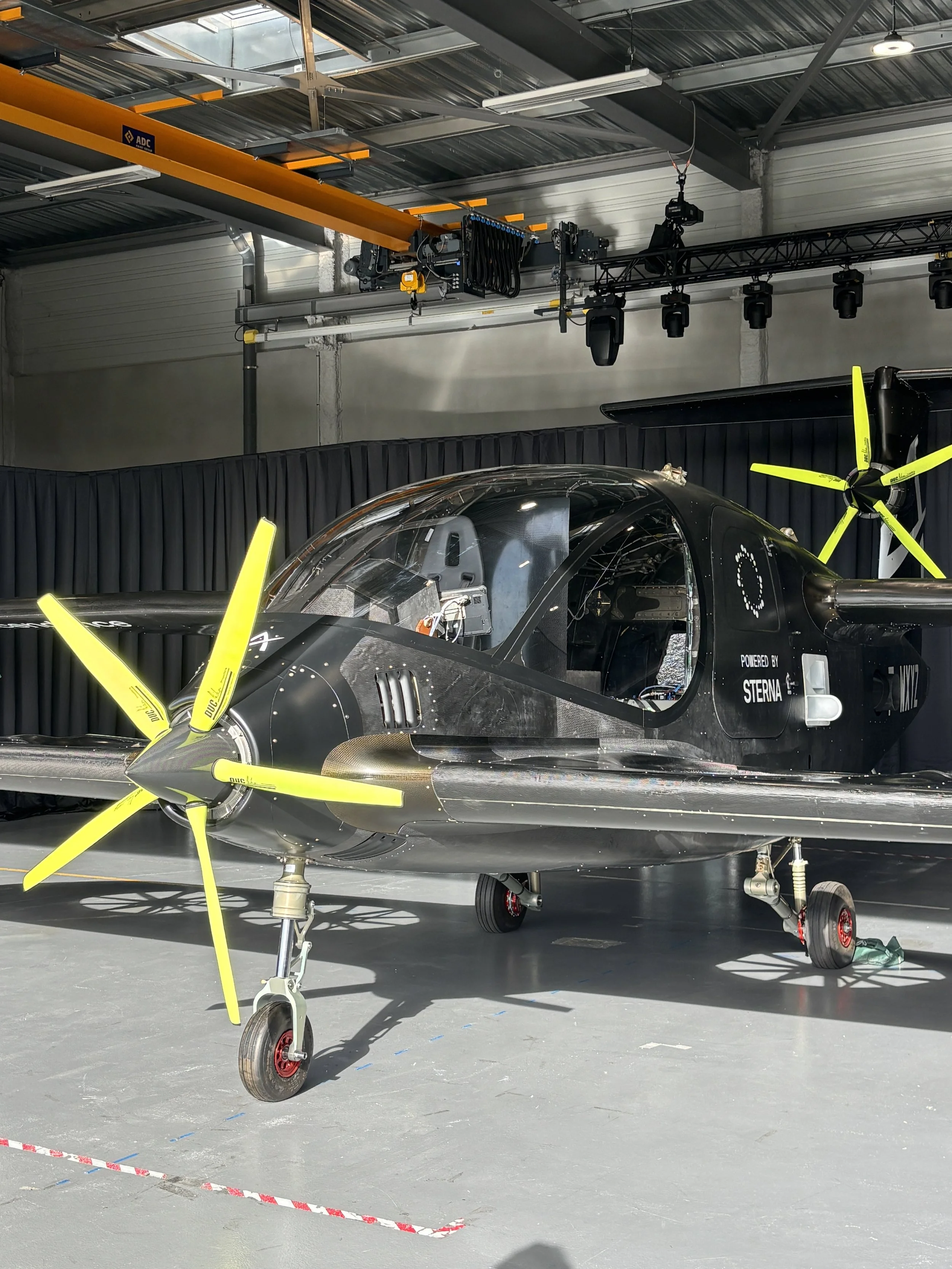
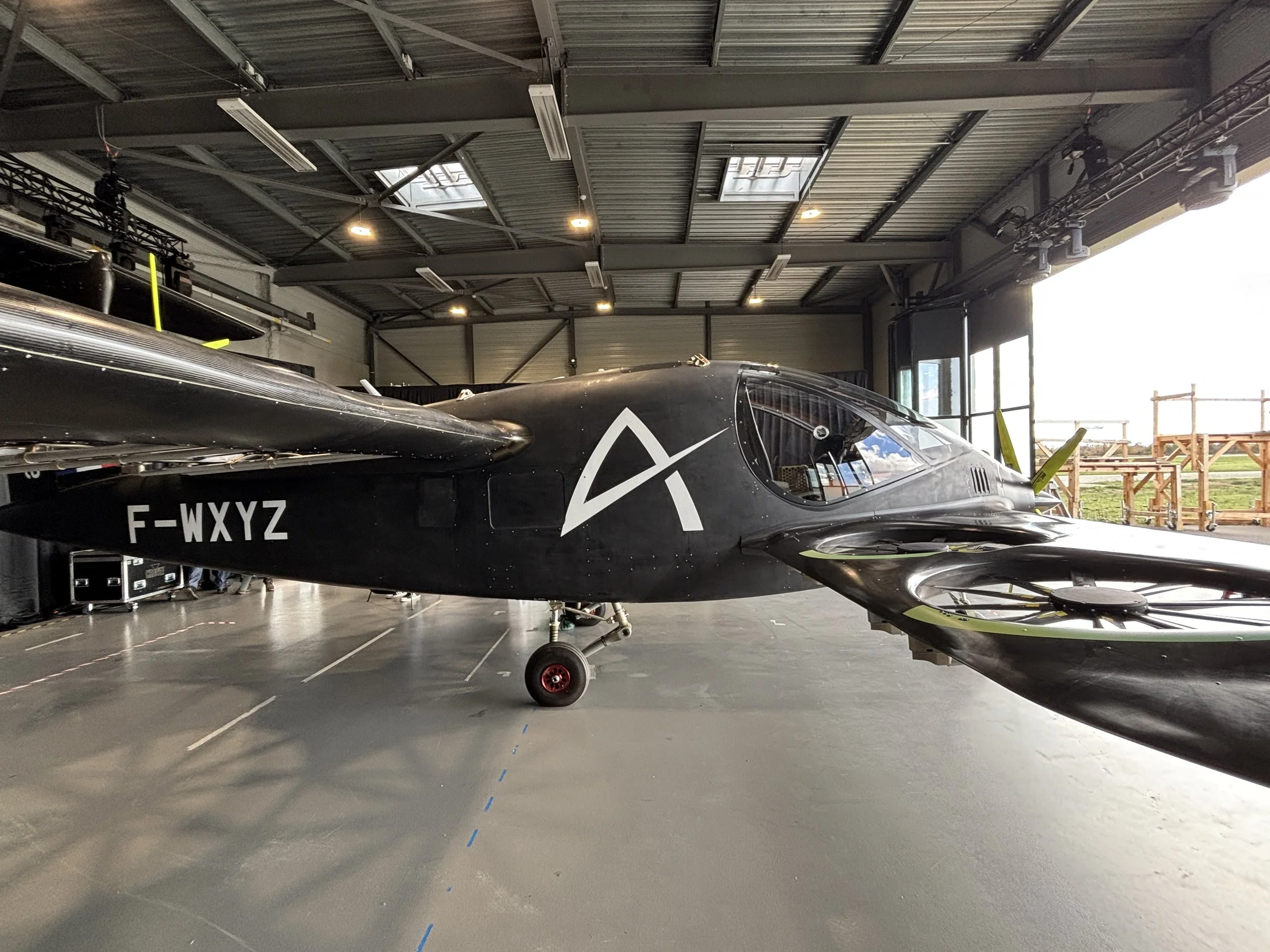
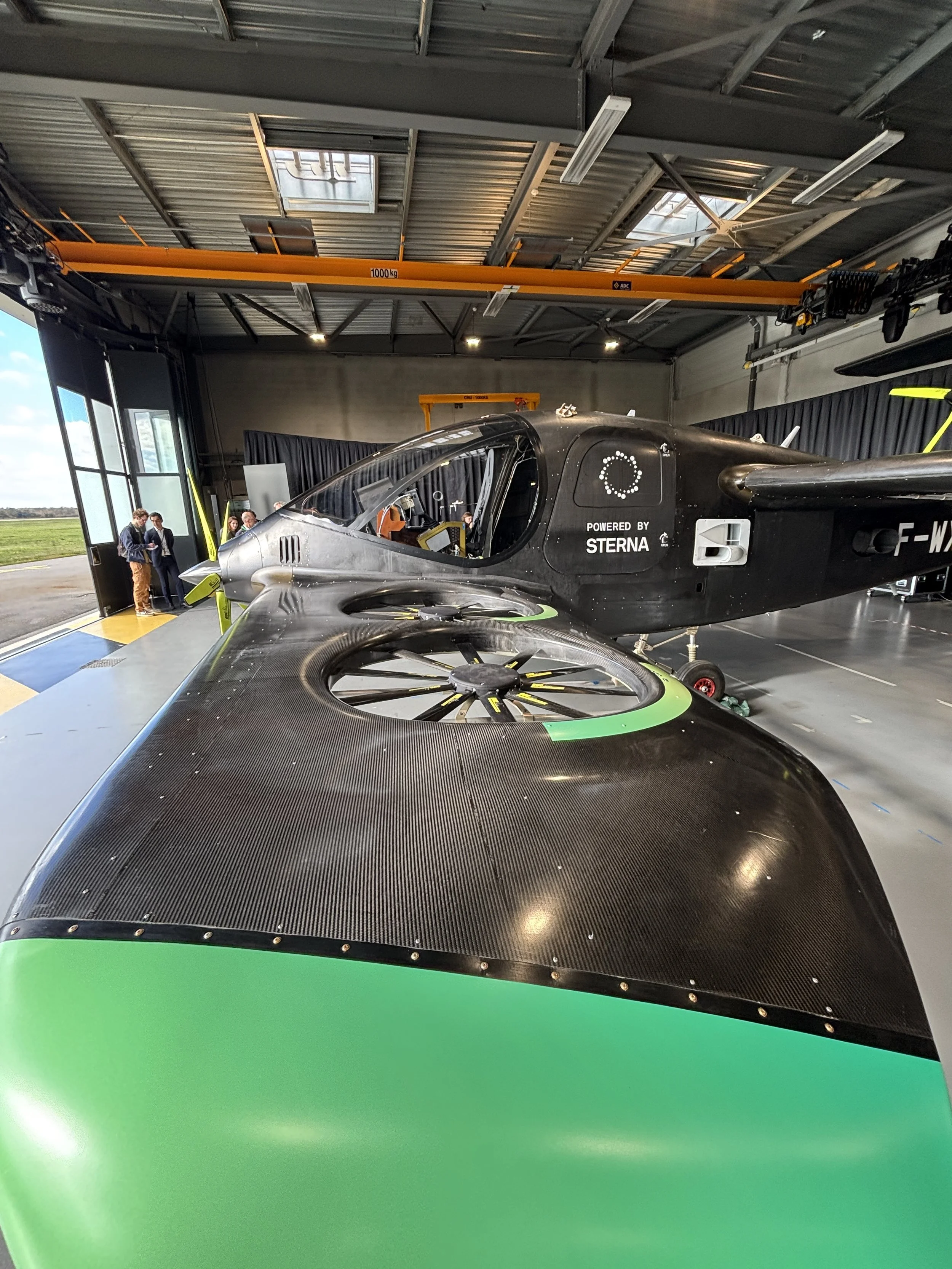
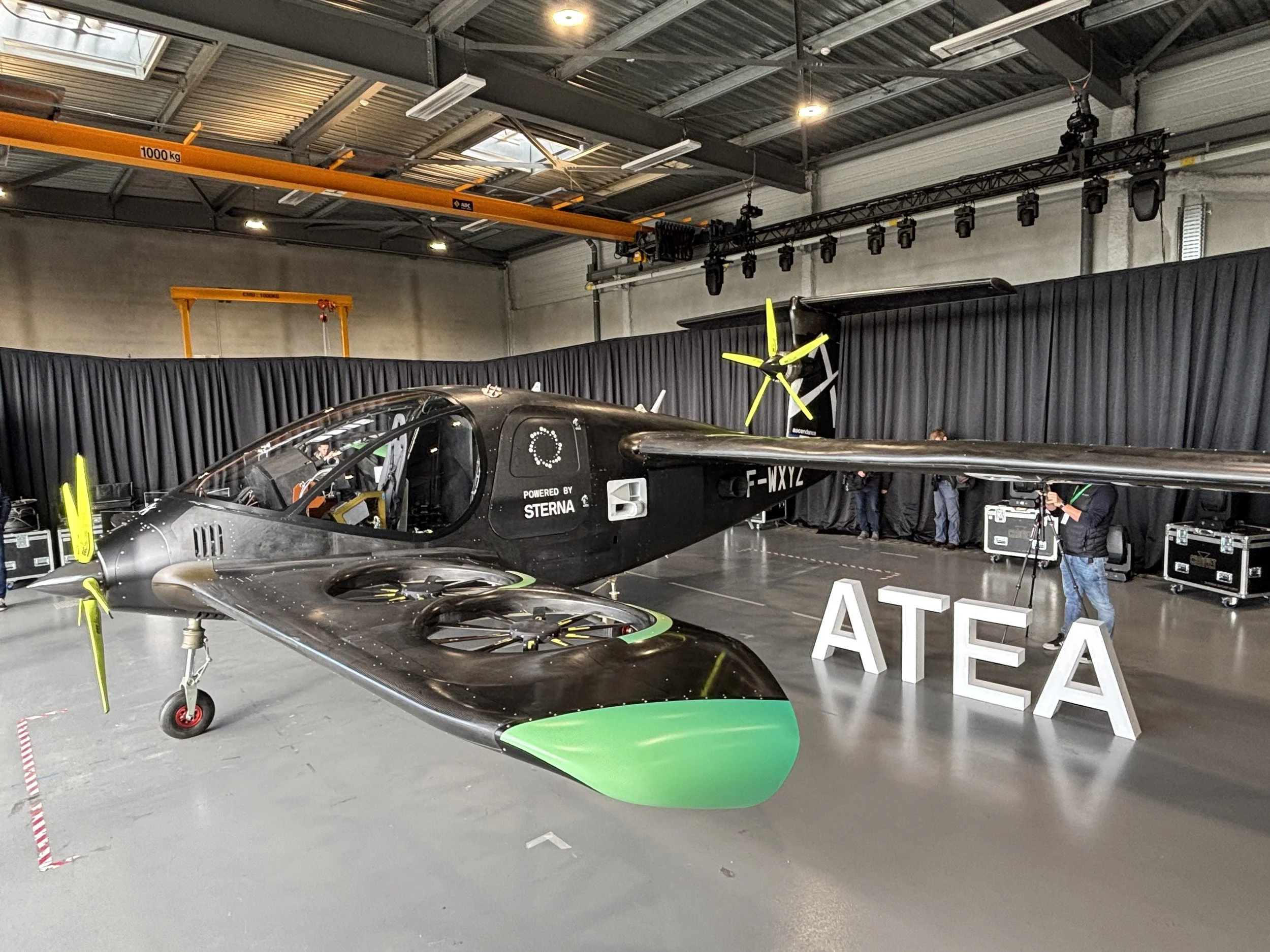
There was a very good reason for this trip and it was no less than the unveiling of the very first prototype of a new hybrid-electric eVTOL aircraft: the ATEA, developed by French startup Ascendance.
Ascendance has been working on this project since 2018, although, unlike other eVTOL developers had kept a rather low profile. In fact, at some point it even appeared that development of the ATEA eVTOL had somehow been sidelined in favour of a stronger focus on the propulsion technology itself.
But, it was a nice surprise to find out that this was not the case at all!
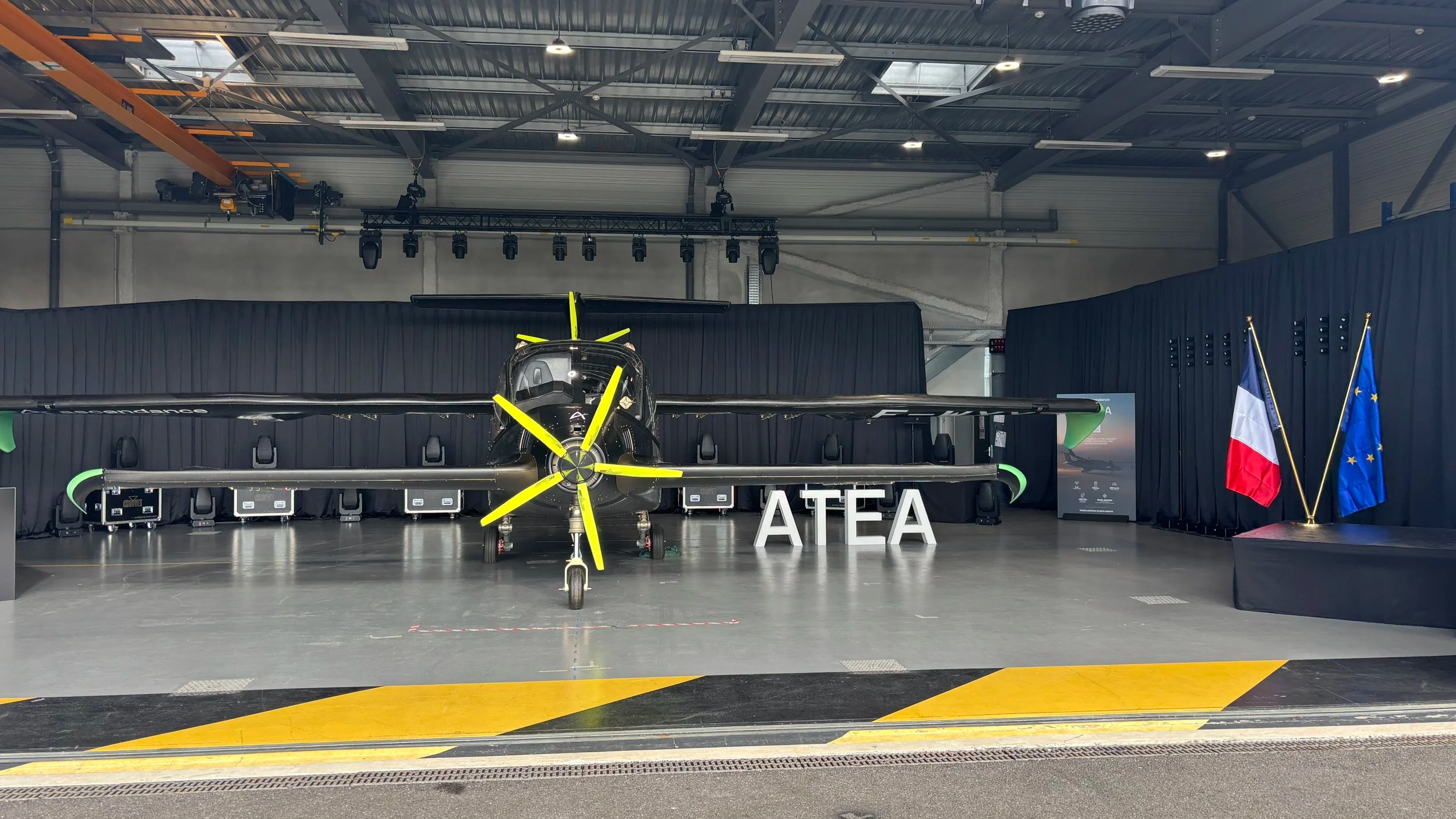
Ascendance’s two founders, Jean-Cristophe Lambert and Thibaut Valdivia acted as masters of ceremonies for the handful of media congregated for the occasion, which had a rather cinematic moment with the opeing of the hangar’s doors to reveal the new aircraft.
Ascendance has already conducted extensive ground testing of the different components of its Sterna hybrid-electric propulsion system, both separately and intergrated, and it is now prepared to start the flight test campaign as soon as they receive the official greenlight from the French aviation authorities.
For the time being only this prototype will be involved in testing. In this regard, Lambert pointed out that the company is doing quite a lot with resources that are just a fraction (€60 million to date) of those available to their US and Chinese competitors!
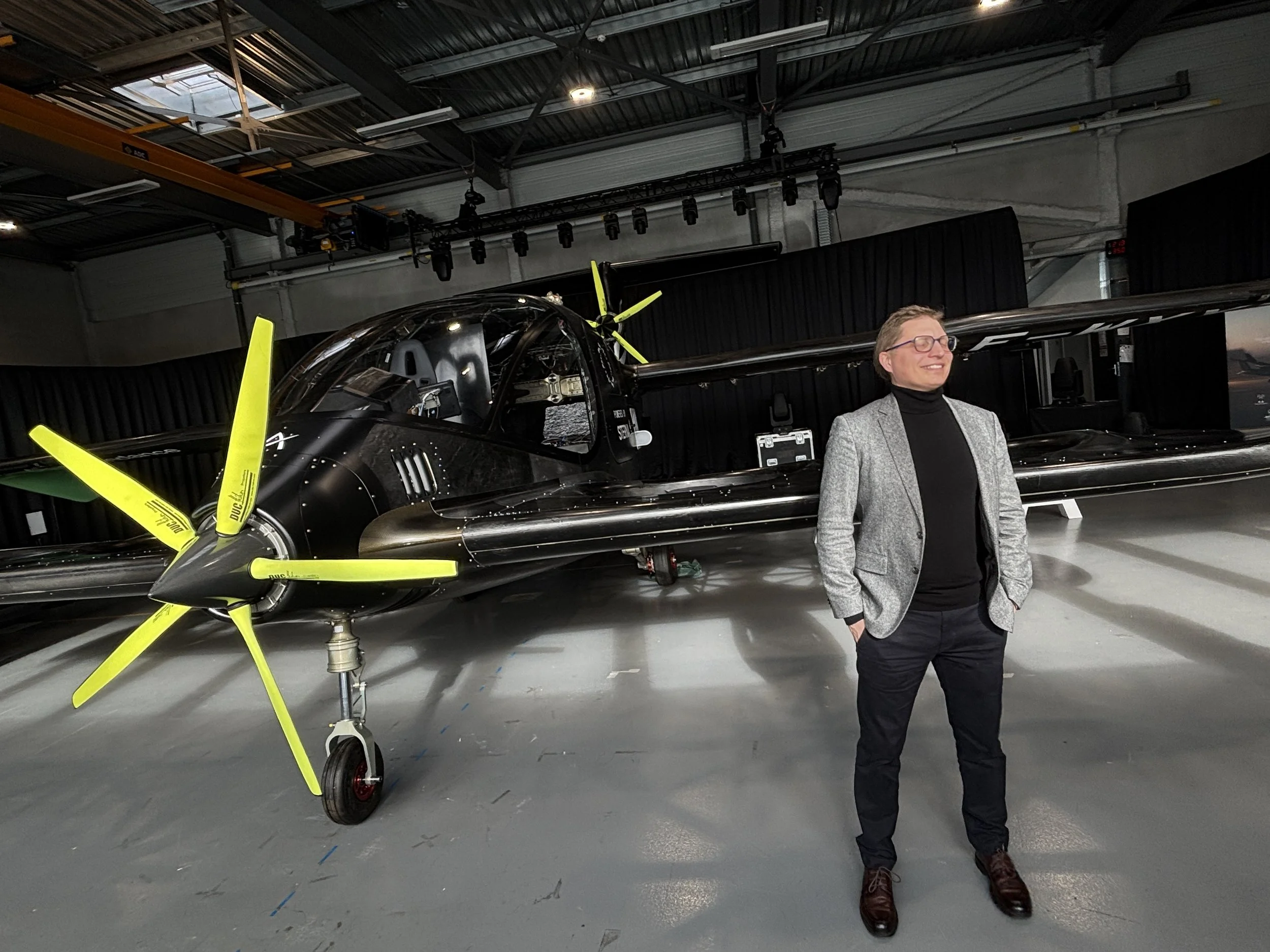
Ascendance’s Jean-Cristophe Lambert with the ATEA prototype
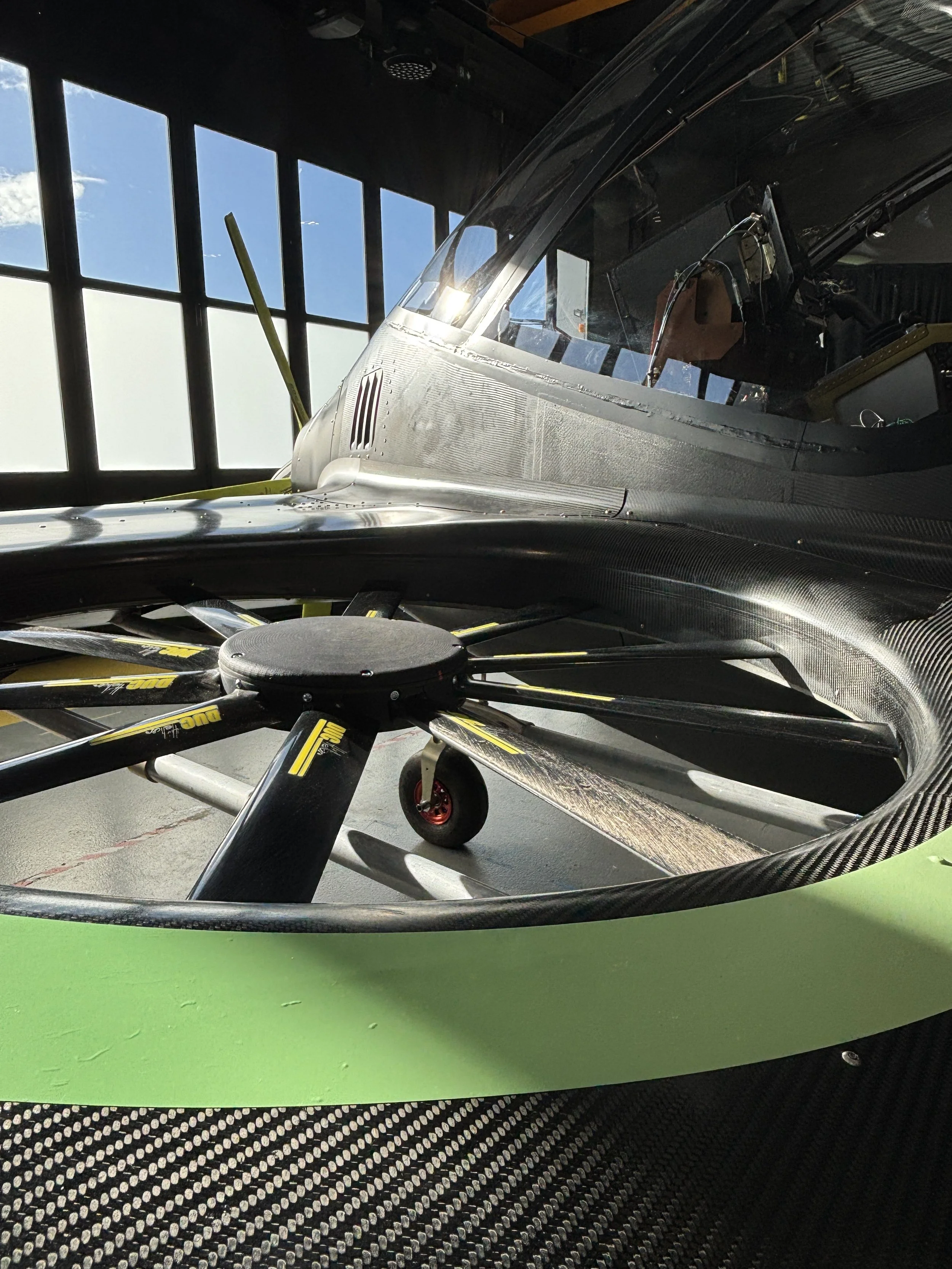
The ATEA has a lift and cruise configuration and is powered by a modular hybrid-electric system called “Sterna”, which has been designed with versatility in mind. In this regard, Ascendance envisages Sterna to equip also other types of aircraft in the future, both manned and unmanned.
Lambert and Baldivia also highlighted the strong European flavour of the ATEA, with most of its parts and components being designed or manufactured in Europe. This is a card that the company certainly aims to play in light of the growing interest by European countries in developing sovereign aerospace capabilities.
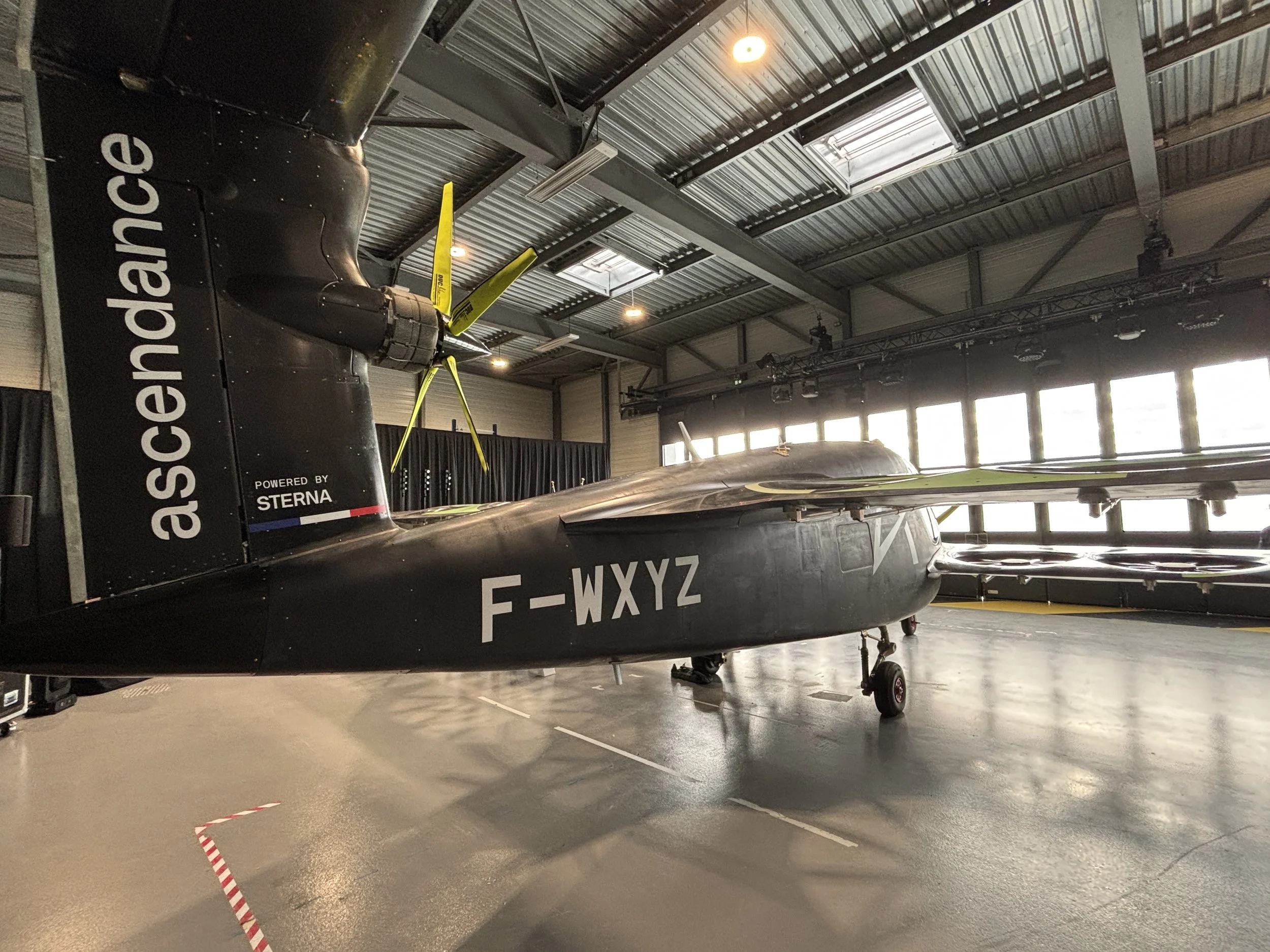
The prototype now unveiled has a a carbon-fibre composite fuselage combining pre-preg and resin-infused structures, with a length of 9 meters, and a height of 3.7 meters.
Ascendance’s team explained how they have been rather ruthless when it comes to saving wright and they were actually quite (and rightly) proud that they managed to complete a prototype that is 100kg below target.
The ATEA is a fly-by-wire aircraft with no hydraulic actuators whatsoever.
It will also have a ballistic parachute for added safety.
The final version of the ATEA is expected to be able to carry between 4 and 6 people at speeds of around 250 km/h and over distances of up to 900km.
What follows is a compilation of pictures that I am sure will give you a better sense of this aircraft: