One more year Barcelona hosted the Future Travel Summit, which is closely connected to EU-Startups (a digital platform tracking the European tech scene which often features aerospace startups).
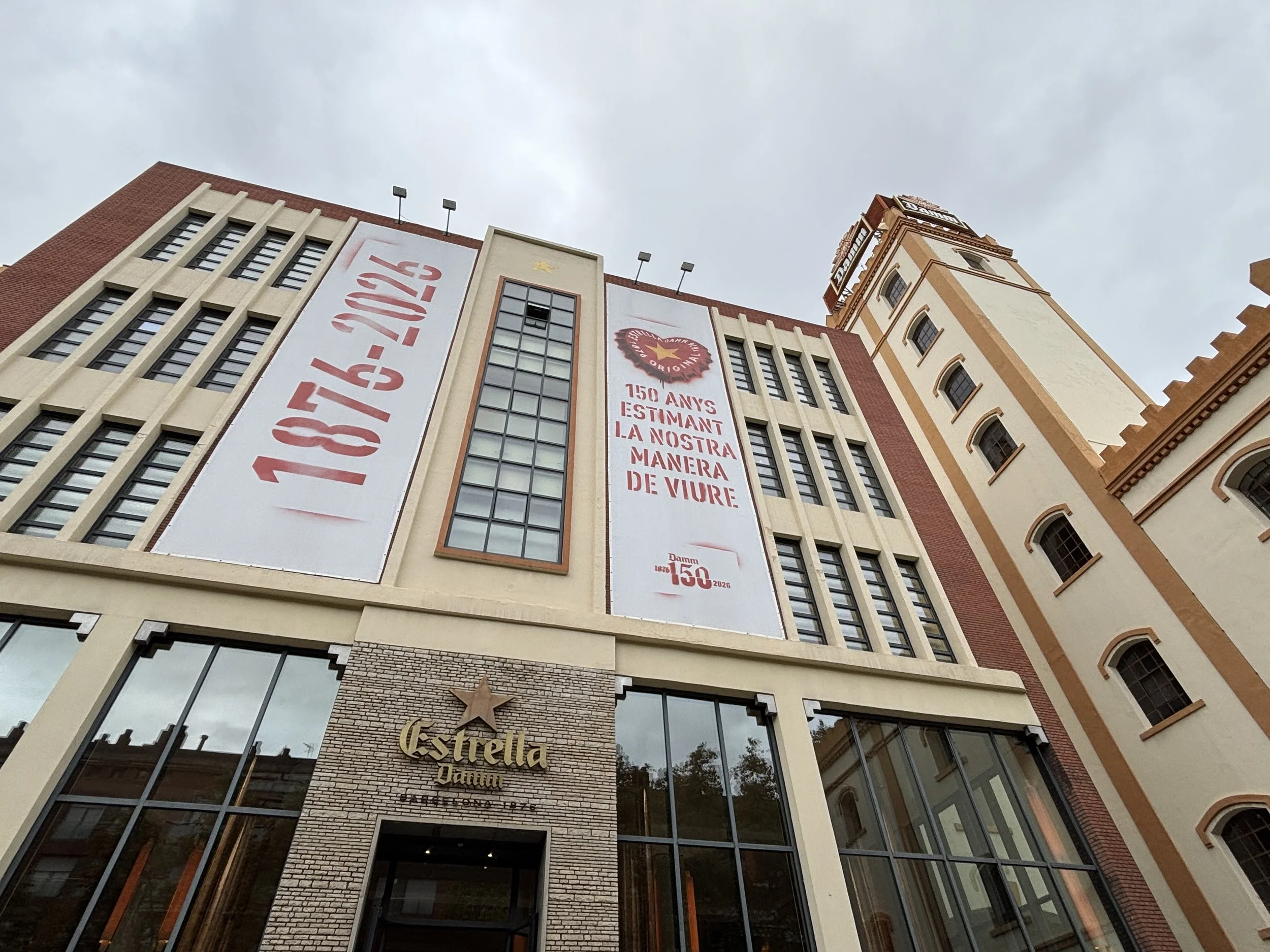
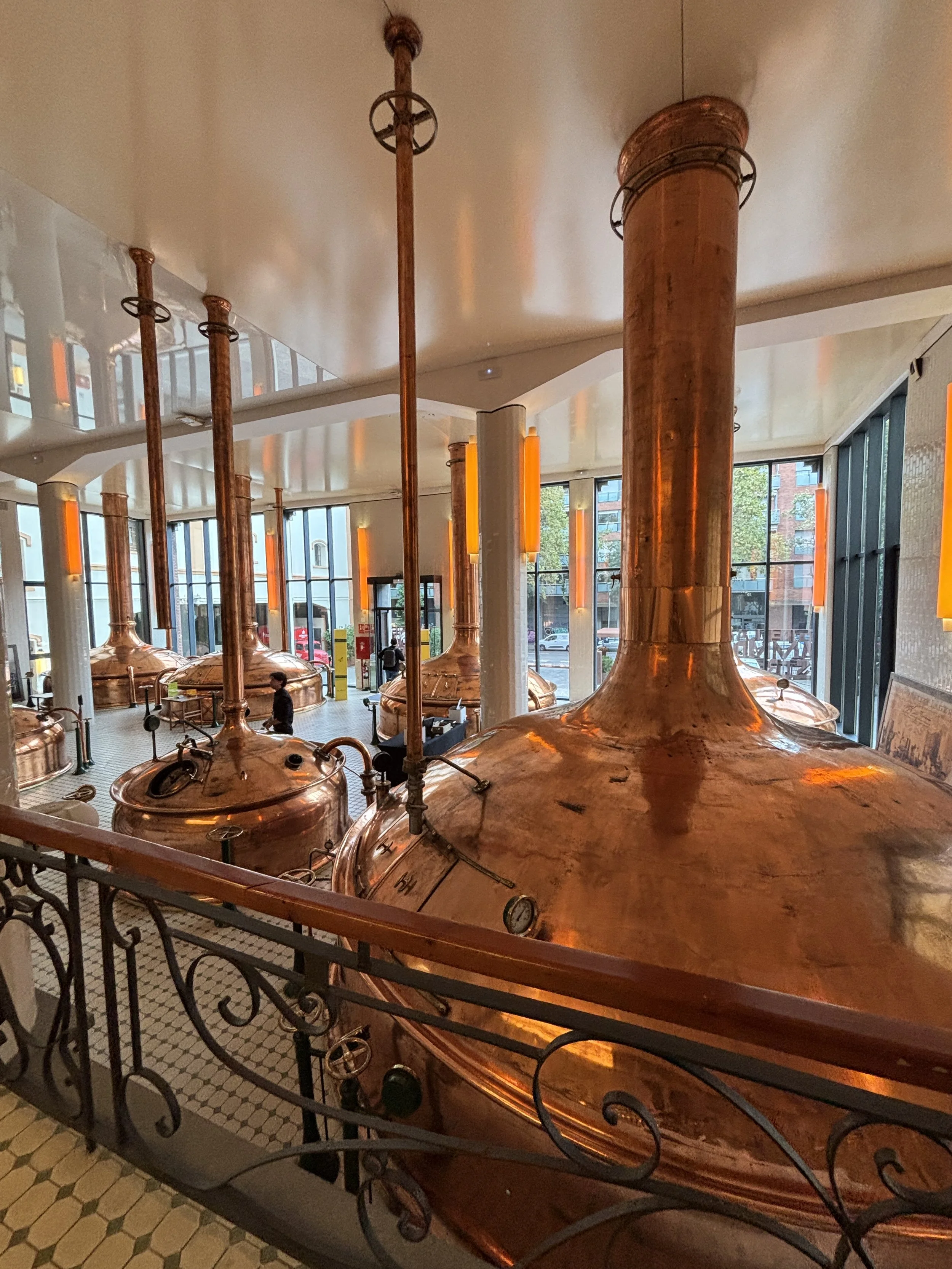
Entrepreneurs, investors and tech industry pundits and observers gathered at a former brewery (the former home of the famous “Estrella Damm” beer brand) to take the pulse of the travel tech industry.
The program was pretty comprehensive in scope and covered different facets of travel tech. Two of the conference’s sessions caught my attention, in particular, since they covered topics which I have had the chance to follow closely over the years and covered on this site and podcast previously.
How airlines can generate demand for distressed inventory?
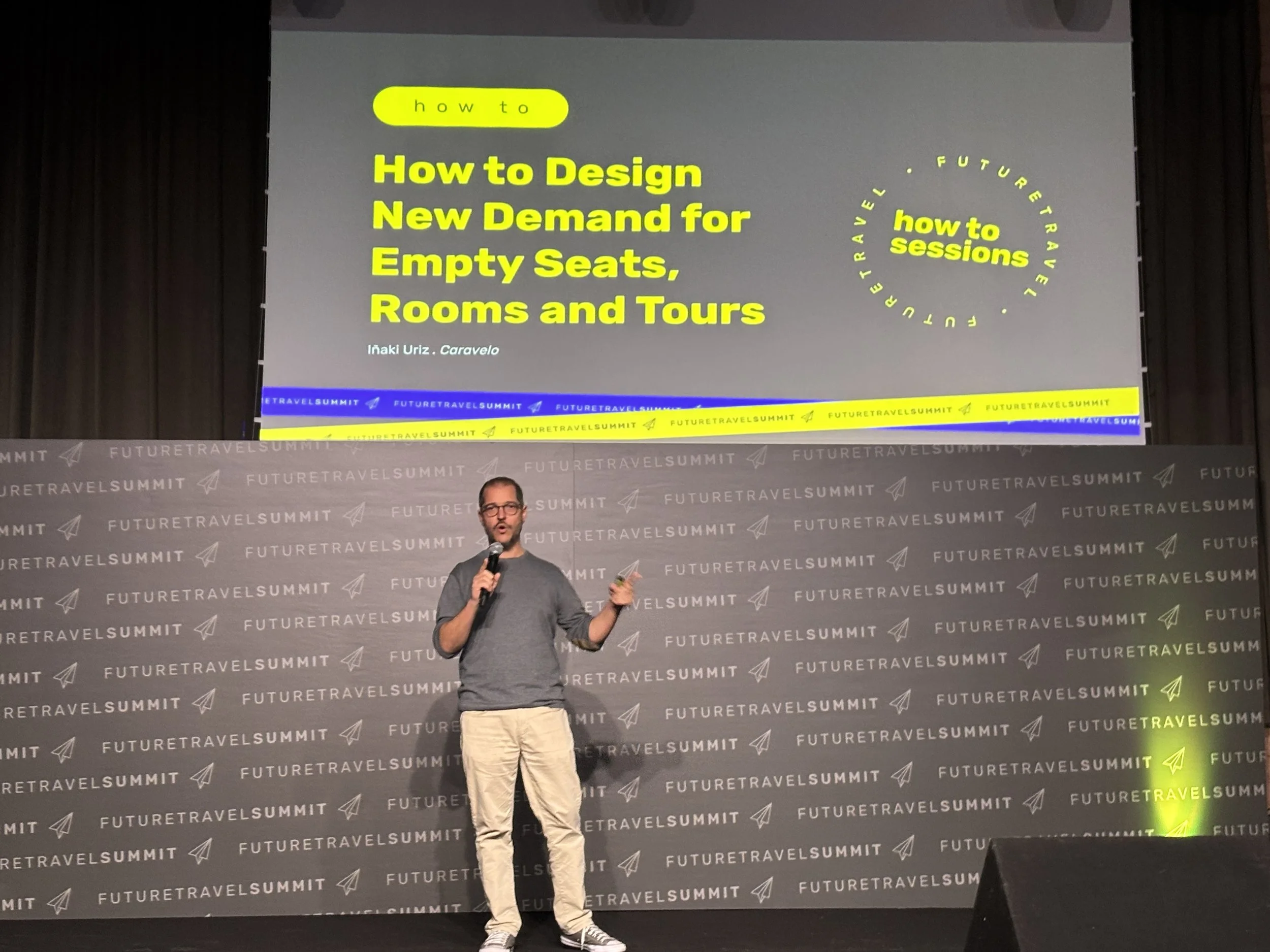
One of these sessions was a brief keynote by Iñaki Uriz, co-founder of Caravelo, explaining how to build demand for empty seats and rooms without jeopardizing your value proposition by bluntly discounting your product.
In its very beginnings, quite a few years ago, Caravelo was helping airlines recover and resell their own inventory in the face of fluctuating demand (I actually interviewed the two founders back then when the company even had a different name!). The Barcelona-based startup has since pivoted to provide solutions that help airlines reach out to new market segments and retain more business from those that are already customers. These include, for example, subscription products for frequent flyers, such as the ones being offered, among others, by Wizz Air.
Now, these subscriptions can appeal to different profiles of frequent flyers, while generating reasonably predictable advance cash flow for the airline (plus potentially significant additional ancillary revenue too), but also, by tweaking the product a bit, can solve another issue all travel operators face.
Uriz explained that on average, around one in six airline seats and a quarter of hotel rooms go unsold. That leaves operators with a conundrum. They're tempted to discount this inventory heavily to sell it before it expires, yet the seats that remain available close to departure are the ones that can be sold at a high margin to less price-sensitive customers, the people who need to get to that destination at the last minute no matter what. The challenge, then, is to create new demand for that inventory without cannibalising existing demand.
Some operators mask this inventory problem by trying to distribute it through packages that combine it with other offerings, so it is more difficult to discern what is the actual “distressed” inventory they are actually disposing of.
Caravelo's answer is a flavour of its subscription product called "Last Minute Pass", wich is designed for frequent flyers with fairly flexible schedules who don't need much help with logistics on the ground. Think of pensioners with a second home near another city, or remote workers who travel regularly between two cities and already have accommodation sorted.
Under this scheme, customers pay a fixed annual fee, for example €499, and can then book flights anywhere on the network within 72 hours of departure (you would still need to pay €10 per flight to cover fees and taxes).
Wizz Air sold 8,000 of these passes within 48h of them becoming available for purchase, which translated into some 60,000 flights in a year (around 7 to 8 flights per member).
The system helped the low-cost carrier unlock around €4 million in direct revenue compared with the baseline scenario, plus another €700,000 in ancillaries bought by those extra passengers. Did these passes cannibalize existing business? A little bit, Caravelo and Wizz Air estimate this resulted in a 6% drop in tickets that would have been bought anyway by existing customers, but the financial impact was less than €350,000 in total. What’s interesting is that 42% of those signing up were new customers to Wizz.
Overall, it may sound like these are small numbers in the grand scheme of things, and it’s true, but it's still a positive return which the airline “recovered” pretty much out of thin air.
Uriz summed it up saying that “empty inventory isn’t a pricing problem, but a product design problem”.
Airports as testbeds for tech startups
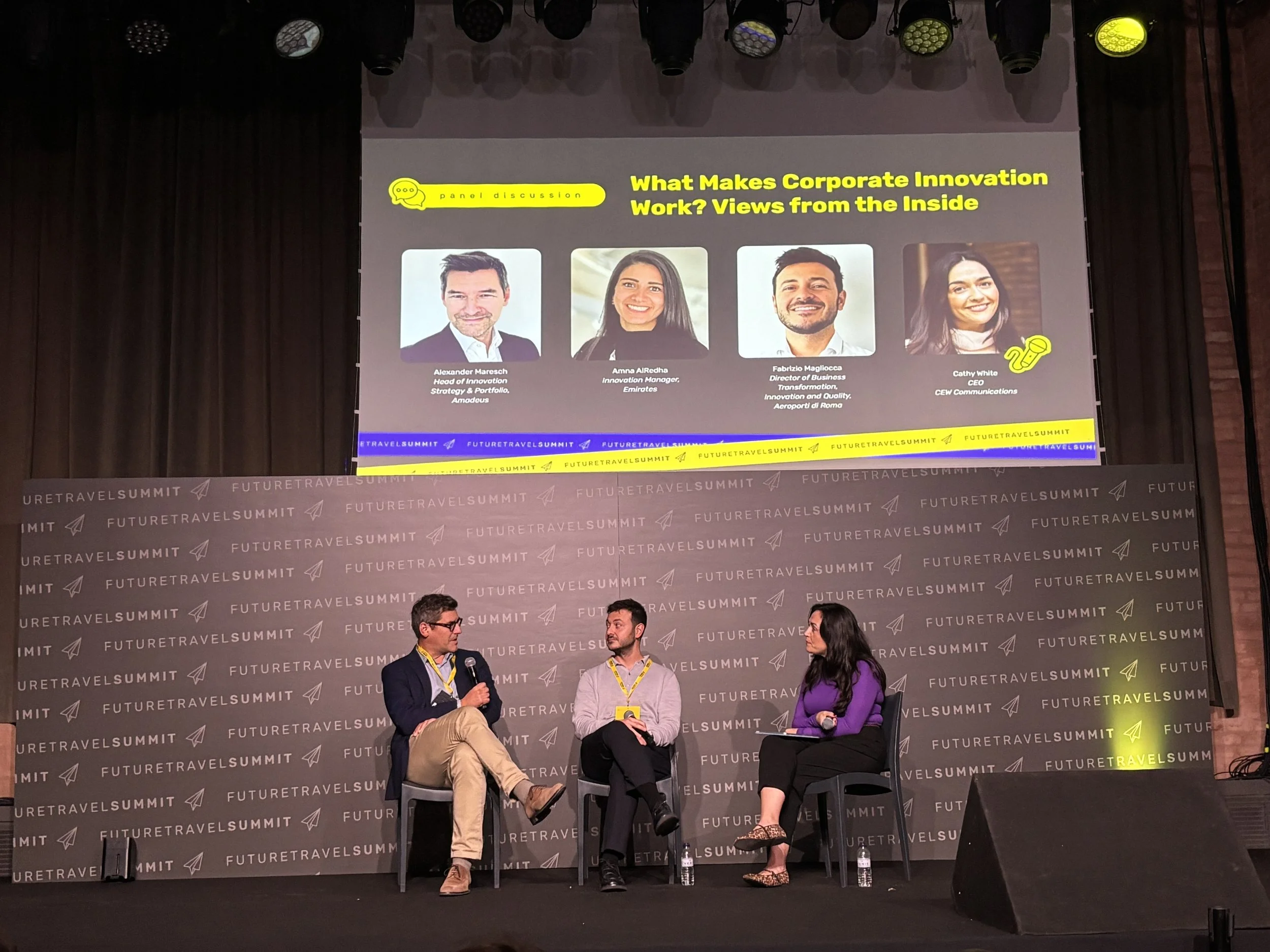
In another session, Fabrizio Magliocca, Director of Business Transformation at Aeroporti di Roma (AdR) shared some insights into the airport operator's innovation programme (his predecessor in the role, Giulio Ranucci, then Head of Innovation at AdR, was, actually, a guest on the Allplane Podcast back in December 2023).
Aeroporti di Roma manages the two airports serving the Italian capital, which together handle nearly 45 million passengers a year, and has been one of the most active players in the airport space when it comes to fostering tech innovation.
Giving an idea of how the idea funnel looks like, Magliocca explained that during the four years of the program, his team has seen some 1,200 startups,. This has resulted in 40 pilot pogrammes and 4 investments.
As you can see, pretty intense filtering here. I am not sure how this compares to the broader VC/startup incubation industry, but there is little doubt that commercial aviation is a particularly challenging space when it comes to introducing new tech.
For very good reasons, commercial aviation is subject to a rather strict regulatory environment and companies also tend to be rather risk averse. As a startup, even if you get the operator’s buy-in, a full technology deployment may take around two years and very often technology doesn’t make it past very small scale testing.
Magliocca acknowledged that while airports (and aviation in general) could be receptive to new tech, they are not so good at scaling. Still, the hyper-controlled environment of the airport is in many cases the best platform to get a toehold in the industry which can potentially be scaled later. What’s more, a program like the one run by AdR also gives founders and startups a taste of how the industry works. These often come with naive ideas about the realities of the aviation corporate world, where often multiple decision makers and several layers of compliance need be brought in before even small scale roll-out can be greenlighted.
So, what factors decide who is given a chance and who’s not?
Magliocca also explained that very often interest in a particular startup or technology arises from practical observation of the teams on the ground, which identify areas for improvement or a problem to be solved.
In this respect, an airport is in many ways like a living city, so it offers opportunities for startups working across a broad range of technologies, from energy and passenger experience to retail, robotics and security.
Aeroporti di Roma's programme offers a fast track through this process. Magliocca explained that a selected project typically takes around three months to set up and get things in motion, this is then followed by a six-month pilot in a real-life operational environment.
But there is more to the programme, because Aeroporti di Roma also doesn't work in a vacuum. It is one of the founding members of “Airports 4 Innovation”, a network of airports that run similar programmes and share experiences and information. We are talking some big industry names here, since, besides Aeroporti di Roma, other names include Dubai Airports, Dallas Fort Worth International Airport (DFW), Spain’s Aena and Munich Airport, to name just a few. So, a successful test in Rome can open doors with some or all of these other operators.
