Turkish Airlines business class comparison: A350-900 vs B777-300ER vs A330-300
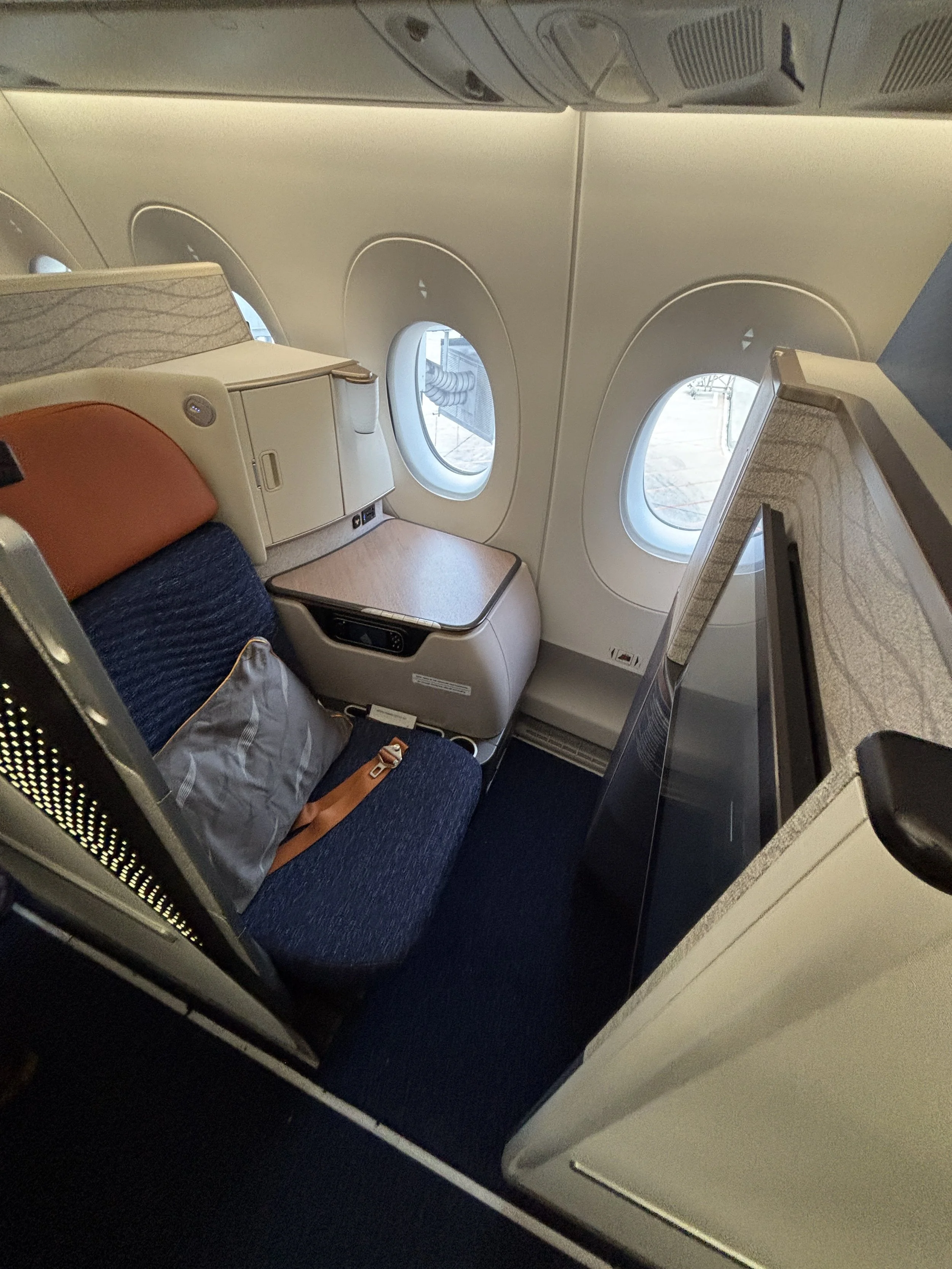
A350-900
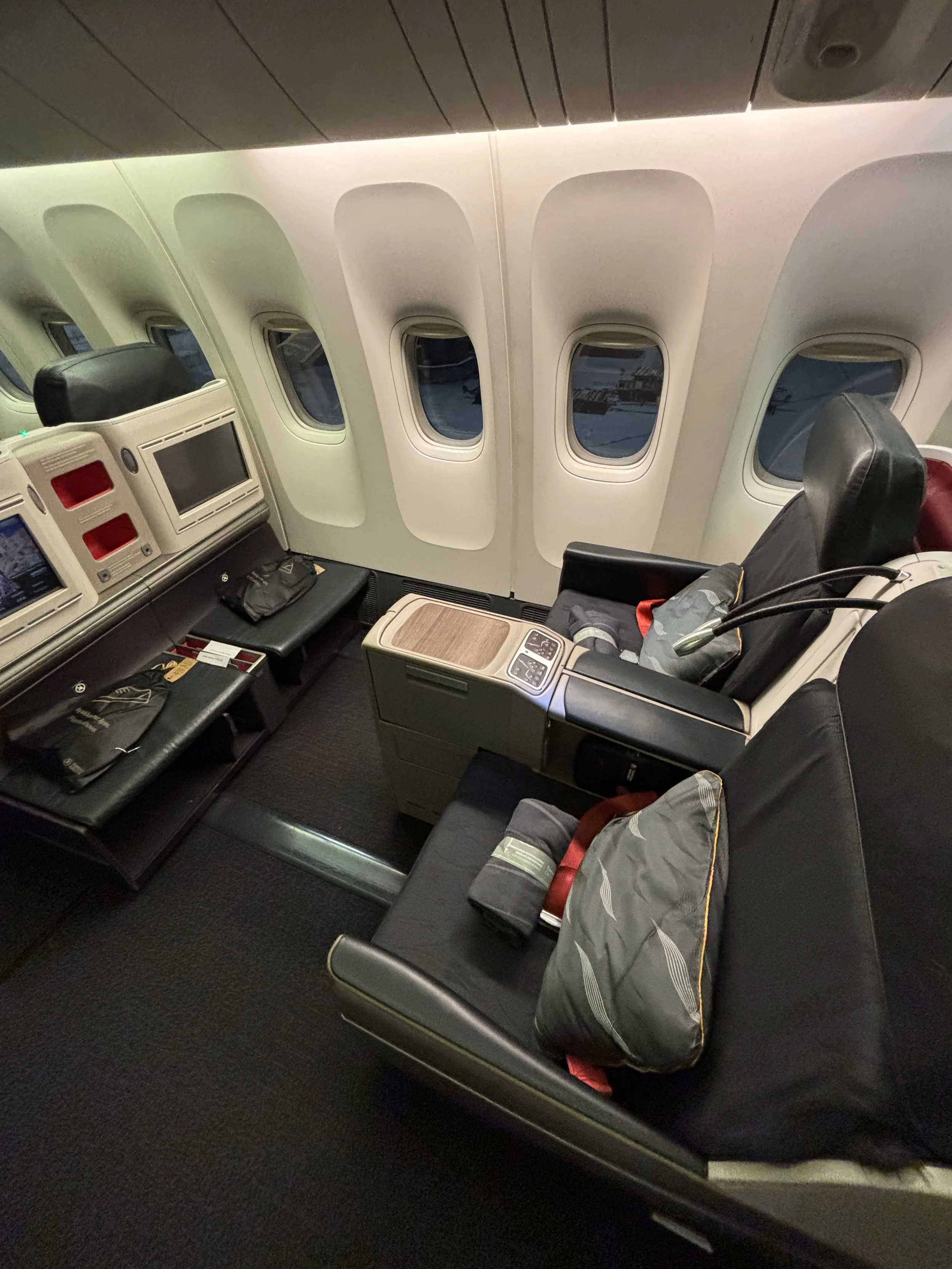
B777-300ER
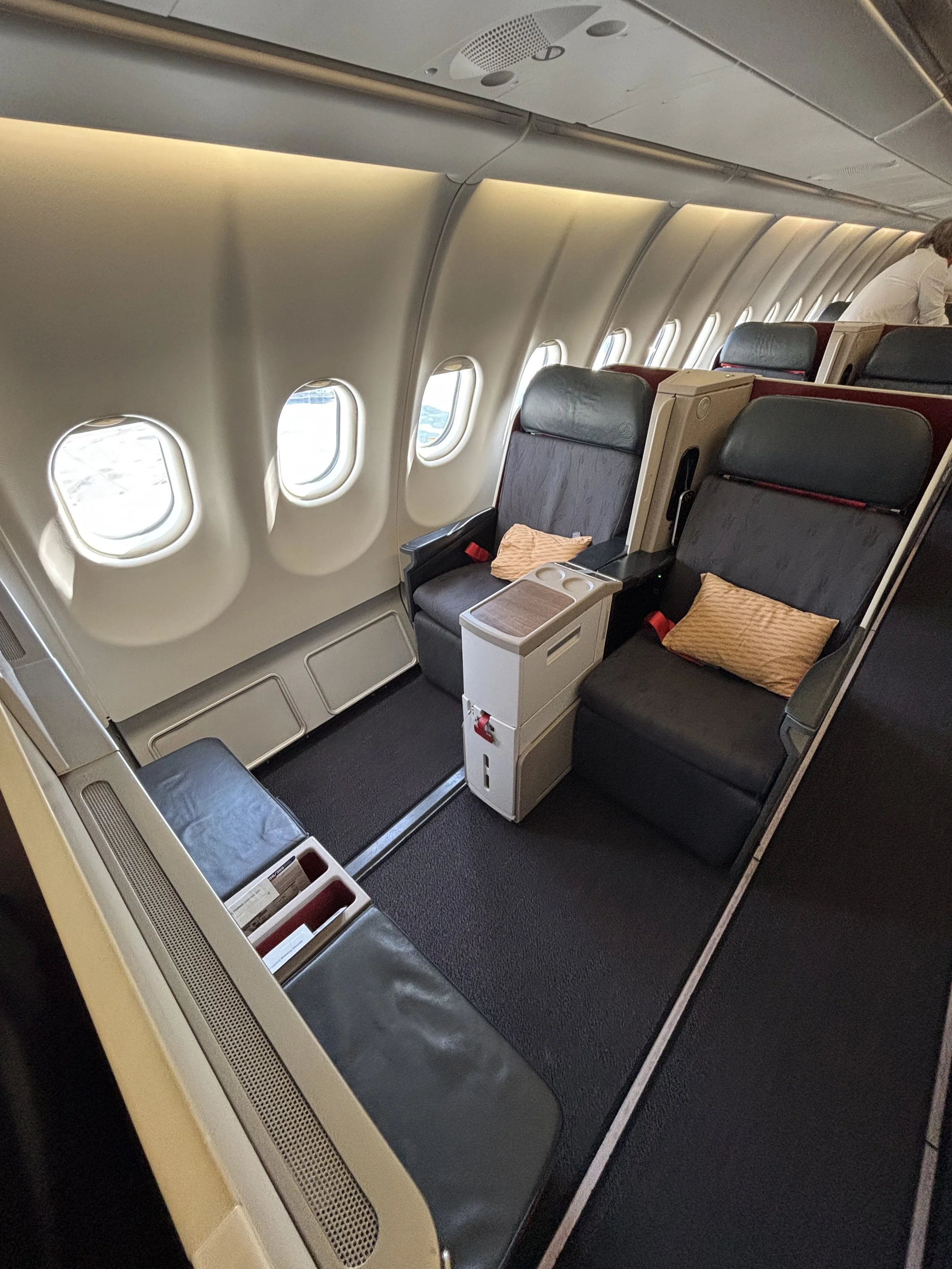
A330-300
Pick your favourite!
My previous reviews of Turkish Airlines flights have proved to be quite popular, which shows there is quite a lot of interest out there about the different products and services the Turkish flag carrier offers.
The type of cabin you may find upon boarding a Turkish Airlines plane, though, can vary a bit, since the airline operates a very diverse fleet which includes the Boeing 777 and 787 and the Airbus A330 and A350 (we’ll leave the Boeing 737s and Airbus A320-family narrow body fleet for another occasion).
So, I thought it would be a good idea to create a little summary highlighting those differences I have come across when flying three of these aircraft types (the A330-300, B777-300ER and A350-900) on business class. Hopefully will be able to update this post in the near future with the B787, as well!
You can find the full flight reviews here:
It’s worth noting that the soft product (food, inflight entertainment (IFE) content and internet access) are pretty much identical across all types. The main differences are, obviously, on the hardware side, since these aircraft have joined Turkish Airlines’ fleet over a period of quite a few years in which aircraft cabin technology and passenger experience trends have evolved significantly.
Also, the A350-900 cabin described here is not the standard Turkish Airlines A350 cabin. This is because there a number of A350s in Turkish Airlines’ fleet which had been originally earmarked for Russian airline Aeroflot. They had already had their cabins fitted and were almost ready for delivery when the war in Ukraine started and Aeroflot was sanctioned by the European Union, so the planes could not be delivered and Turkish Airlines purchased them as they were.
My understanding is that there is another Turkish Airlines A350-900 cabin layout which was designed specifically for the Turkish flag carrier and is used by all the other A350s that are not ex-Aeroflot. The cabin described here is fitted, thus, only on a sub-fleet of four aircraft.
Last but not least, as of Q1 2026 Turkish Airlines have started retrofitting its B777-300ER fleet with a new configuration, switching to a 1-2-1 layout and Safran Unity suites, which, I think, will be a big upgrade from the current legacy cabin described in this post.
This post may contain affiliate links. If you book or buy something through them, I earn a small commission — at no extra cost to you. It's one of the ways I keep Allplane going. Thank you for your support.
Business Class Cabin Layout
1) A350-900
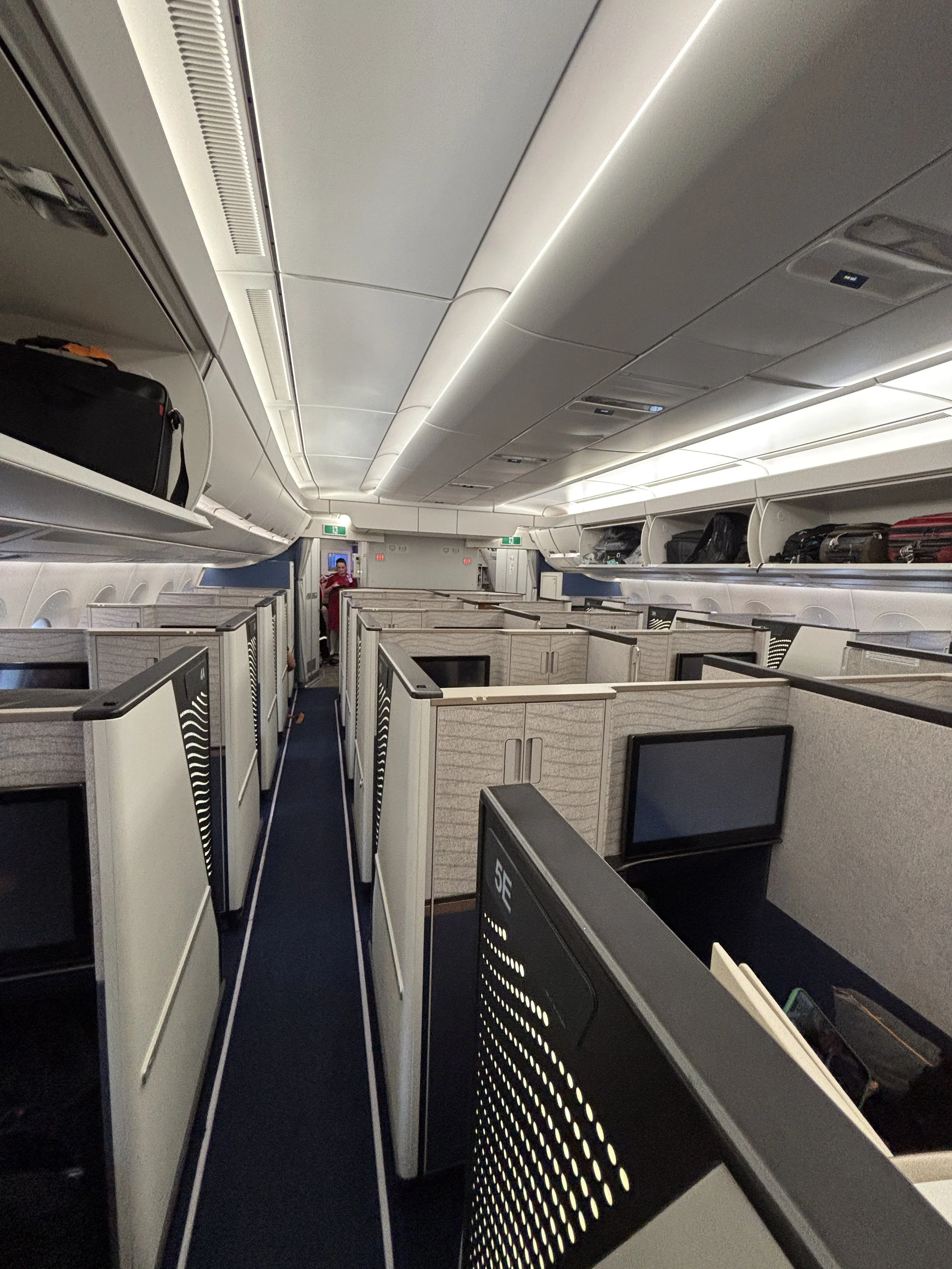
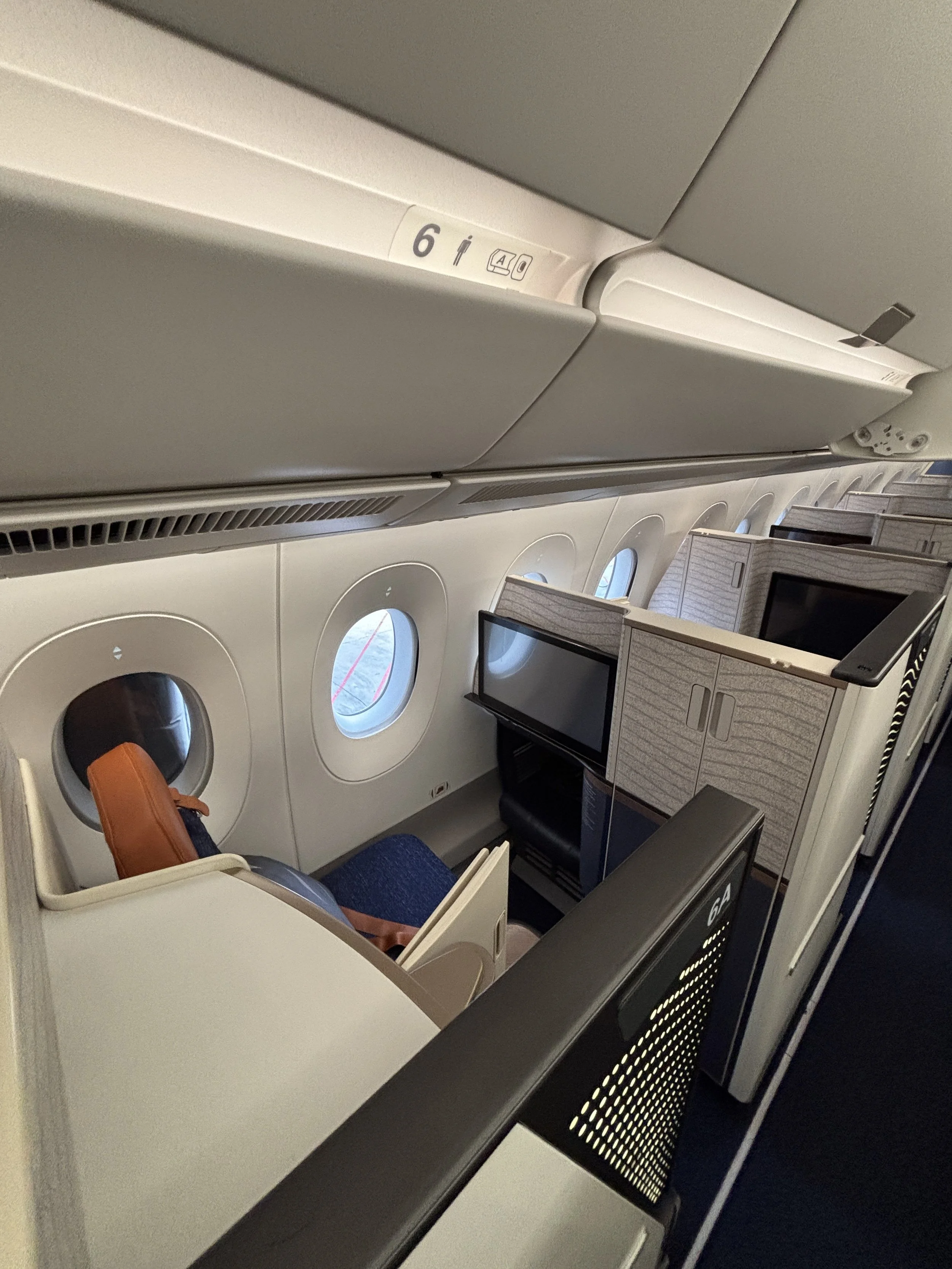
Main points of the Turkish Airlines A350-900 business class cabin:
1-2-1 Configuration
28 Collins Aerospace Horizon suites
Privacy doors with direct aisle access
2) B777-300E
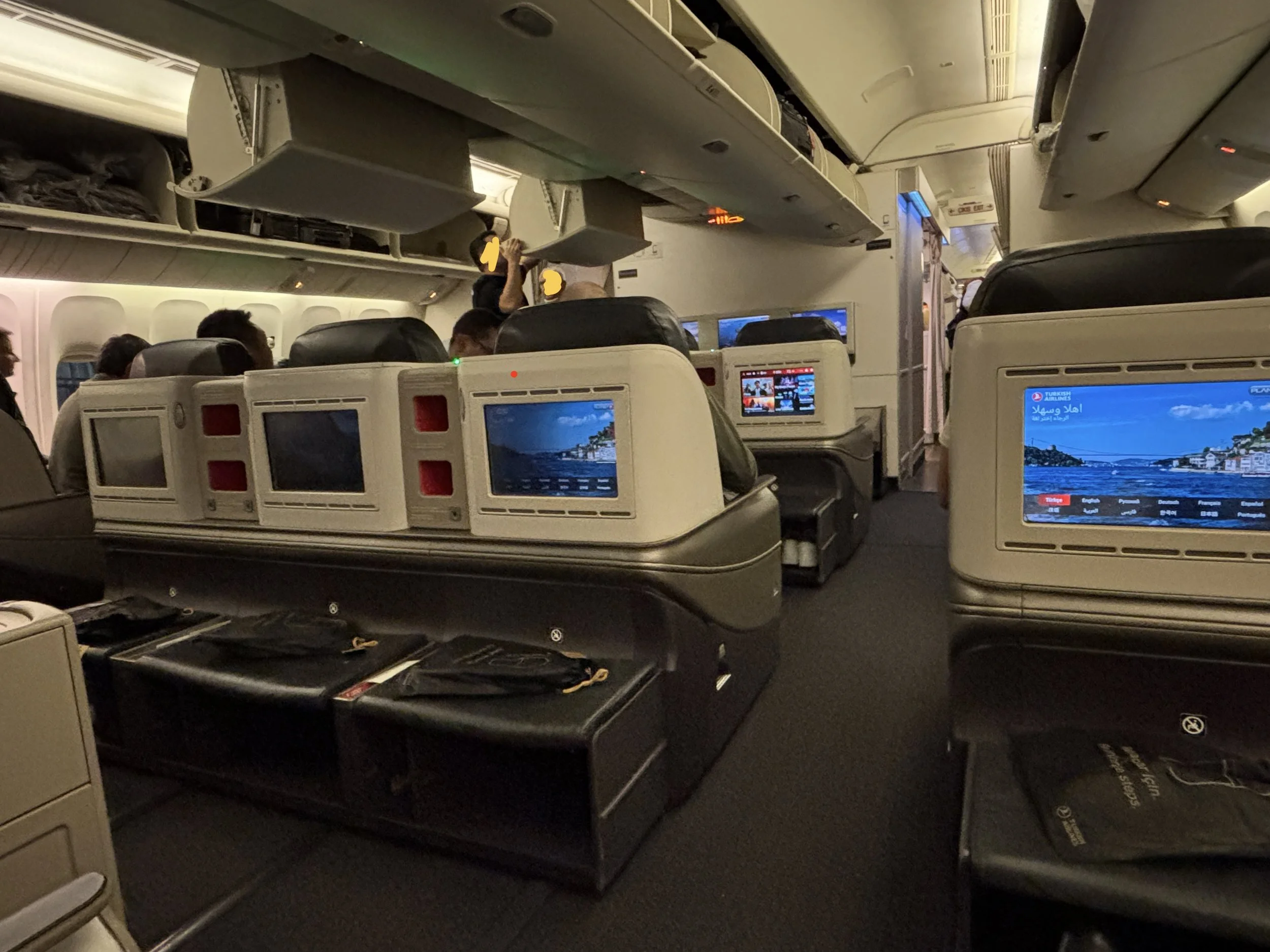
Main points of the Turkish Airlines B777-300ER business class cabin:
2-3-2 some seats lack direct aisle access
Open seats (spacious but no privacy)
Two-piece seats with separate foot-rest
3) A330-300
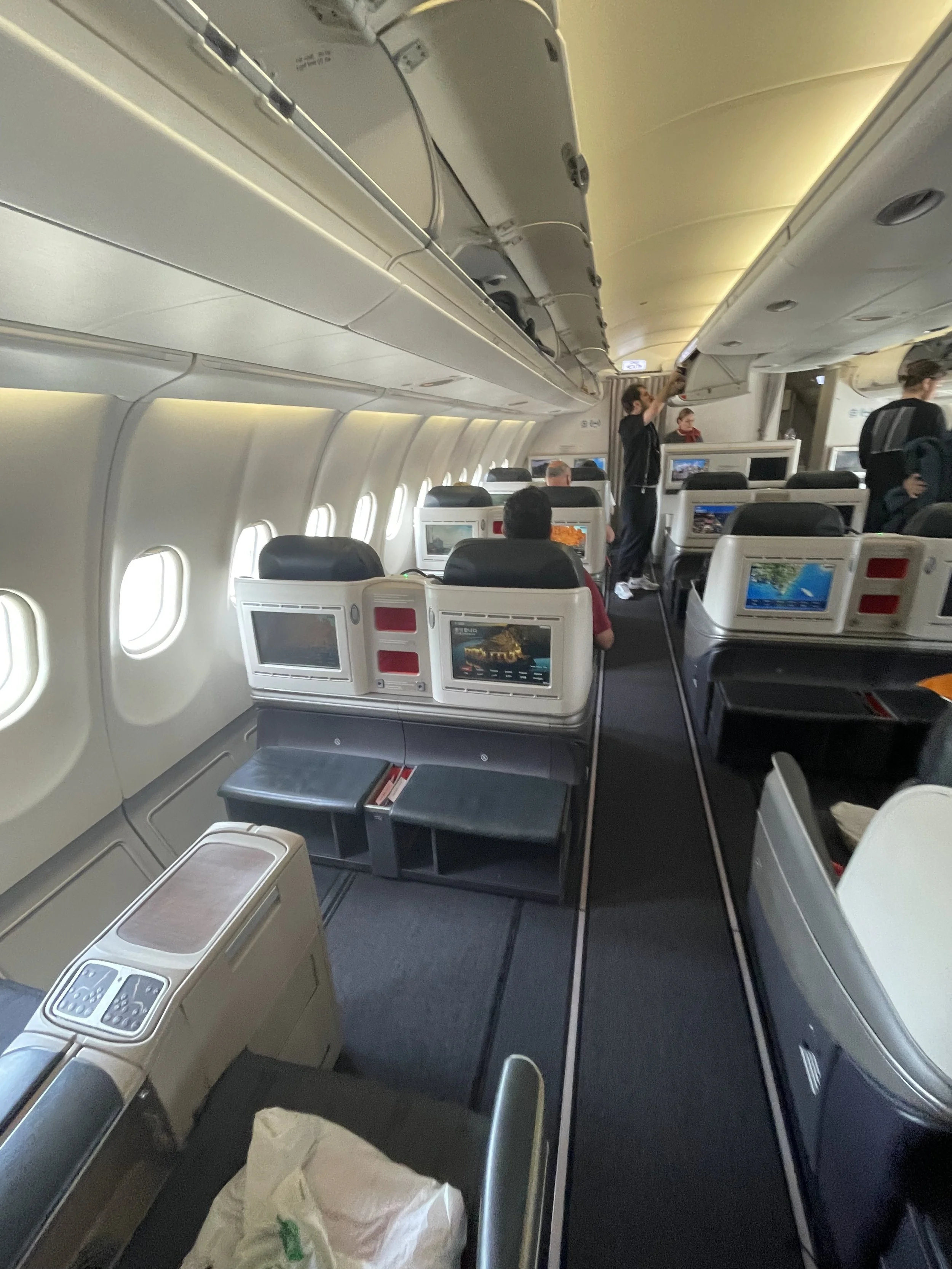
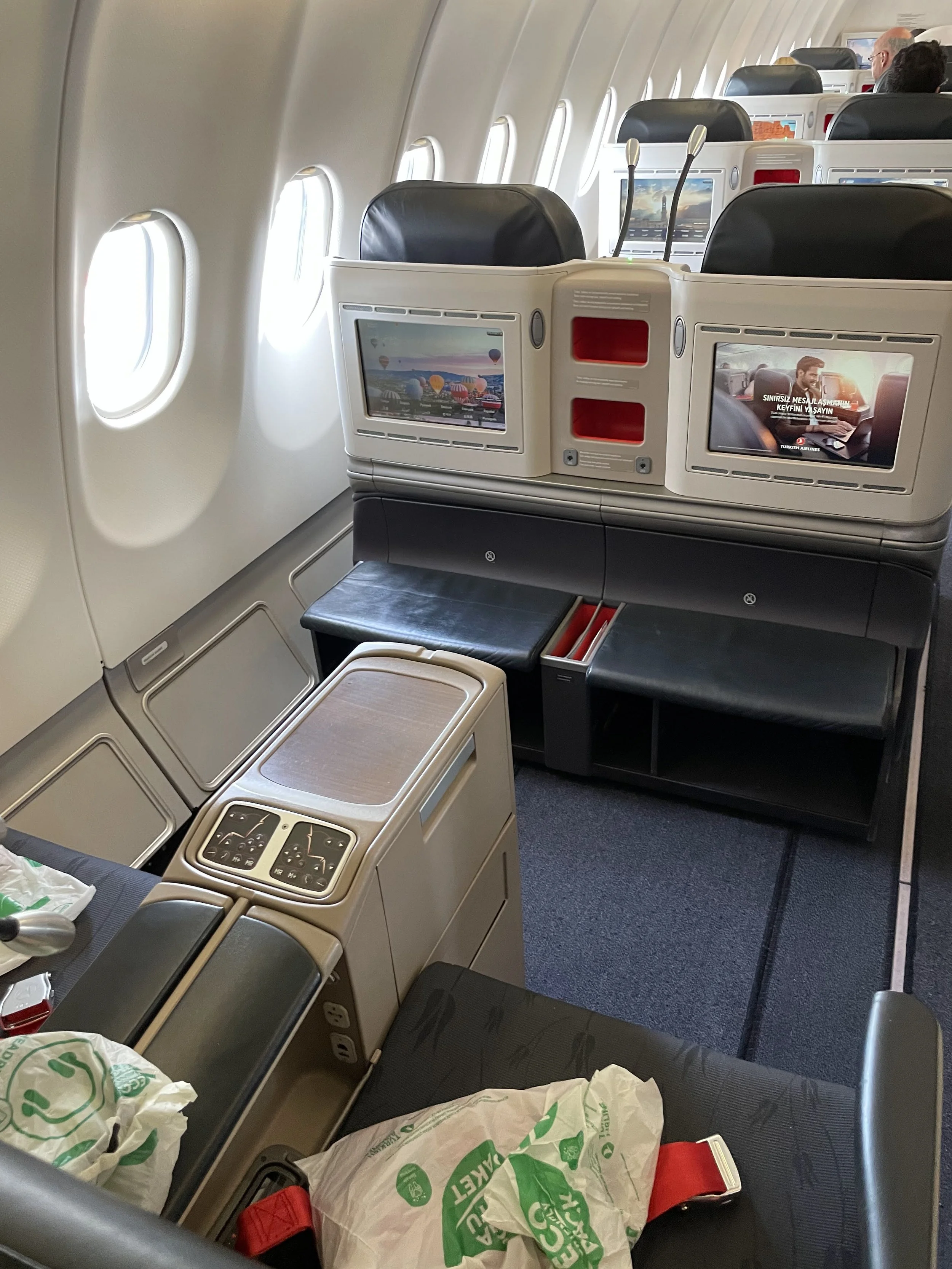
Main points of the Turkish Airlines A330-300 business class cabin:
2-2-2 Configuration
The rest is all the same as in B777-300ER described previously
Business Class Seat
1) A350-900
The Collins Aerospace Horizon suite is a truly great seat. It provides great amounts of space and privacy as well as some other amenities we will see below.
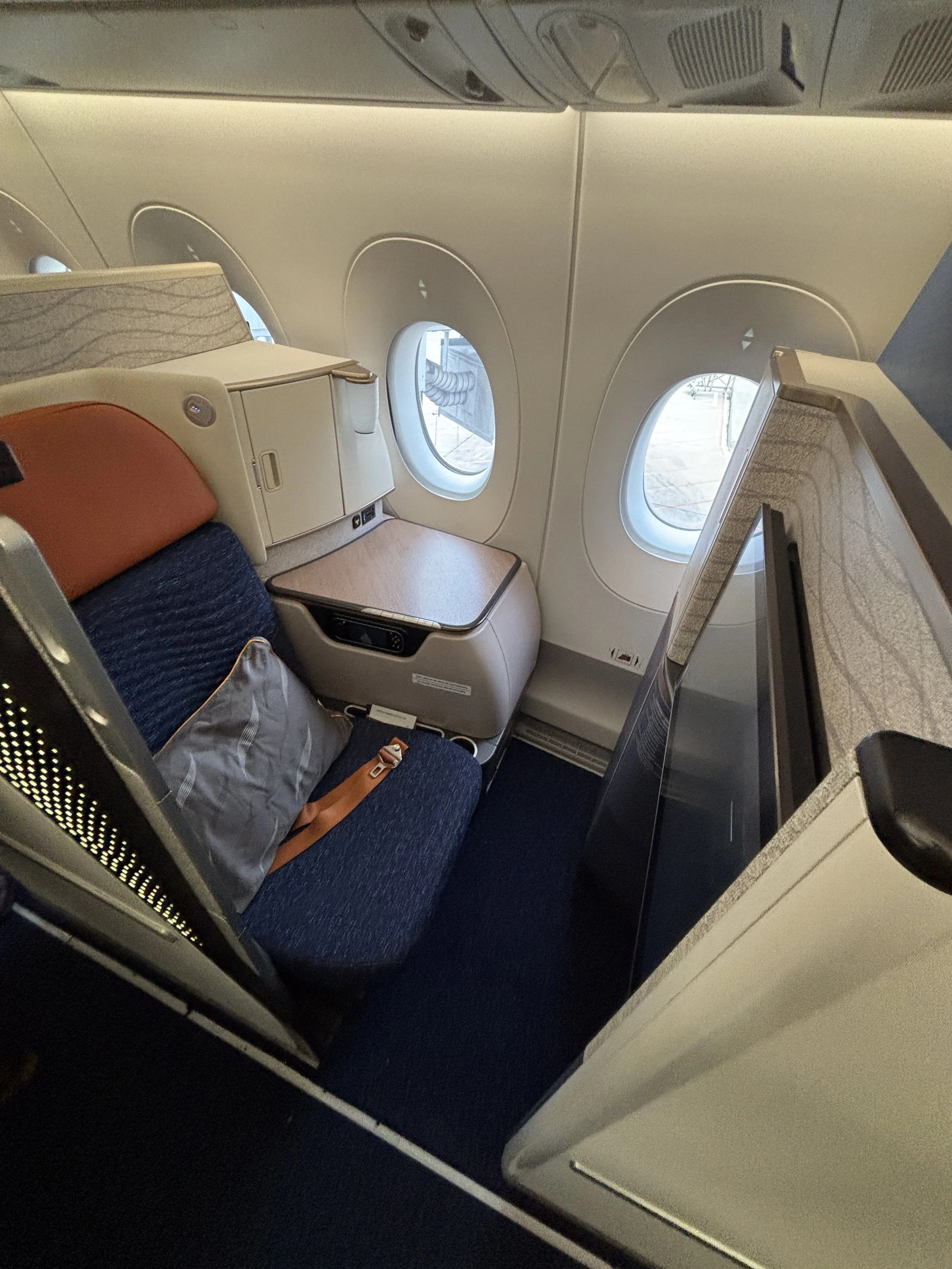
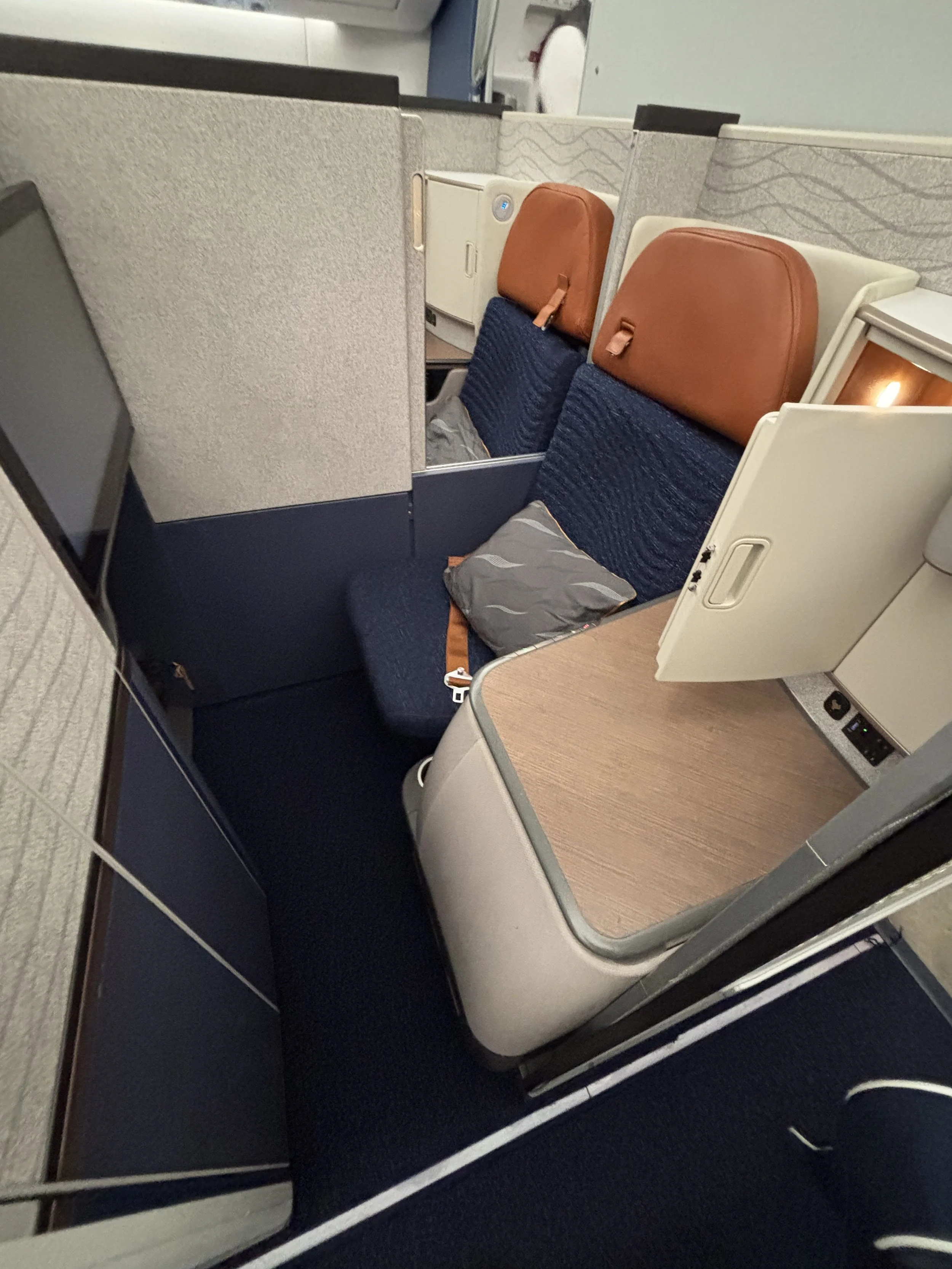
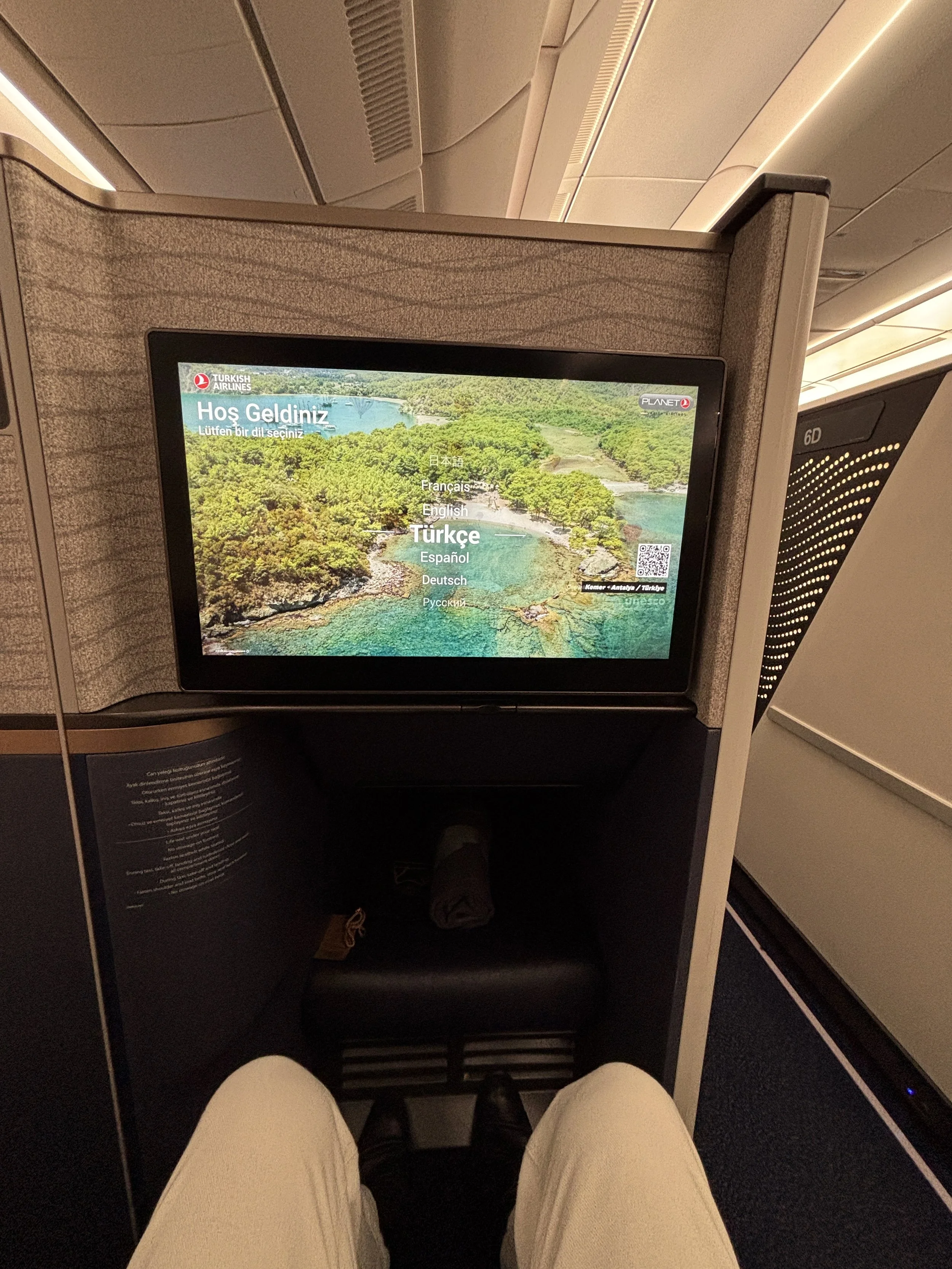
It is fitted with 21-inch HD touchscreen display, running Panasonic's eX3 IFE system.
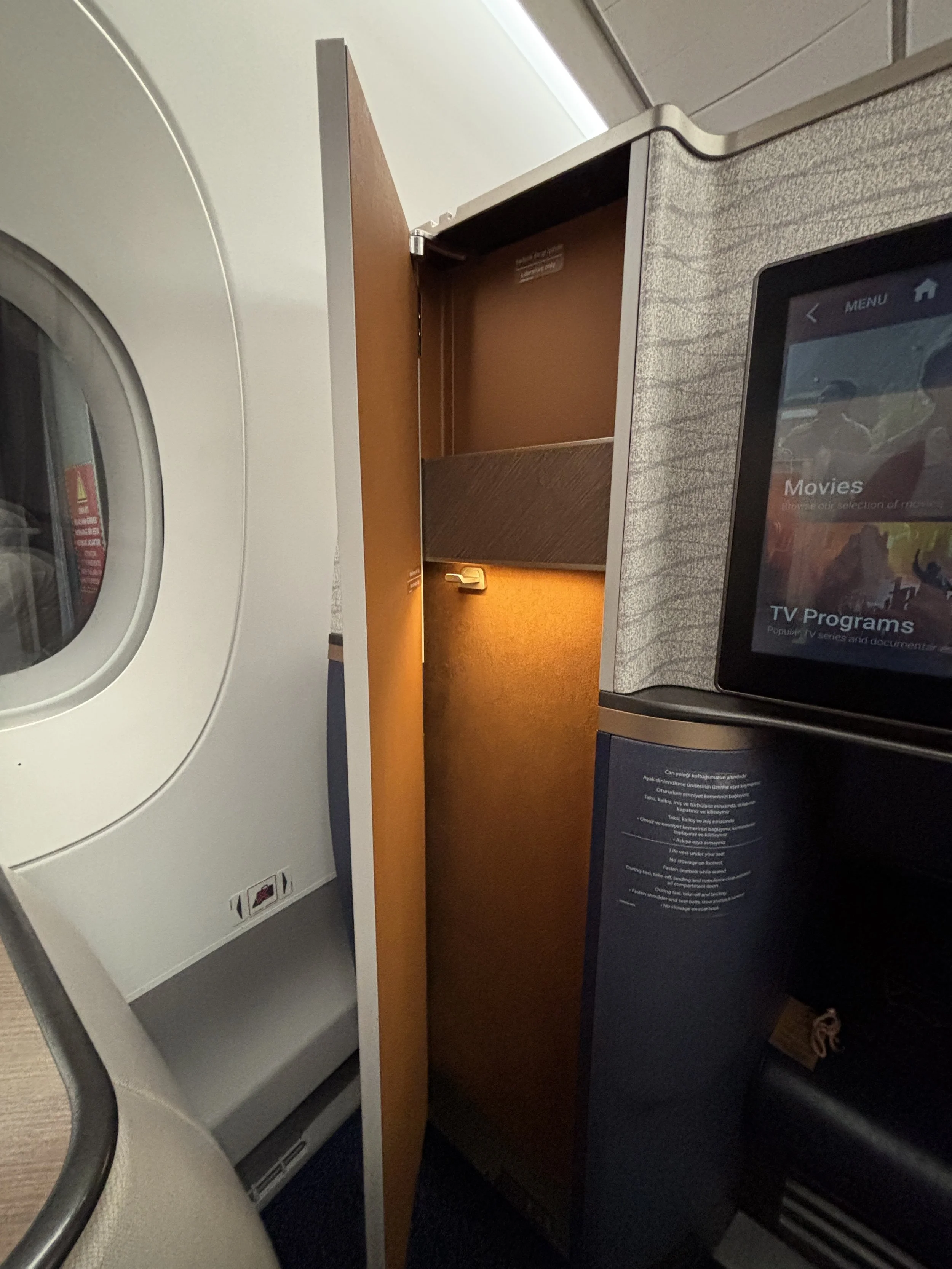
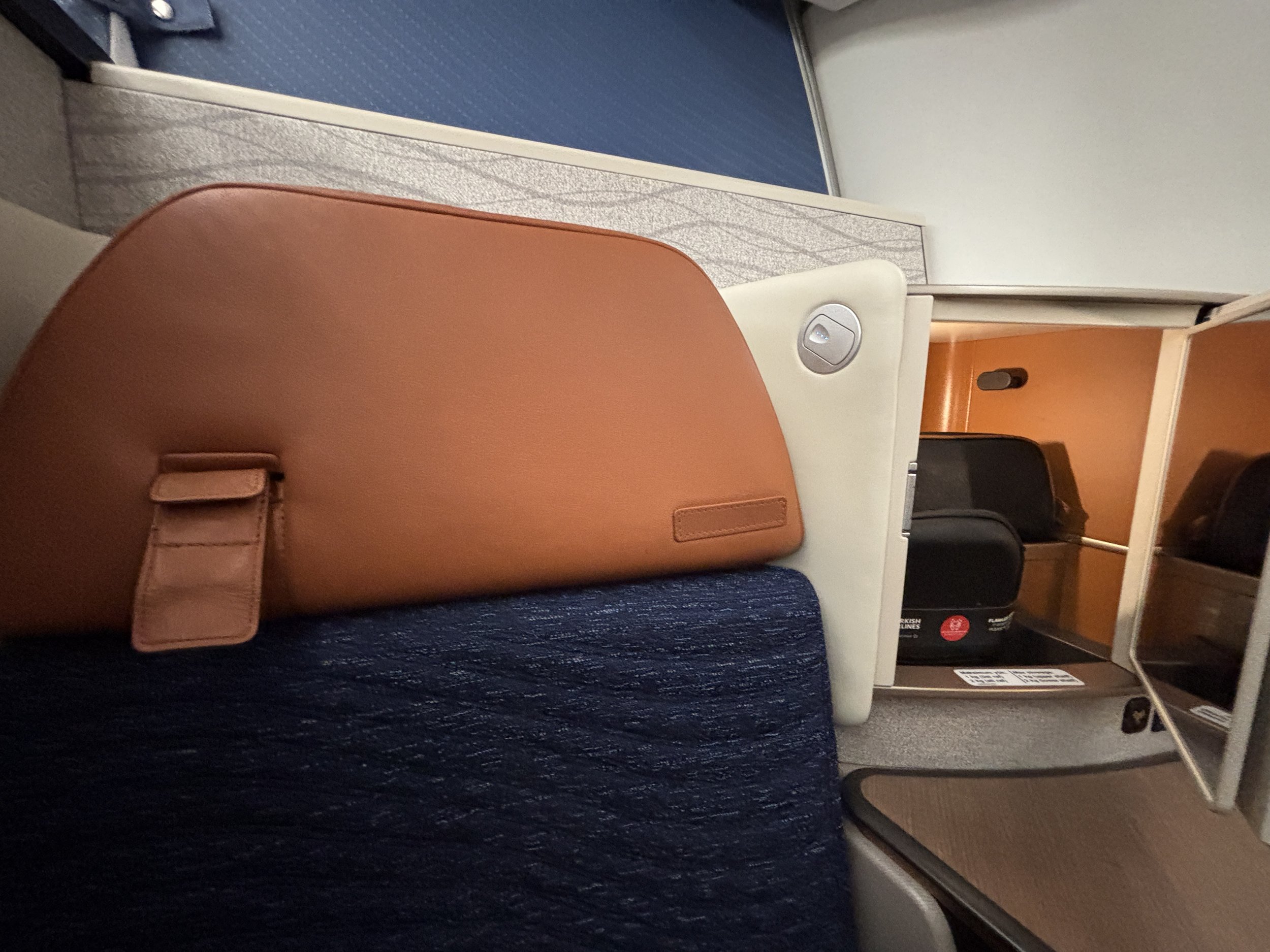
It has its own guardrobe to hang your suit or coat
Footrest under the screen
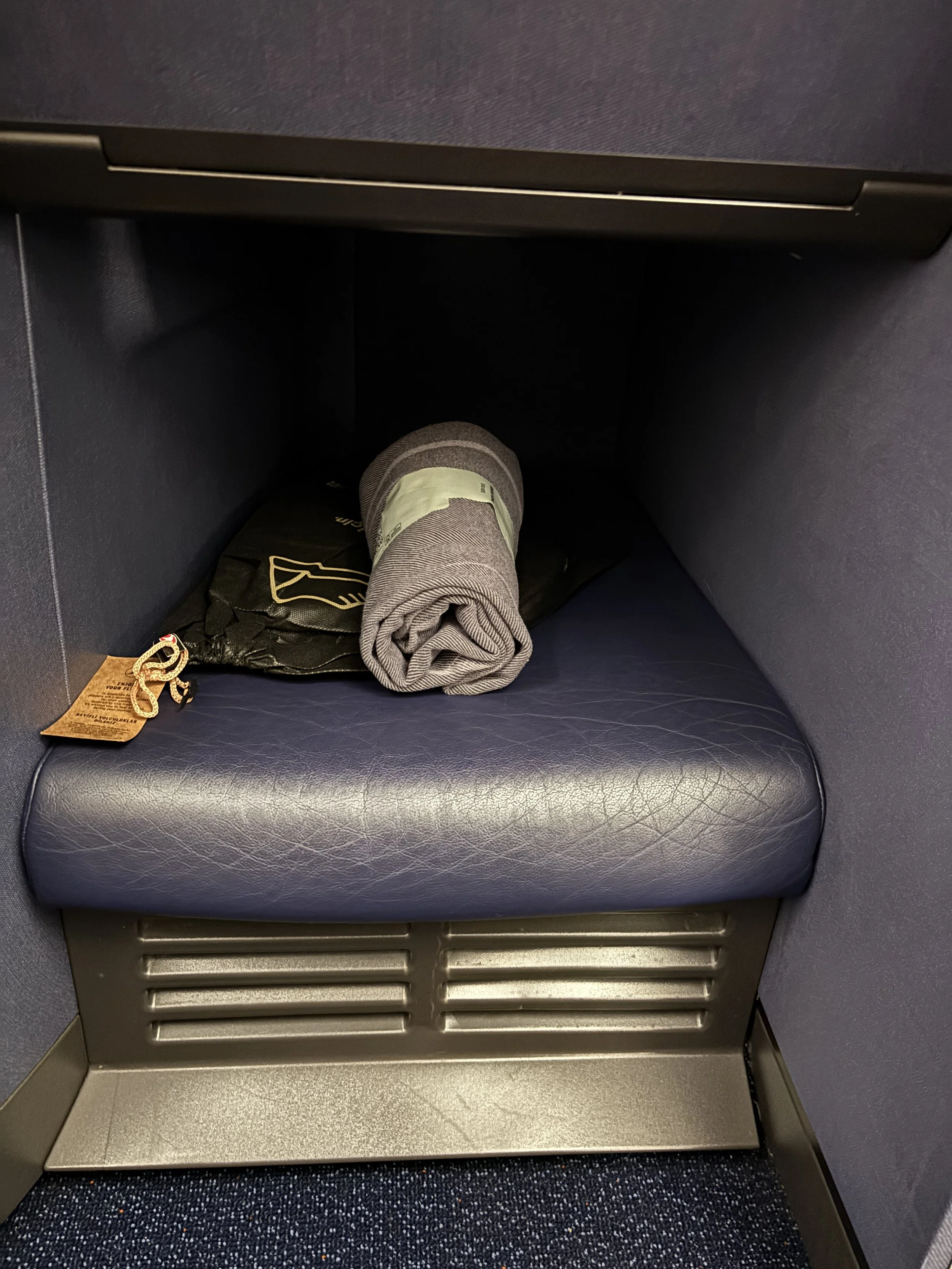
Space on the side to leave your things, including a small compartment with mirrored door
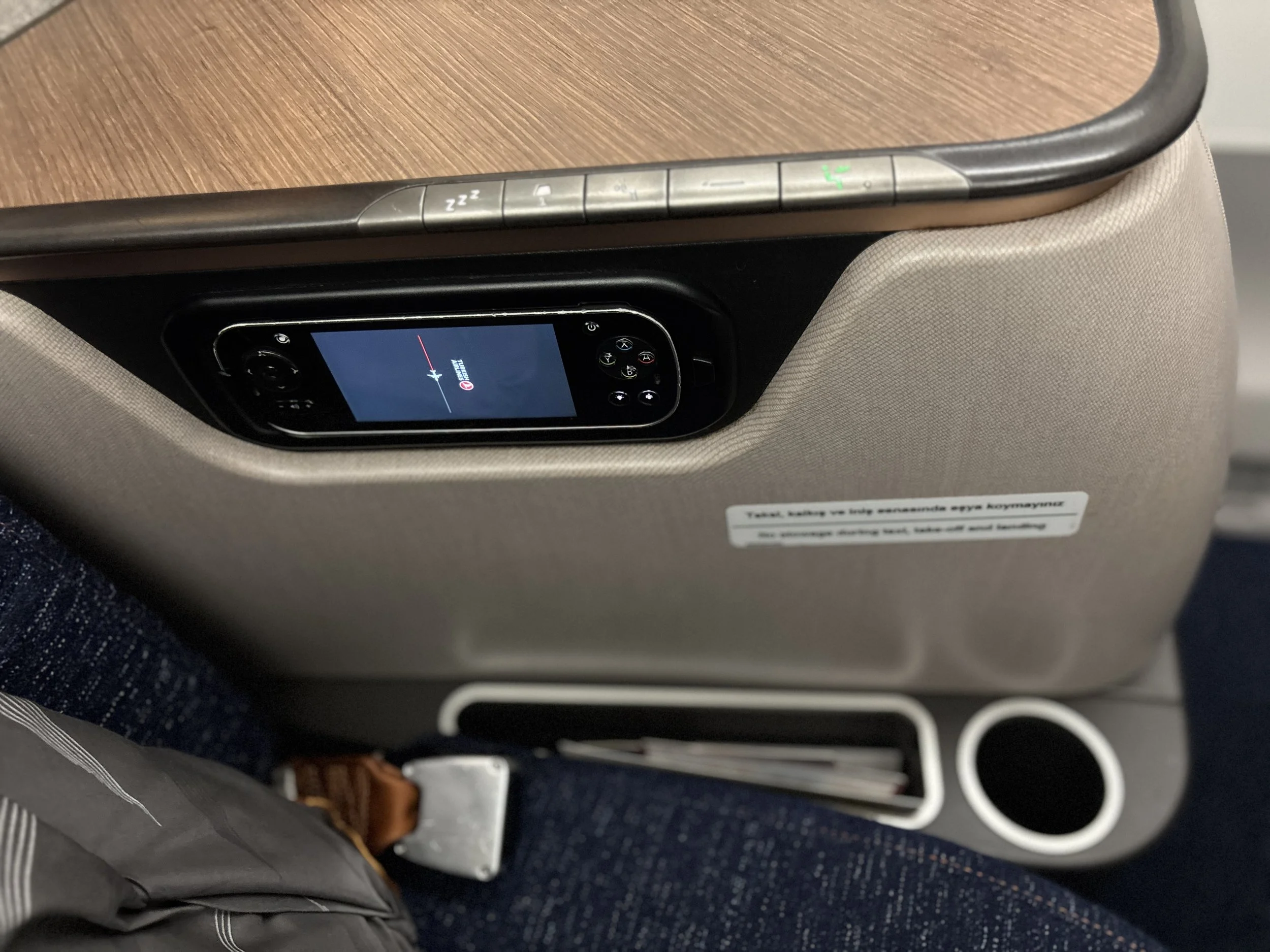
Reading light and simplified seat controls
2) B777-300ER
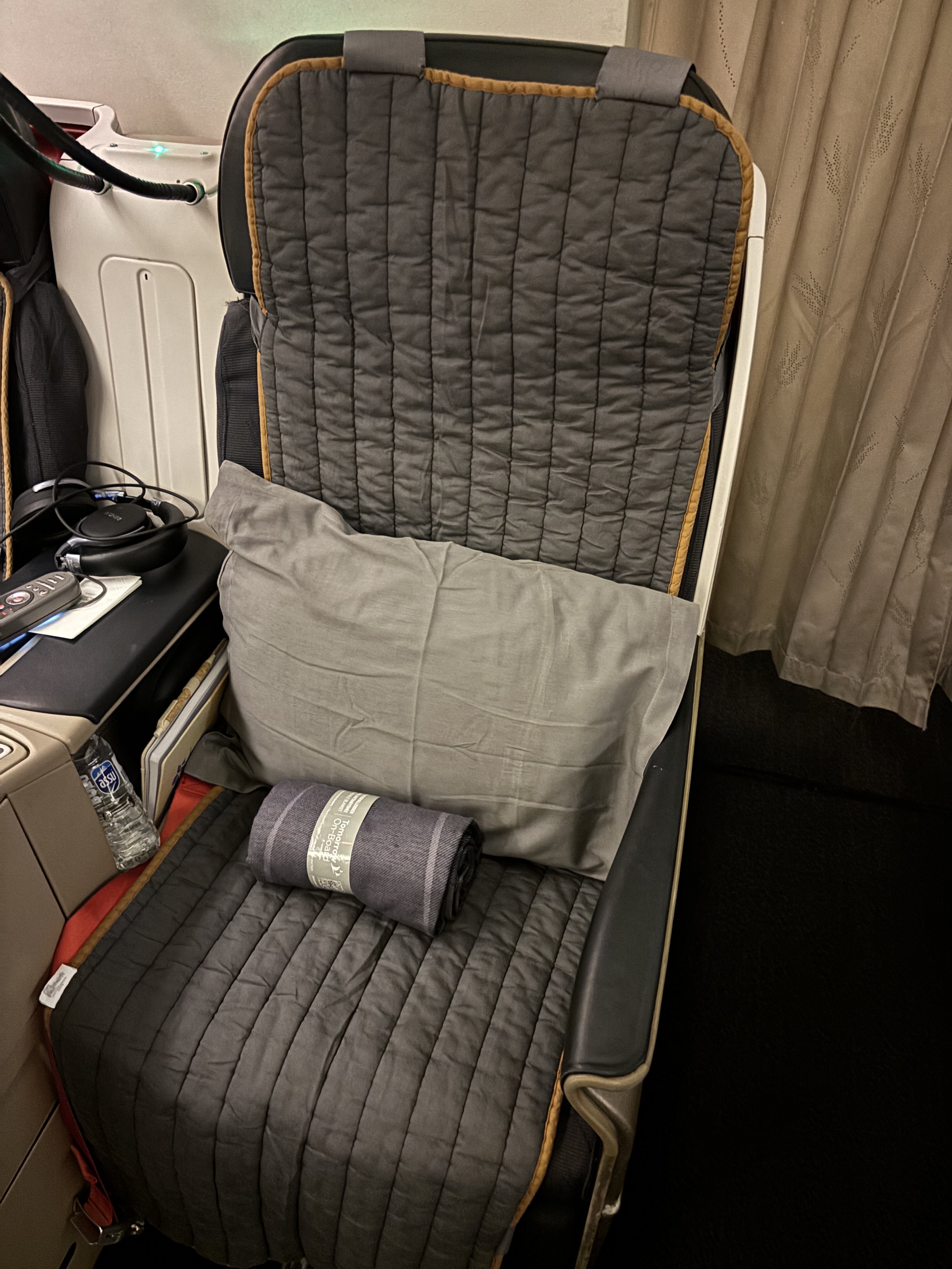
The B777-300ER is fitted with the Zodiac (now Safran) Aura Lite seat.
As you can see, this is a rather older design (in fact, at the time of writing these lines is in the process of being replaced by the state-of-the-art Safran Unity). I list some of the key features below.
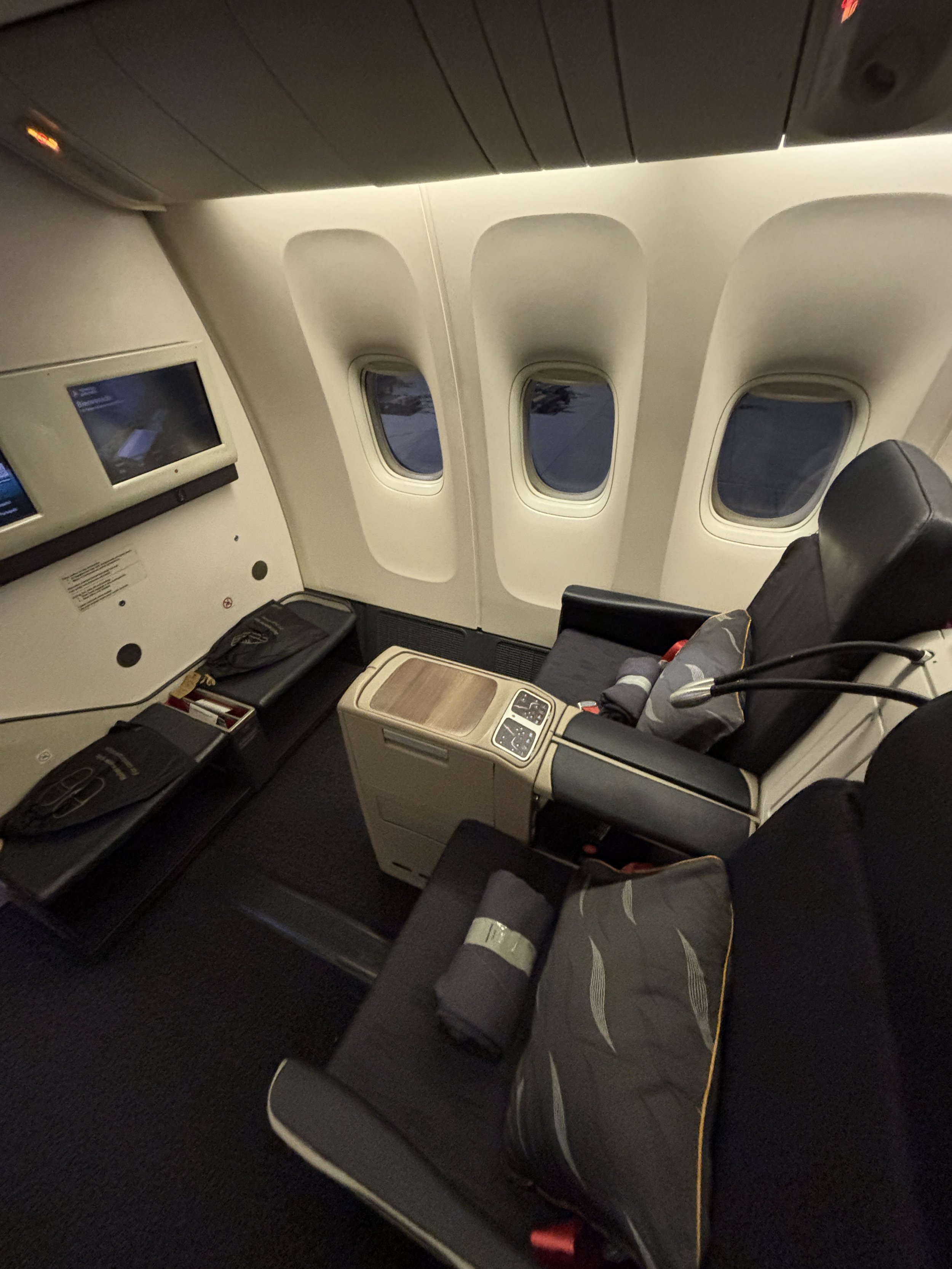
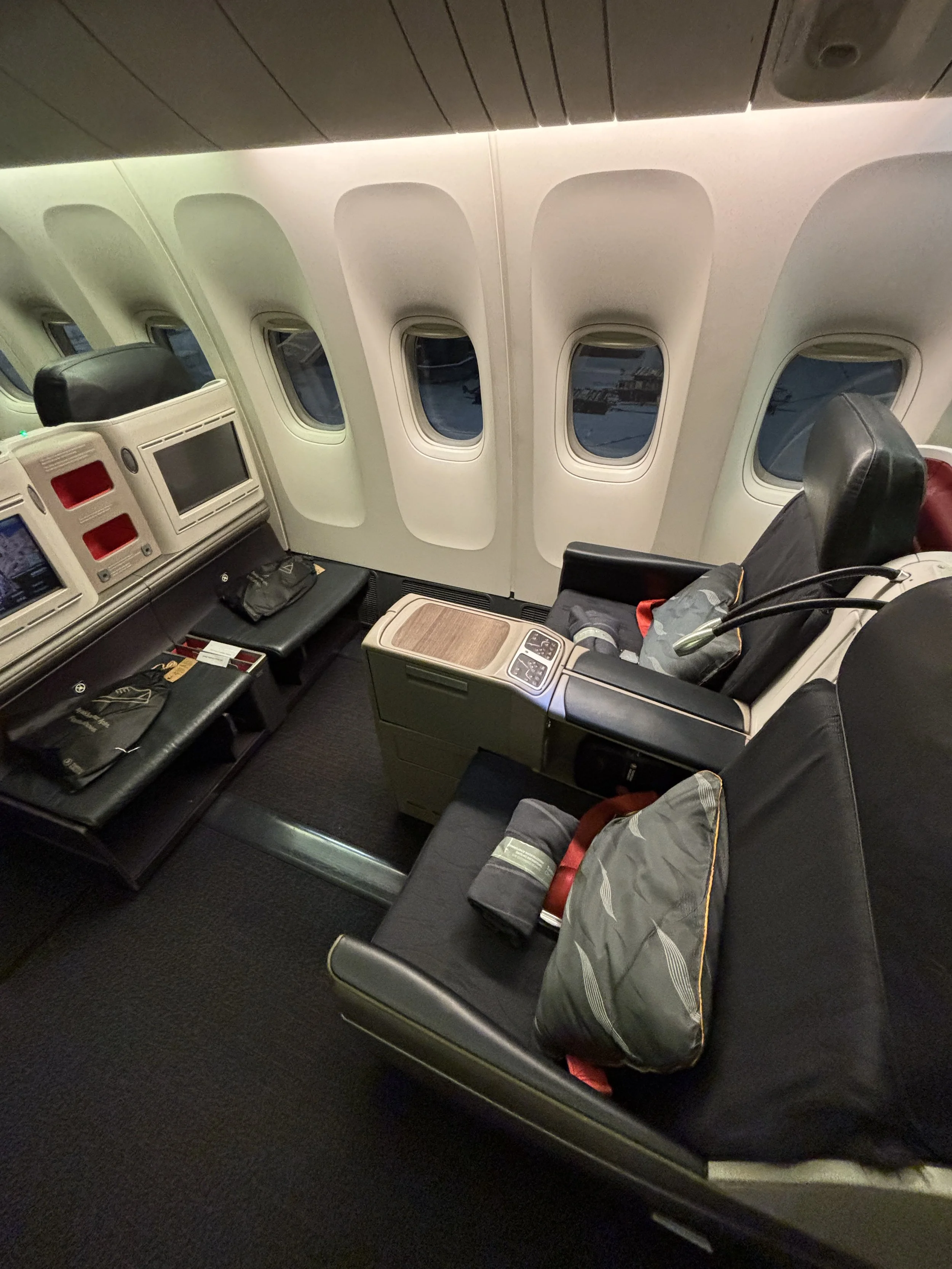
Two-piece seat, with the foot-rest separate in a chaise-longue-type arrangement
Most storage space is in front, inside the foot rest (there is a picture in the A330-300 section) and in hard pockets
The 15.4-inch HD screens are placed at a considerable distance, which is sometimes not ideal
Limited space on the side of the seat. Also the armrest can be used to keep drinks but not really for electronic devices and the like, since there is not enough flat surface and it is shared.
The in-seat power outlet is awkwardly placed at the back of the seat, so you need some contortion to reach it out
As a positive, it has quite a lot of space in front, so if you have long legs, this is good
3) A330-300
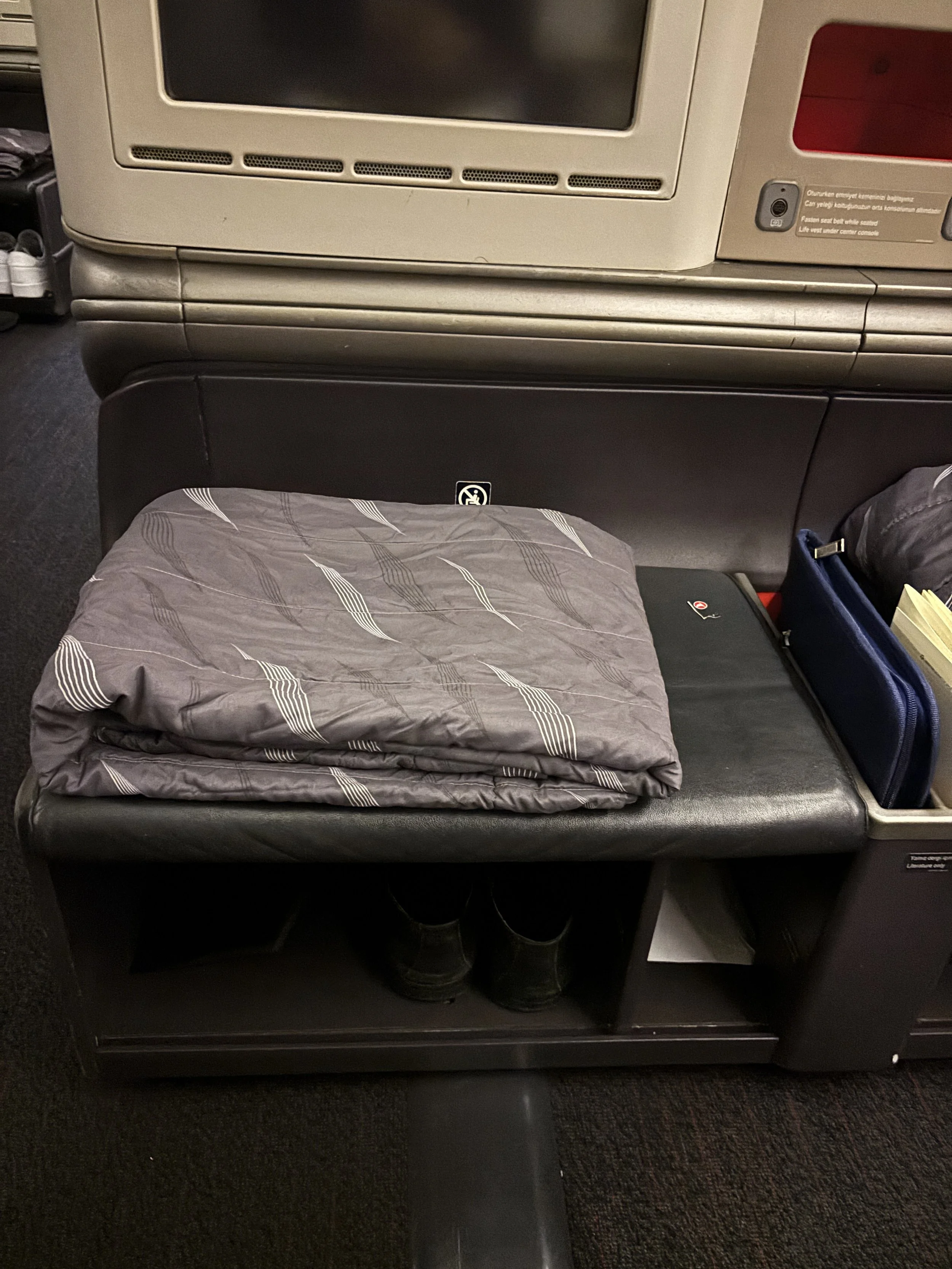
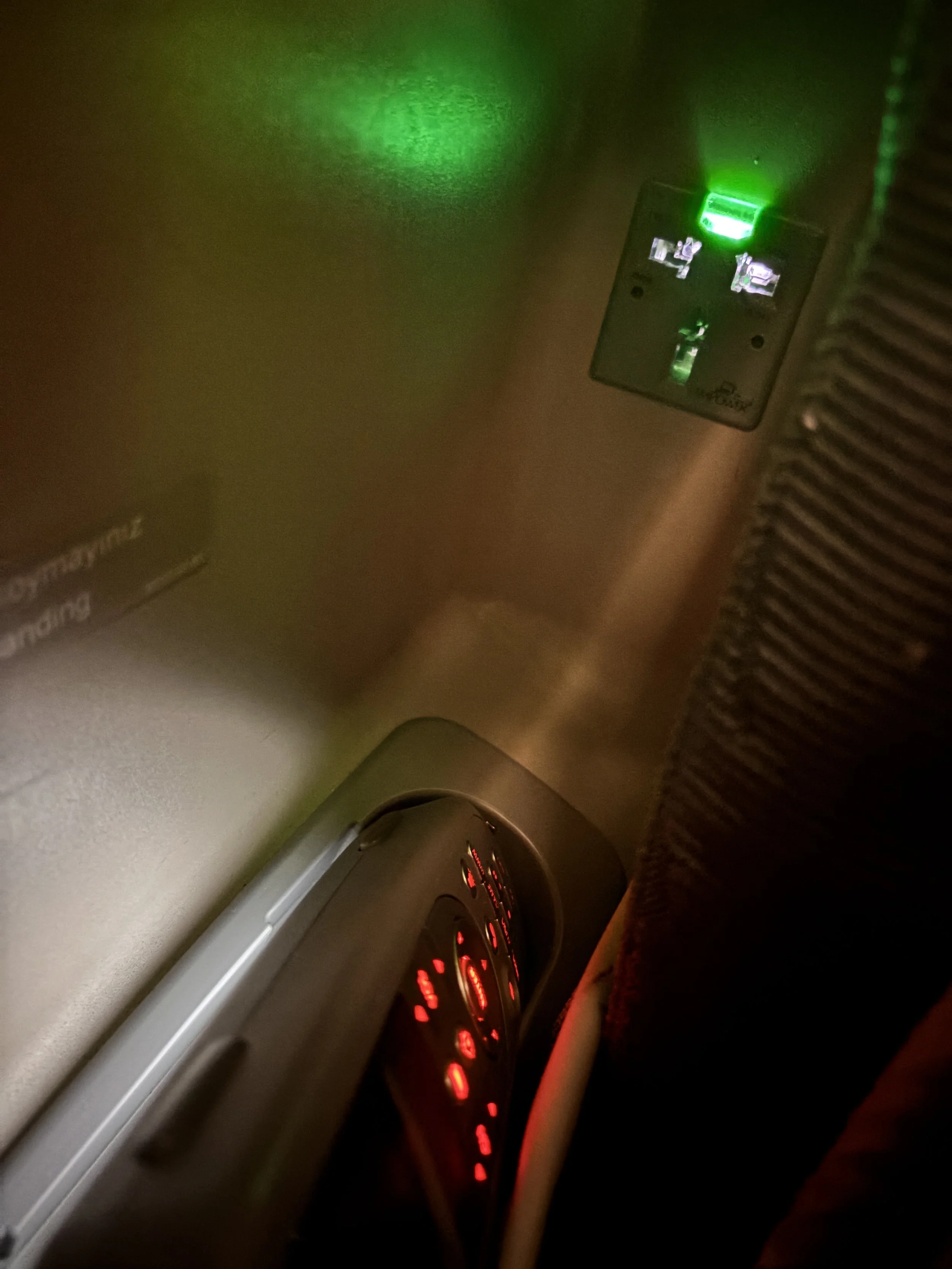
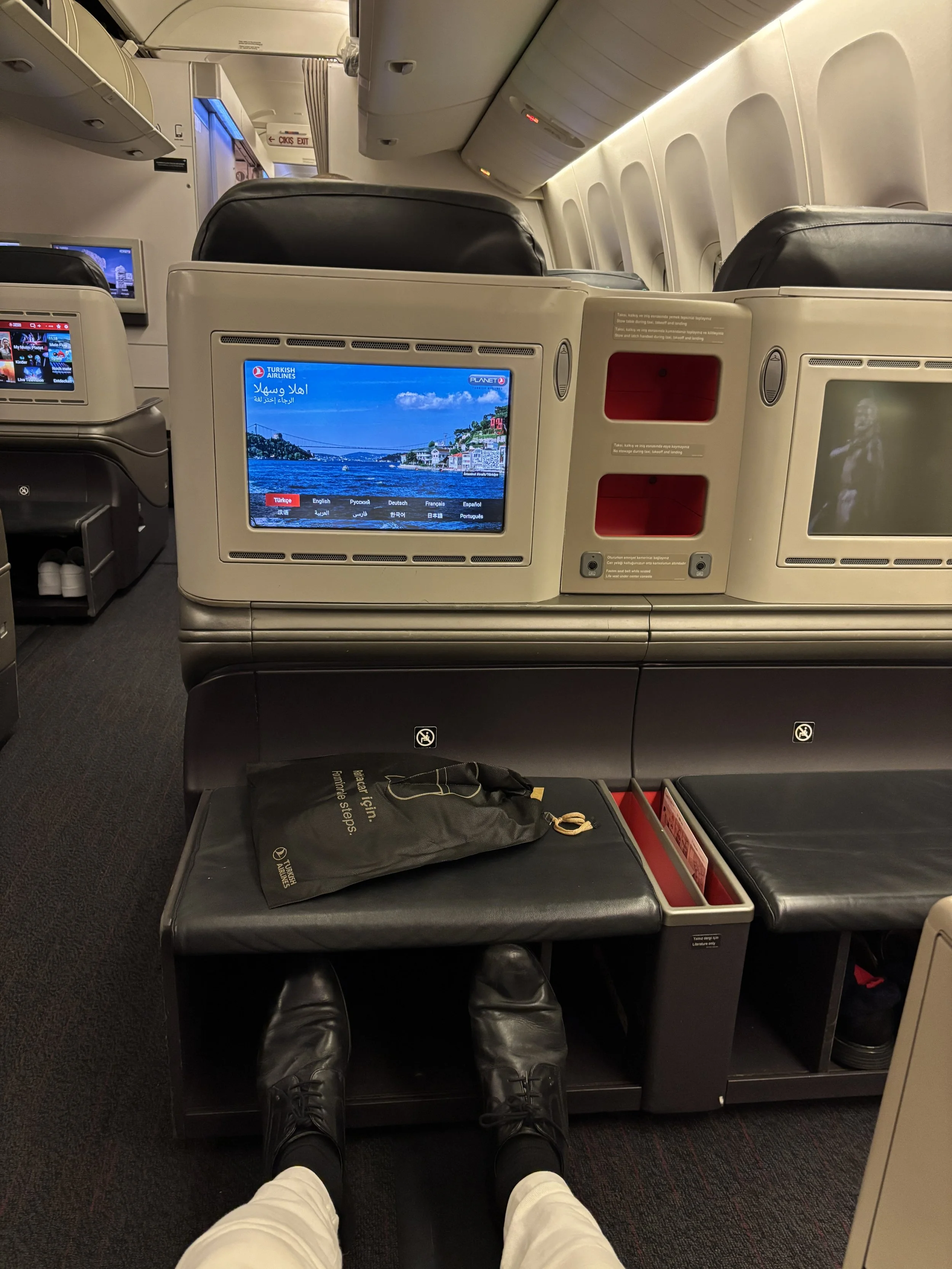
The seat on the Turkish Airlines A330-300 is the Zodiac (Safran) Aura Lite, just as in the B777-300ER. I have added some additional details for further illustration.
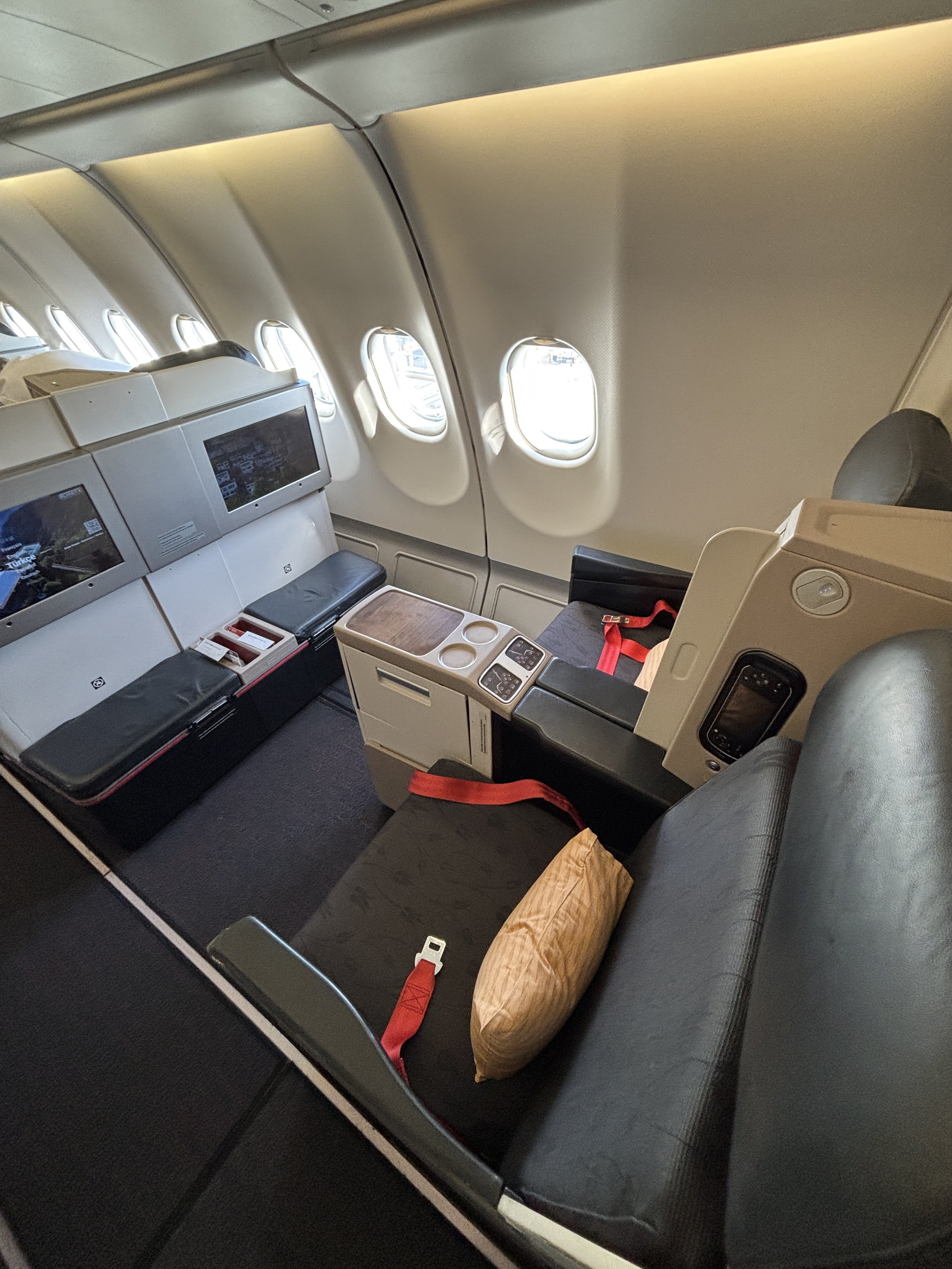
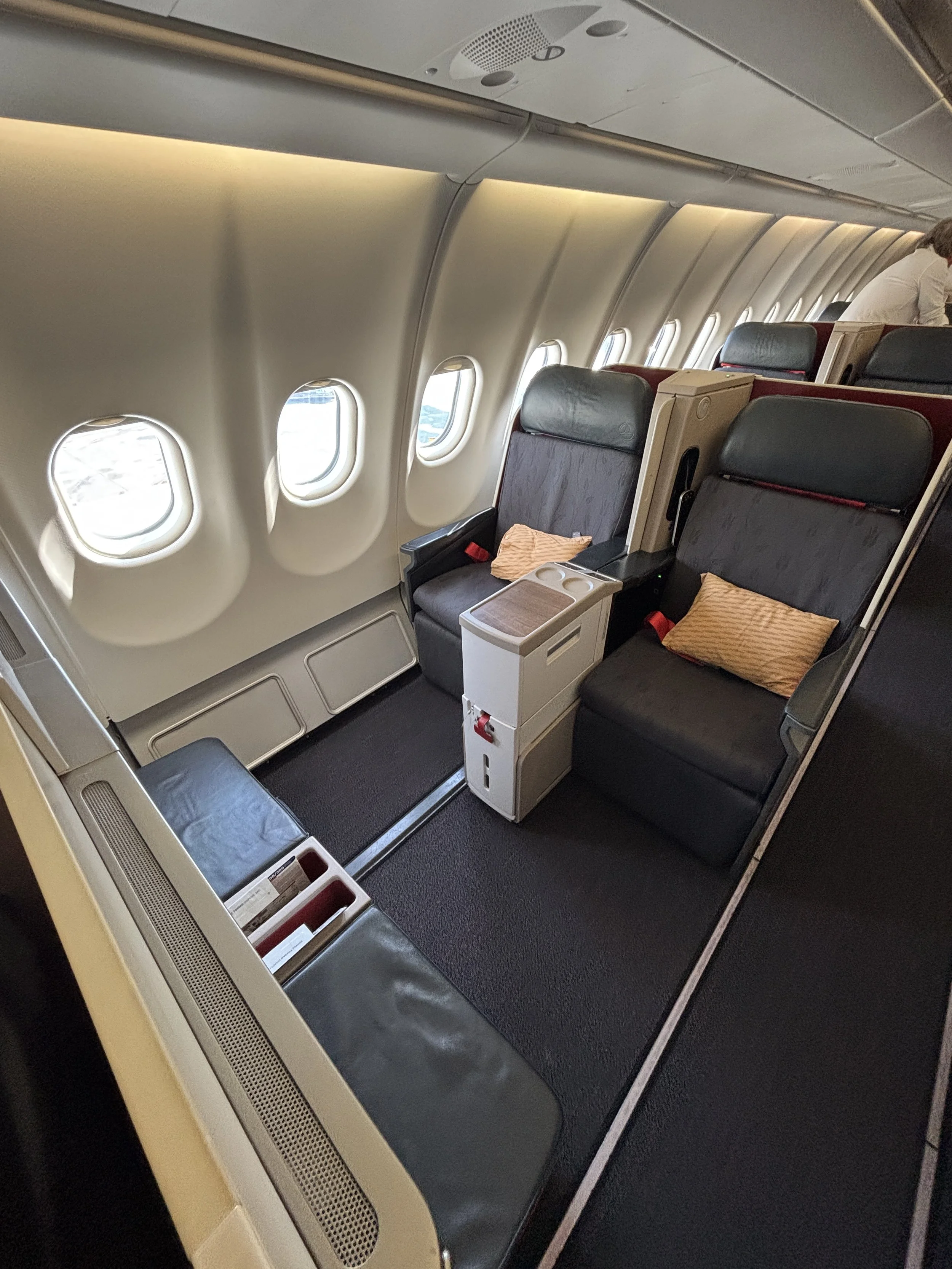
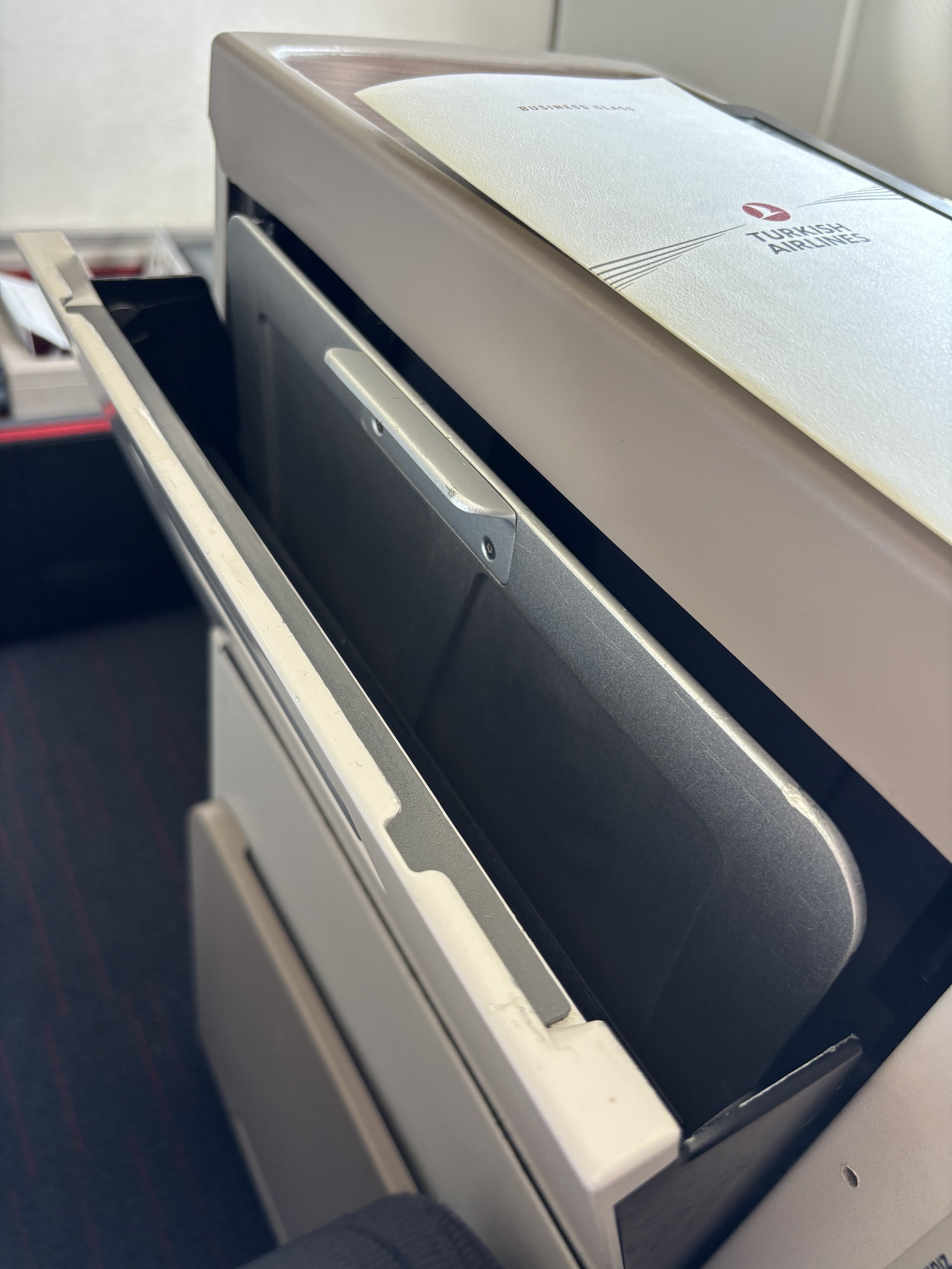
There are just some minor differences, which you can see here, such as, for example, the A330-300 doesn’t have a couple of hard storage compartments next to the screen. Talking about storage, you can see the foot rest with the lid up here, plenty of space here, although I use it mostly for shoes.
The screen itself looked more modern than in the B777-300ER, but I couldn’t confirm whether the B777-300ER and A330-300 use the same model or not. The distance from the seat is roughly the same.
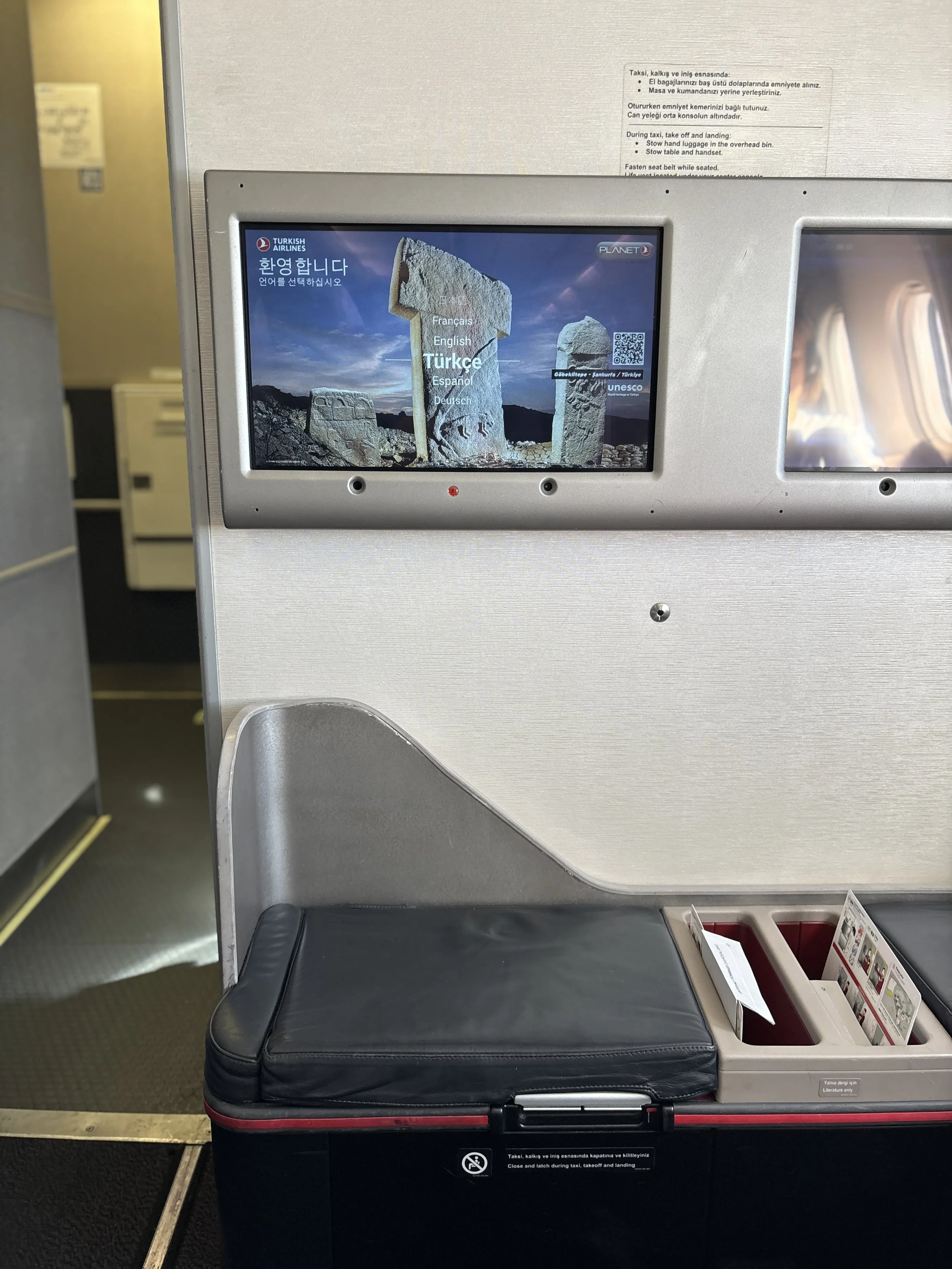
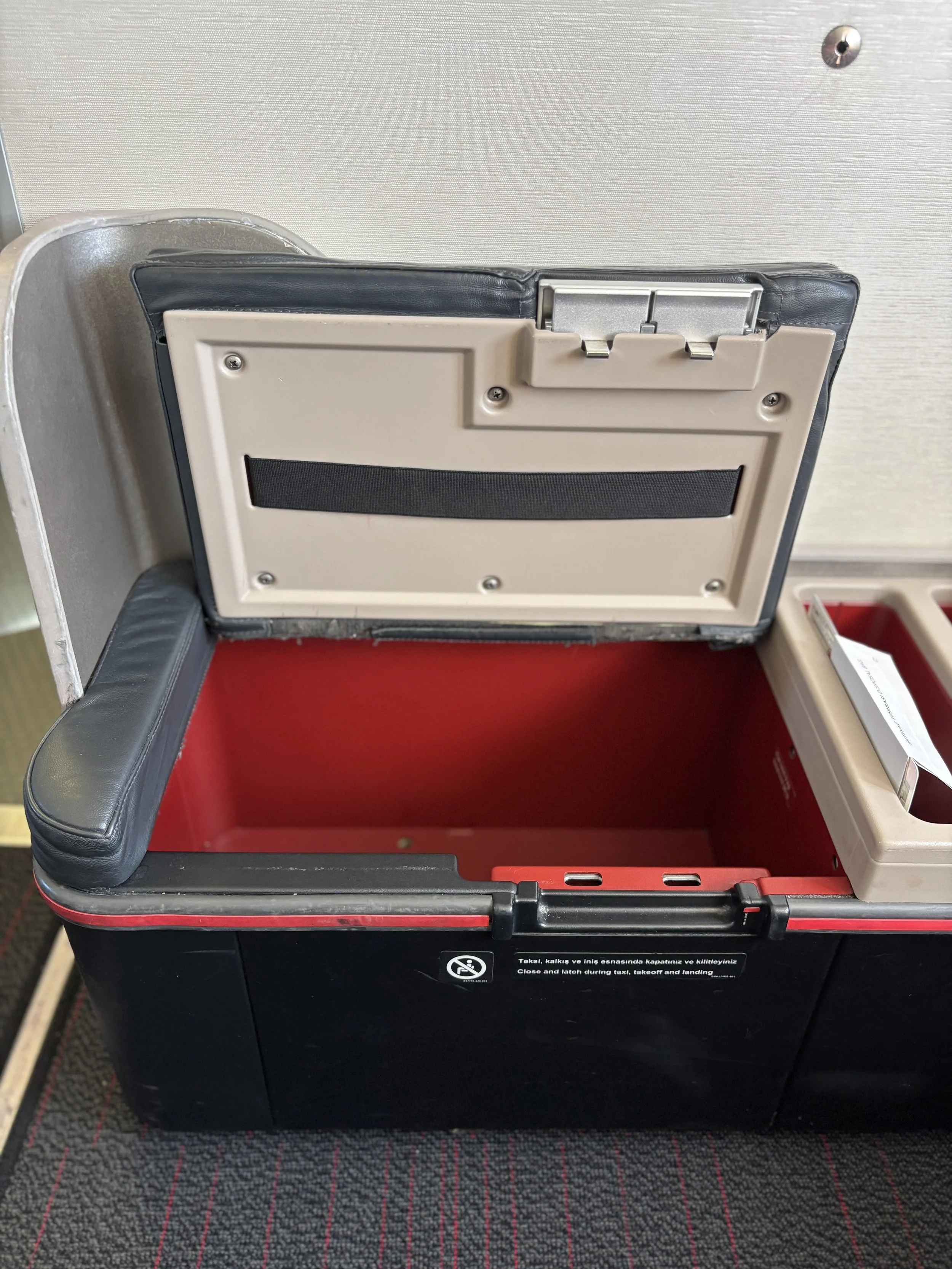
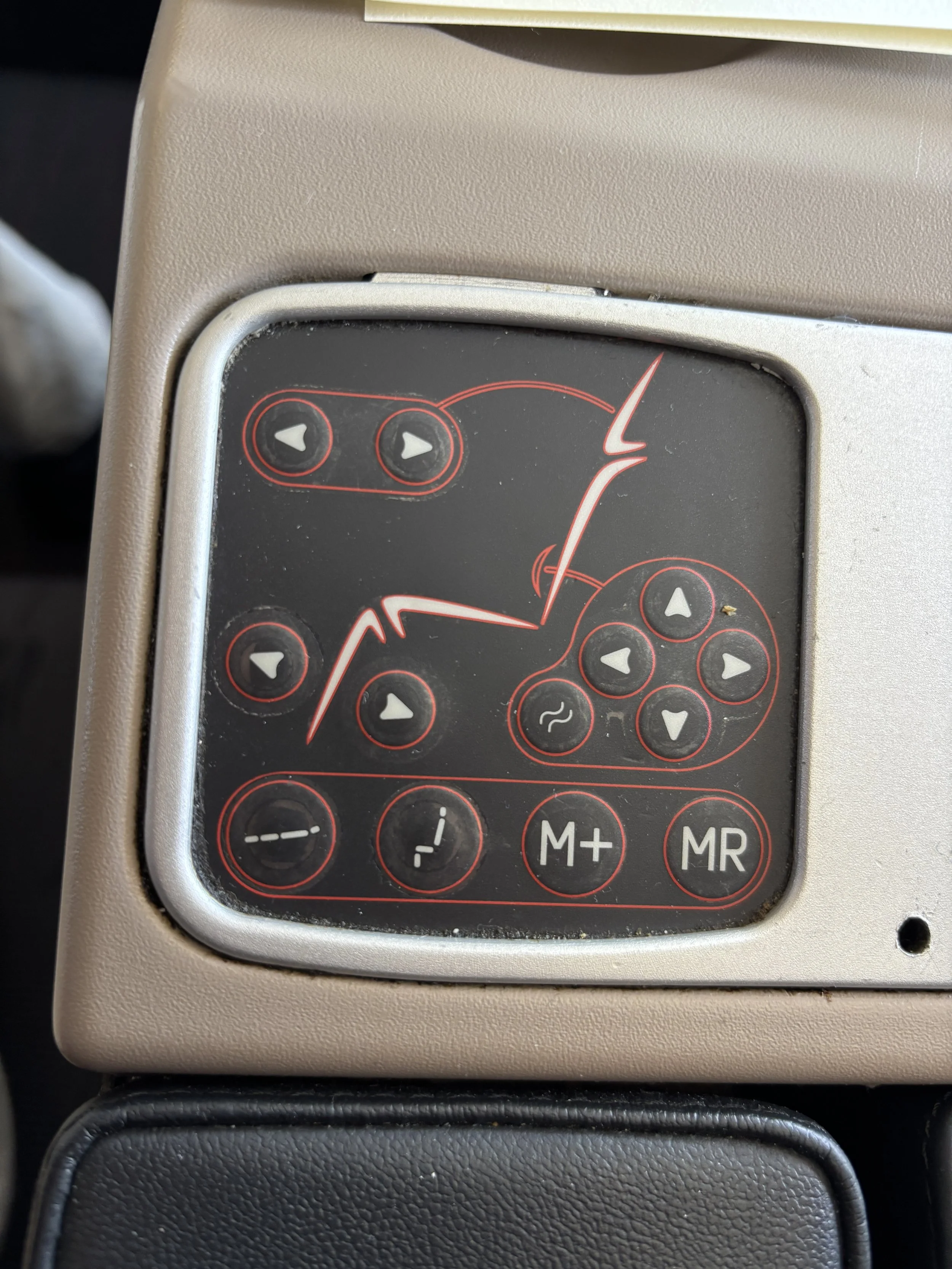
You can also see here how the seat tray unfolds from the side. I have also posted a snapshot of the seat controls, which look rather complicated at first glance. This is because this seat has some “massage”-type functions for the lower back, although my experience is that this feature is not always working.
Our Take:
So, how do each of these business class cabins and seats compare?
My personal opinion is clear and possibly not very surprising: the A350-900 is on a whole different level compared to the this B777-300ER and A330-300 cabins,.
This is to be expected since it is a much more recent product and, therefore, it has incorporated many of the elements that have become the norm over years of continuous cabin design improvements, such as direct aisle access, privacy doors, suite-type cocooned seats, better electronics for the IFE screen controls, etc.
This is not to say that the Turkish Airlines B777-300ER and A330-300 business class cabins provide also a great experience on their own right. I have no doubt they were top of the class at the time when they were introduced and, while already starting to show their age, they continue to soldier on well.
It’s important to remember as well, that the hardware is only part of the business class experience. In the case of Turkish Airlines I would also single out the food in particular as the other big selling point!
Check out the full reviews here:
